
A Food Tour of Italy: Regional Dishes and Culinary Traditions
Late March into early April 2026 saw me take on a two-week journey across Italy, starting in Sicily and working my way north to Milan. On paper, it was always going to be a visually stunning trip. In reality, it became something far more immersive. This was not just about where I went, but what I ate along the way.
This became one of the most gastronomically memorable trips I have taken. Japan and Malaysia still sit right at the top for me, but Italy pushed itself firmly into that conversation. Not through reinvention or complexity, but through confidence. Every region knows exactly what it is doing, and more importantly, why it is doing it.
Italy’s cuisine is not one unified style; it is a patchwork built over centuries. The foundations come from ancient Rome, where bread, olive oil and wine formed the core of daily life. From there, influences layered in. Arab rule in Sicily introduced rice, citrus, and sugar. Trade routes brought spices. The discovery of the Americas introduced tomatoes, which would go on to define southern Italian cooking. What you are left with today is not a single cuisine, but a collection of regional identities, each fiercely protected.
My goal throughout was simple. In every location, eat what that place is known for. Properly. Not the exported versions, not the slightly altered dishes you find abroad, but the ones rooted in that region’s history. Because that is the thing with Italy. The food is not just food, it is history, geography and identity all sitting on a plate.
Palermo, Seafood and Sicily’s Layered Identity
Sicily feels different the moment you arrive. It has a roughness to it, but also a depth that you do not quite get elsewhere and its food reflects that perfectly. Being surrounded by the Mediterranean, seafood is at the heart of everything. The Strait of Messina is one of the most famous places in the region for swordfish, and what makes it even more interesting is that the fishing methods are still largely traditional. Fishermen stand on long, narrow boats, spotting the fish before harpooning them with remarkable precision. It is a practice that dates back to ancient Greek and Roman times, and somehow still exists today.
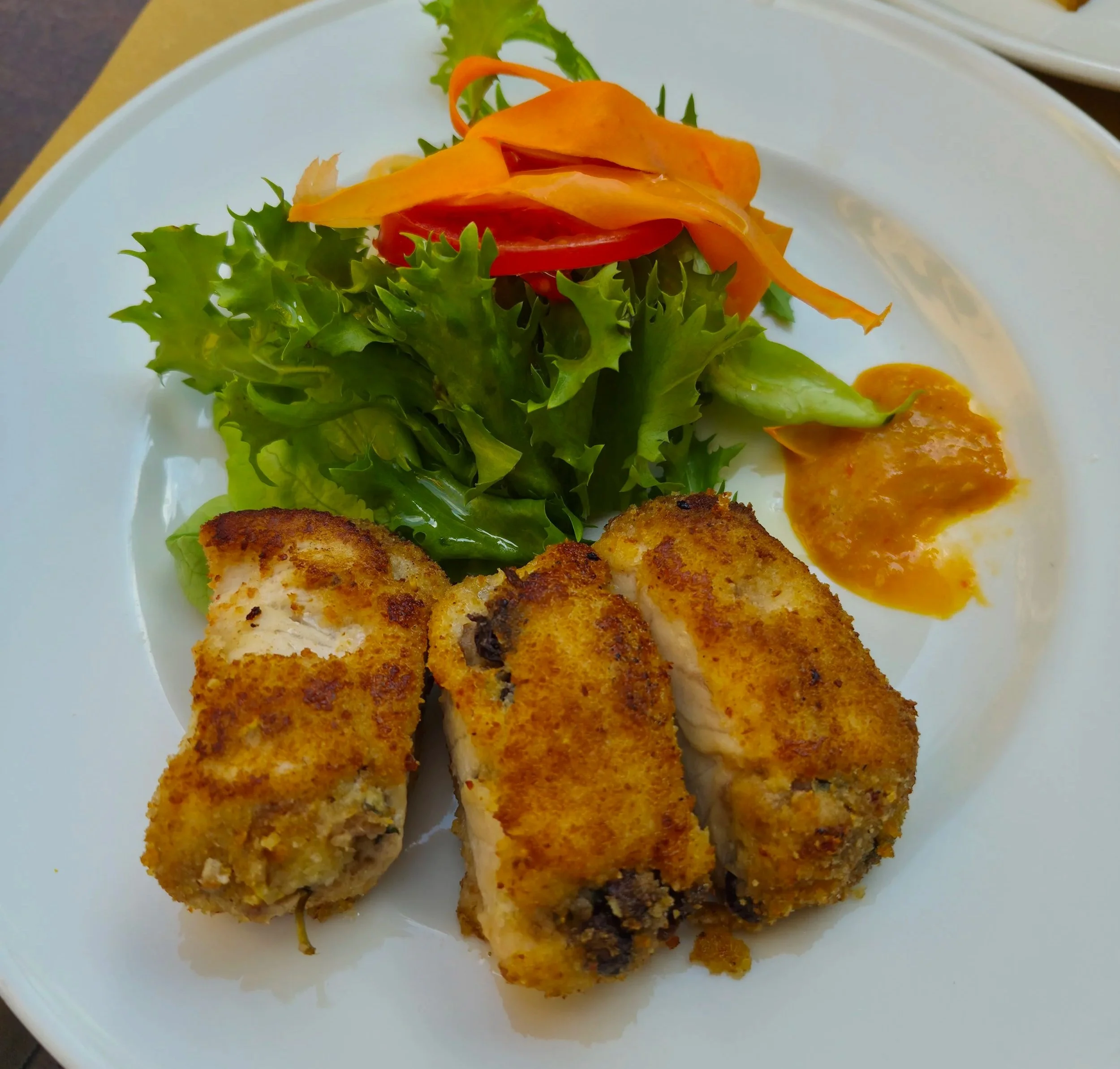
At Bisso Bistrot in Palermo, I had my first taste of it as I ate swordfish rolls with raisins and artichokes, it immediately highlighted something that would come up again and again in Sicily, a balance between sweet and savoury. It is not accidental, it comes directly from Arab influence, where ingredients like dried fruit and nuts became embedded in local cooking.
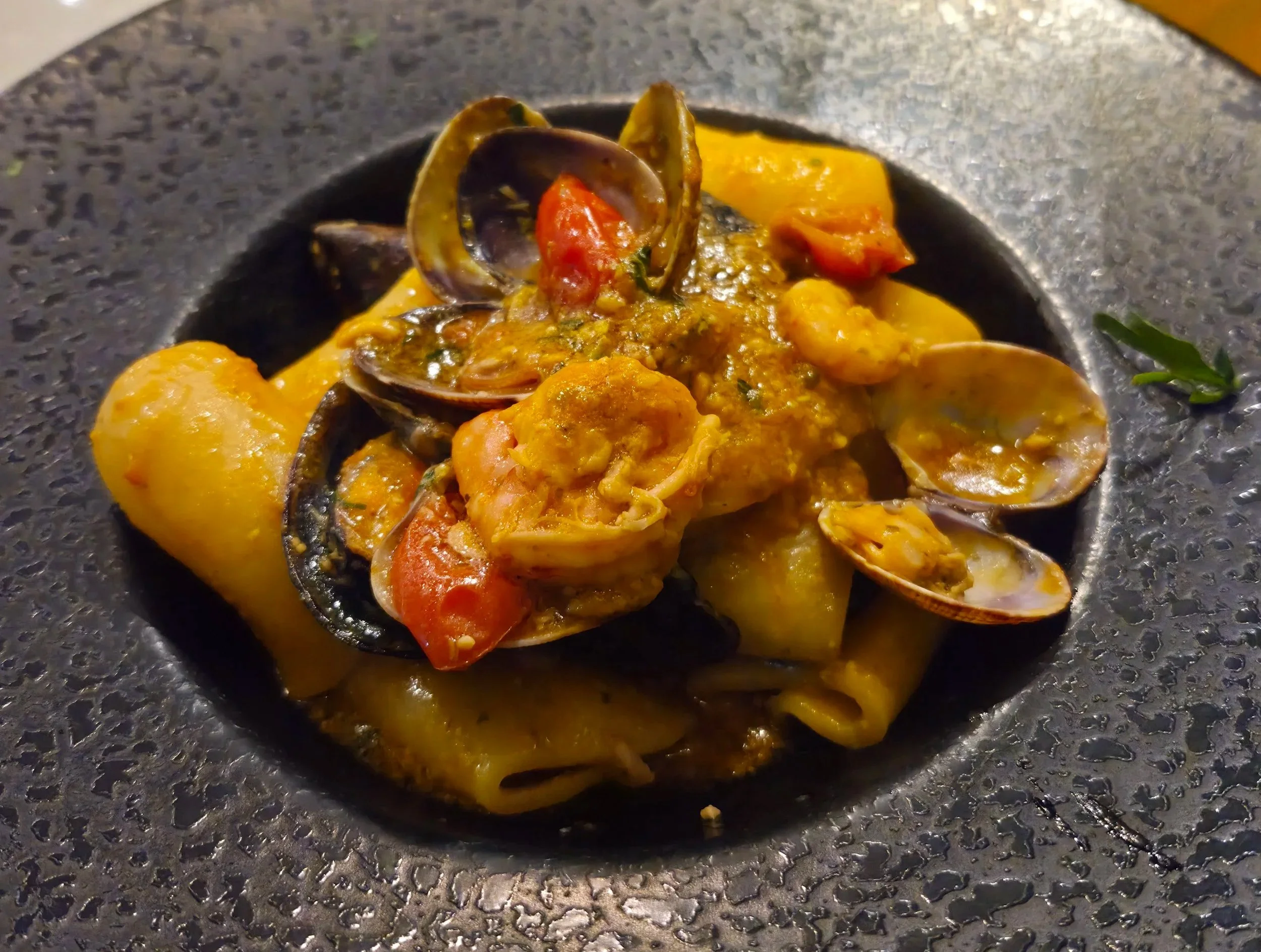
Later that evening at Il Culinaro, things stepped up significantly. Paccheri Mediterraneo arrived loaded with mussels, clams and shrimp, sitting in a creamy tomato and pesto sauce. The pasta itself was perfectly cooked, but what stood out was the seafood. It tasted genuinely fresh, like it had gone from sea to plate with very little time in between and it ended up being one of the highlights of Sicily for me.
Then there were arancini. I became mildly obsessed with them.
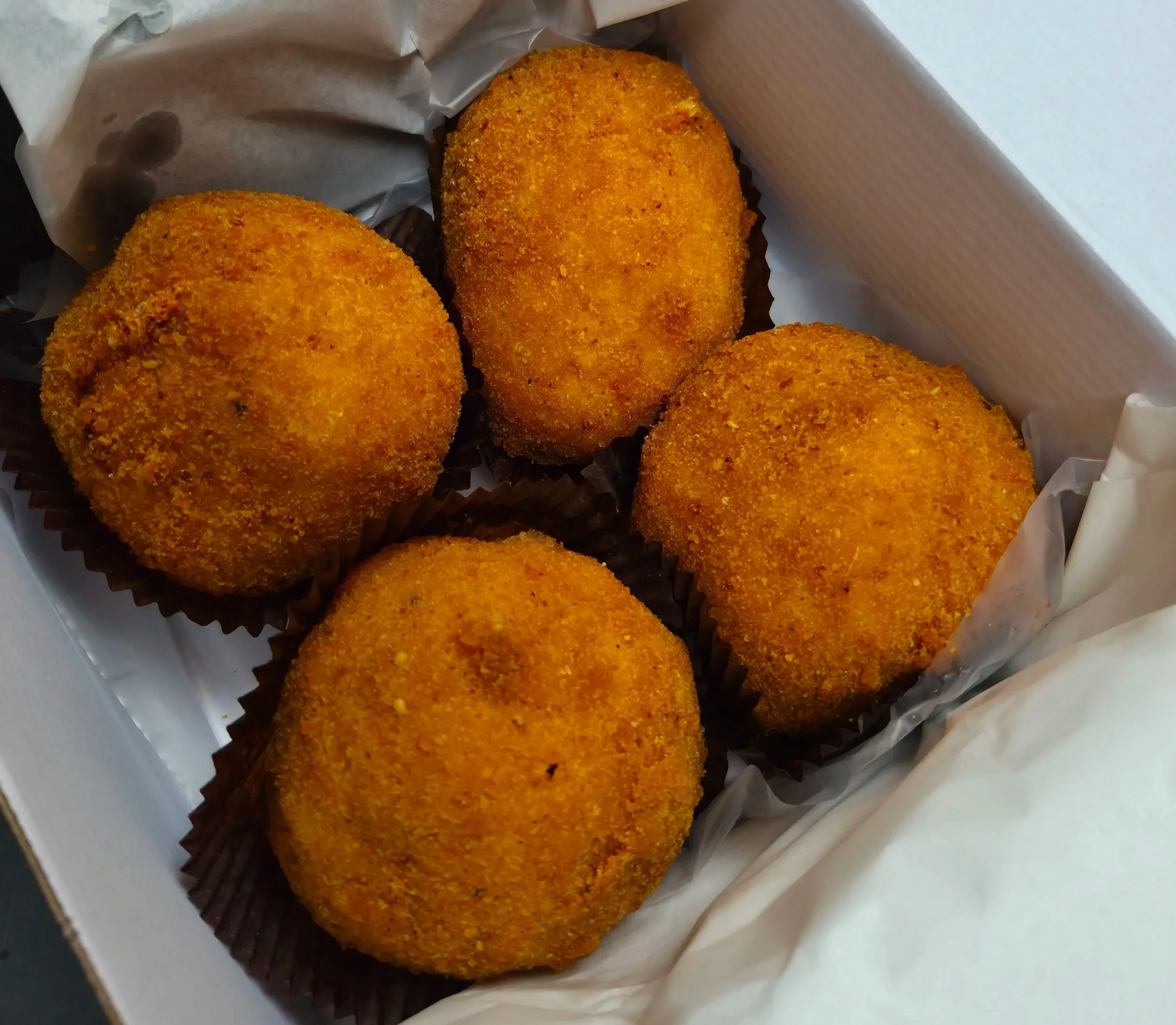
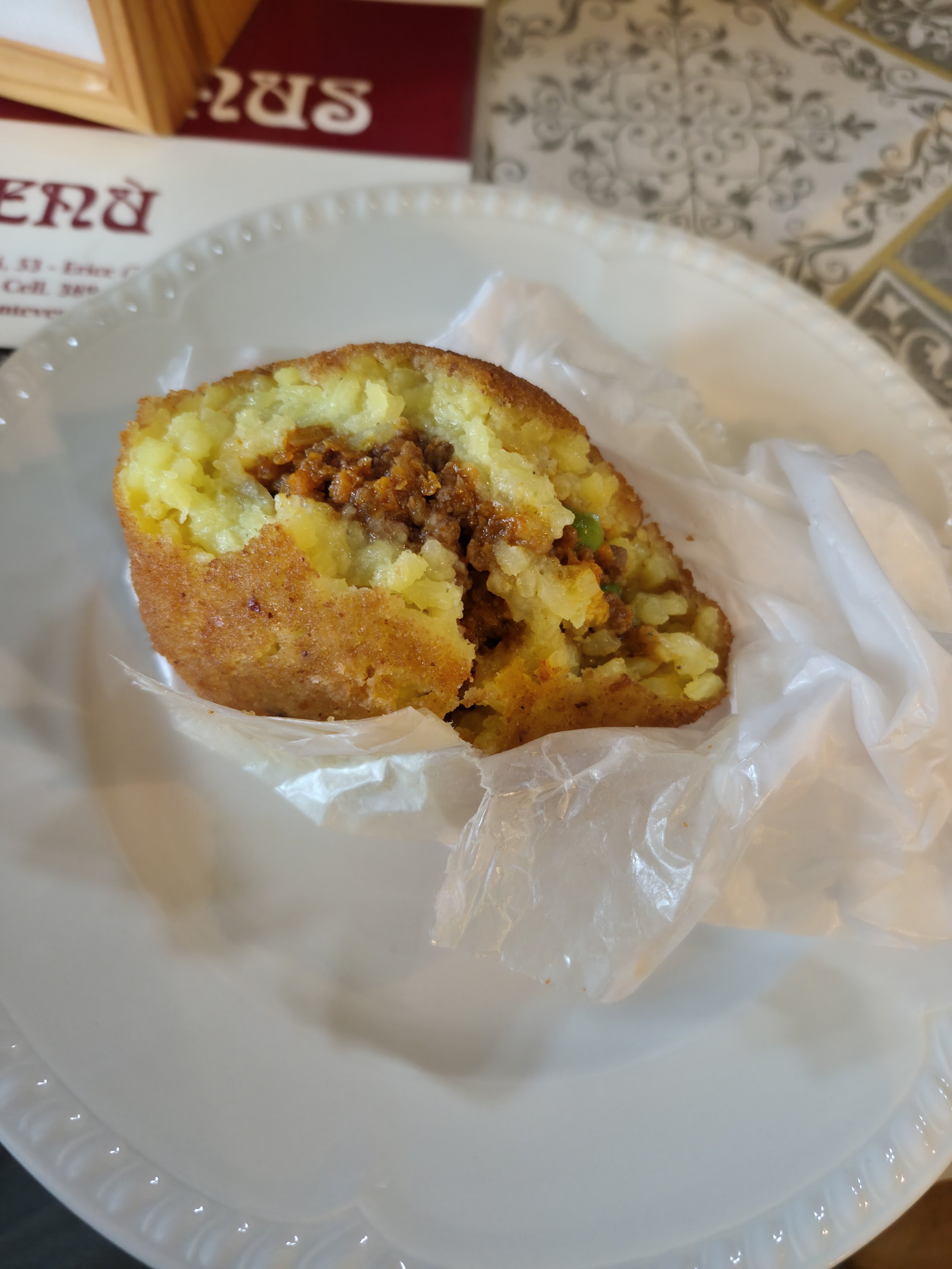
Originally dating back to Sicily’s Arab period, arancini started as a practical solution. Rice flavoured with saffron, filled with meat or vegetables, then shaped and fried to make it portable. Over time, they became a staple street food.
I had them everywhere, but the standout came from Erice, at the sister café of Ristorante New Venus. A ragù de carne arancini that genuinely felt like it was going to fall apart from the amount of filling inside. As you broke into it, the sauce pushed its way out, rich, and full of flavour. The rice was perfectly balanced, not too dry, not overly soft.
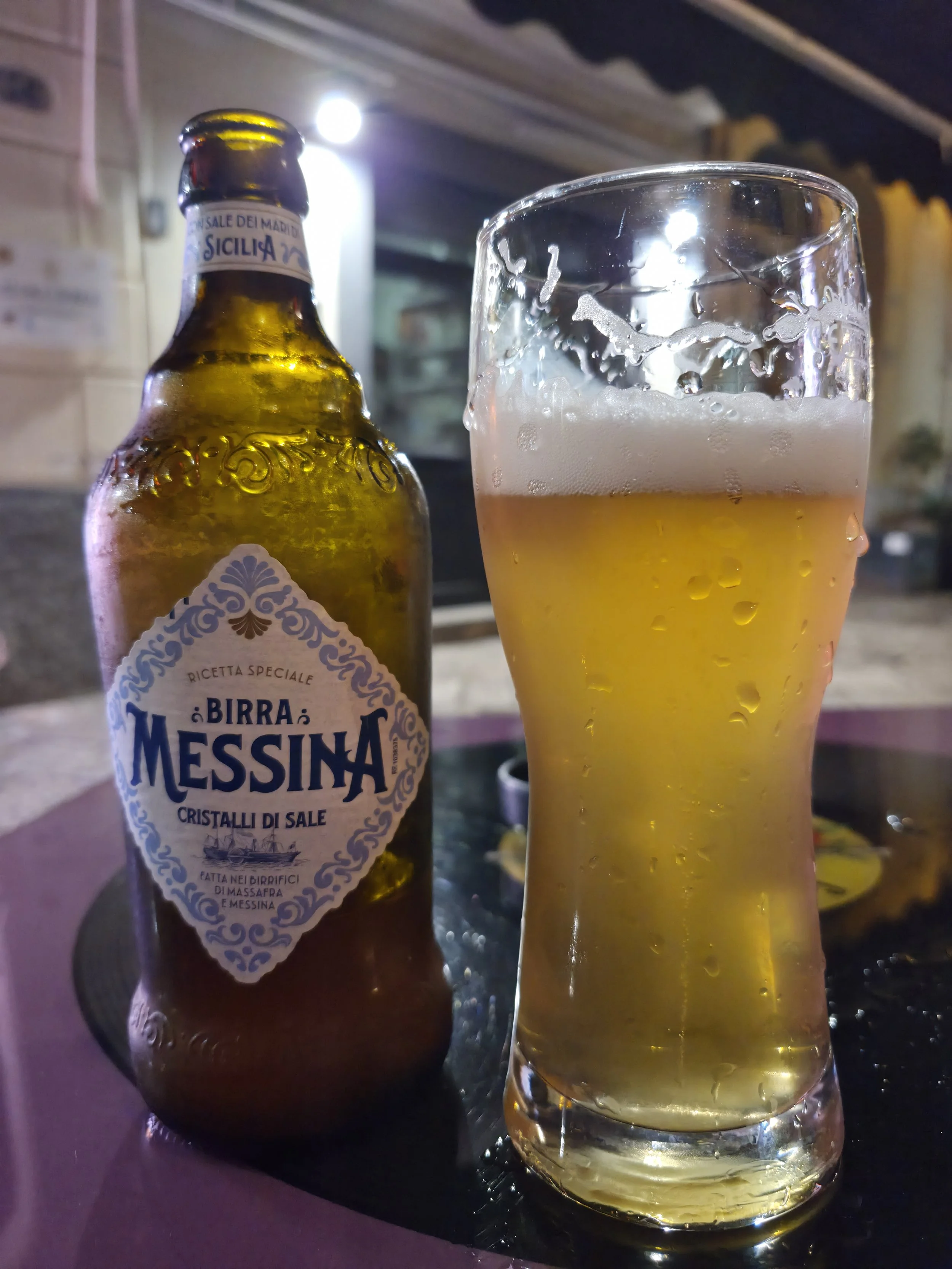
And then there was Messina. On the surface, it is just a beer, but in reality, it carries a bit more weight than that. Birra Messina was originally founded in 1923 in the city of Messina, but its story is tied closely to resilience. After years of operation, the brewery eventually shut down in the early 2010s, a casualty of wider industry consolidation and what followed was former workers refusing to let the identity of the beer disappear and went on to create a cooperative, keeping the spirit of Messina alive even when the original production had stopped.
Crisp, lightly malty, with just enough bitterness to cut through the heat, it became a constant companion throughout my time on the island. If you’re itching to try it yourself, Bonter near the Teatro Massimo di Palermo has just the goods alongside a welcoming atmosphere, friendly staff and only the best rock music airing from their record player.
Naples, Pizza and the Power of Simplicity
Naples feels like a different world entirely. It is loud, chaotic and at times overwhelming, but there is an energy to it that you do not get elsewhere. It is also the home of the margherita pizza.
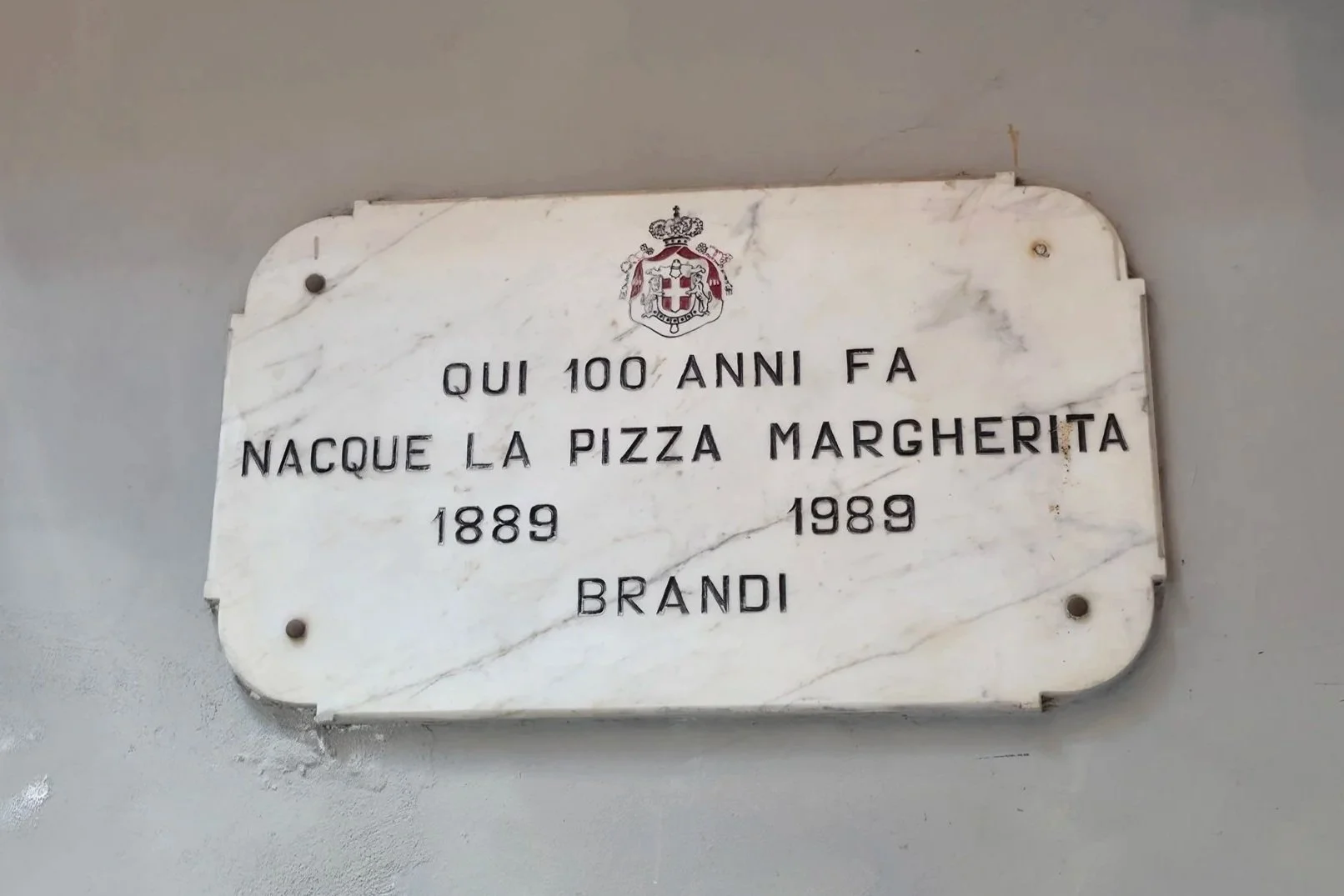
The widely told story begins at Pizzeria Brandi, where in 1889 a pizza was created in honour of Queen Margherita with tomato, mozzarella and basil chosen to reflect the colours of the Italian flag. Whether the story is slightly romanticised or not, it has become part of Naples’ identity. Outside the restaurant, there is a plaque dedicated to that moment. It is easy to walk past without thinking too much of it, but when you stop and read it, it does carry a certain weight. You are effectively standing at the claimed birthplace of one of the most globally recognised dishes in the world. It is a small detail, but it adds context to everything that follows.
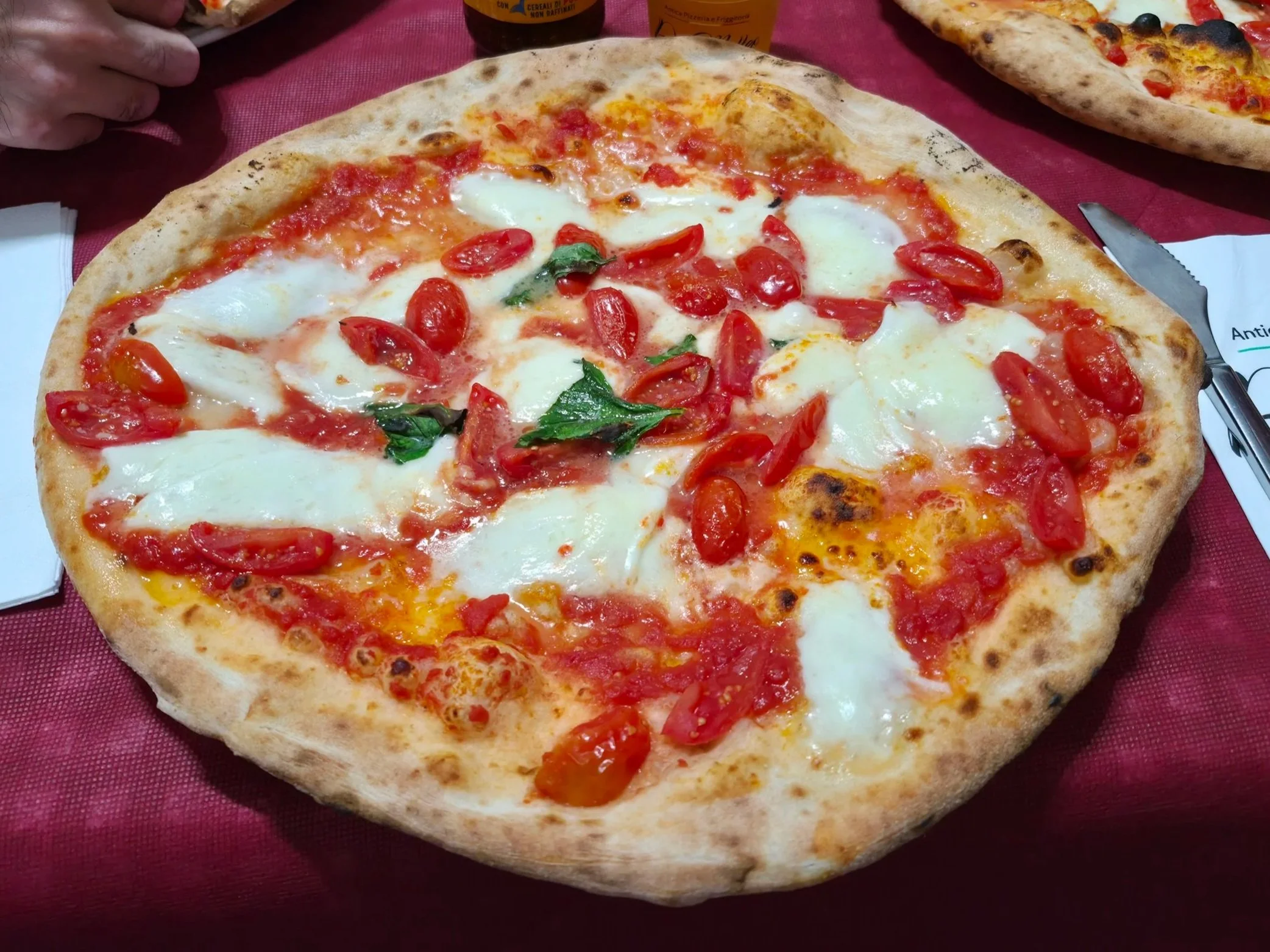
However, at Antica Pizzeria Di Matteo, near the Spanish Quarter, I had my favourite version. You walk through a small opening, past the busy street counter, and up a set of slightly questionable stairs into a dining space. The pizza itself was exactly what it should be: a soft, slightly charred base, fresh tomato, creamy mozzarella with no unnecessary toppings. There’s no overthinking and just balance.
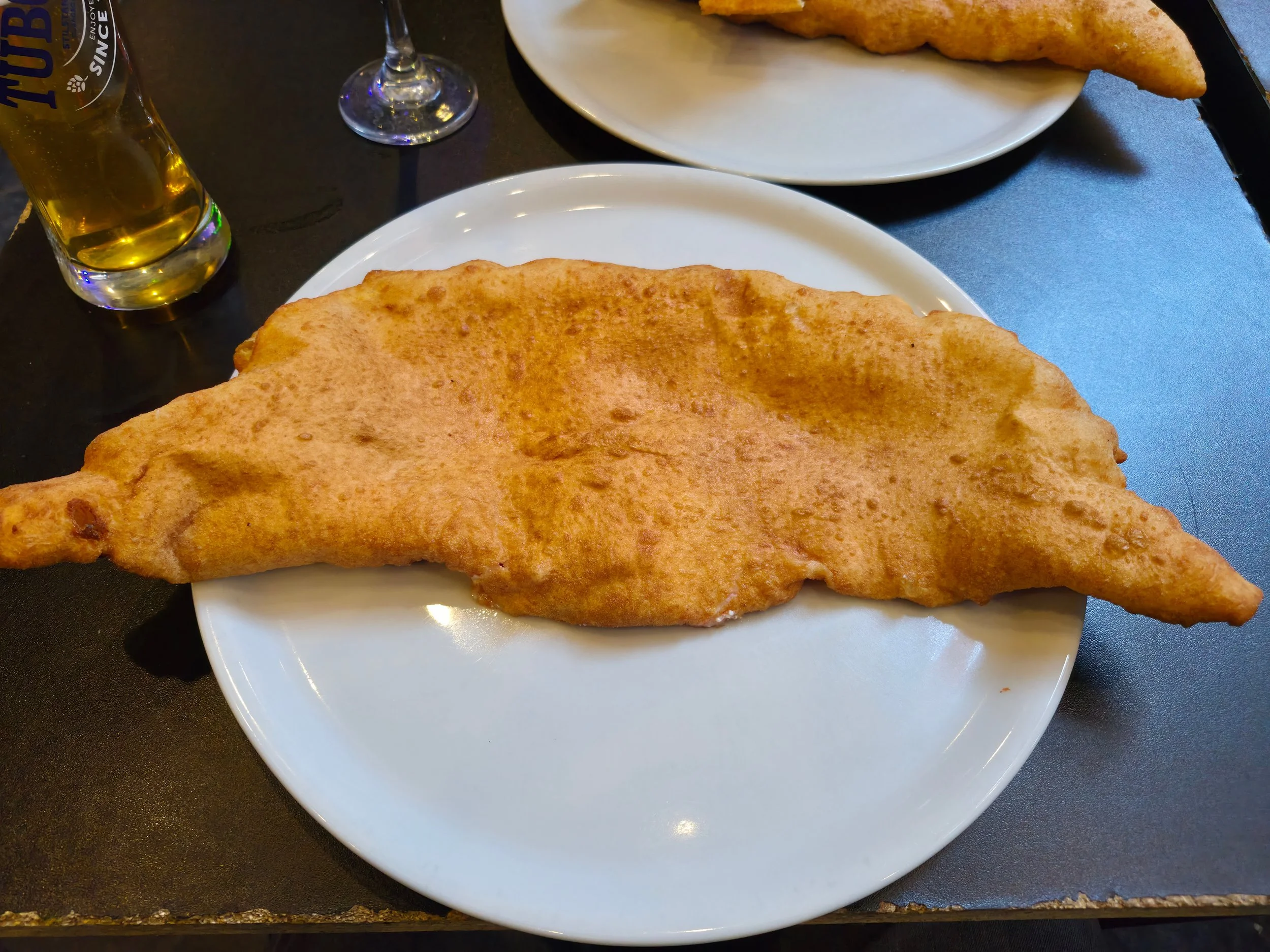
Pizza fritta was another standout. Often described as the food of the people, it originated as a cheaper alternative when ovens were not available or ingredients were scarce, and consisted of fried dough filled with simple ingredients. At Sorbillo Piccolina on Via dei Tribunali, it was messy, hot, and completely worth it. The staff were chaotic, loud and slightly overwhelming, but the food makes it worthwhile. Just make sure you ask for extra napkins, you’ll need them.
Salerno, Lemons and Limoncello
Before Rome, I stopped briefly in Salerno along the Amalfi Coast. This area is defined by its lemons. The Sfusato Amalfitano variety grows on steep terraces and has been cultivated since at least medieval times. Historically, they were even used to help prevent scurvy among sailors and from these lemons comes limoncello. Its origins are debated with some claiming it was created by monks, whilst others say local families developed it as a way to use excess lemons. Either way, it has become synonymous with the region.
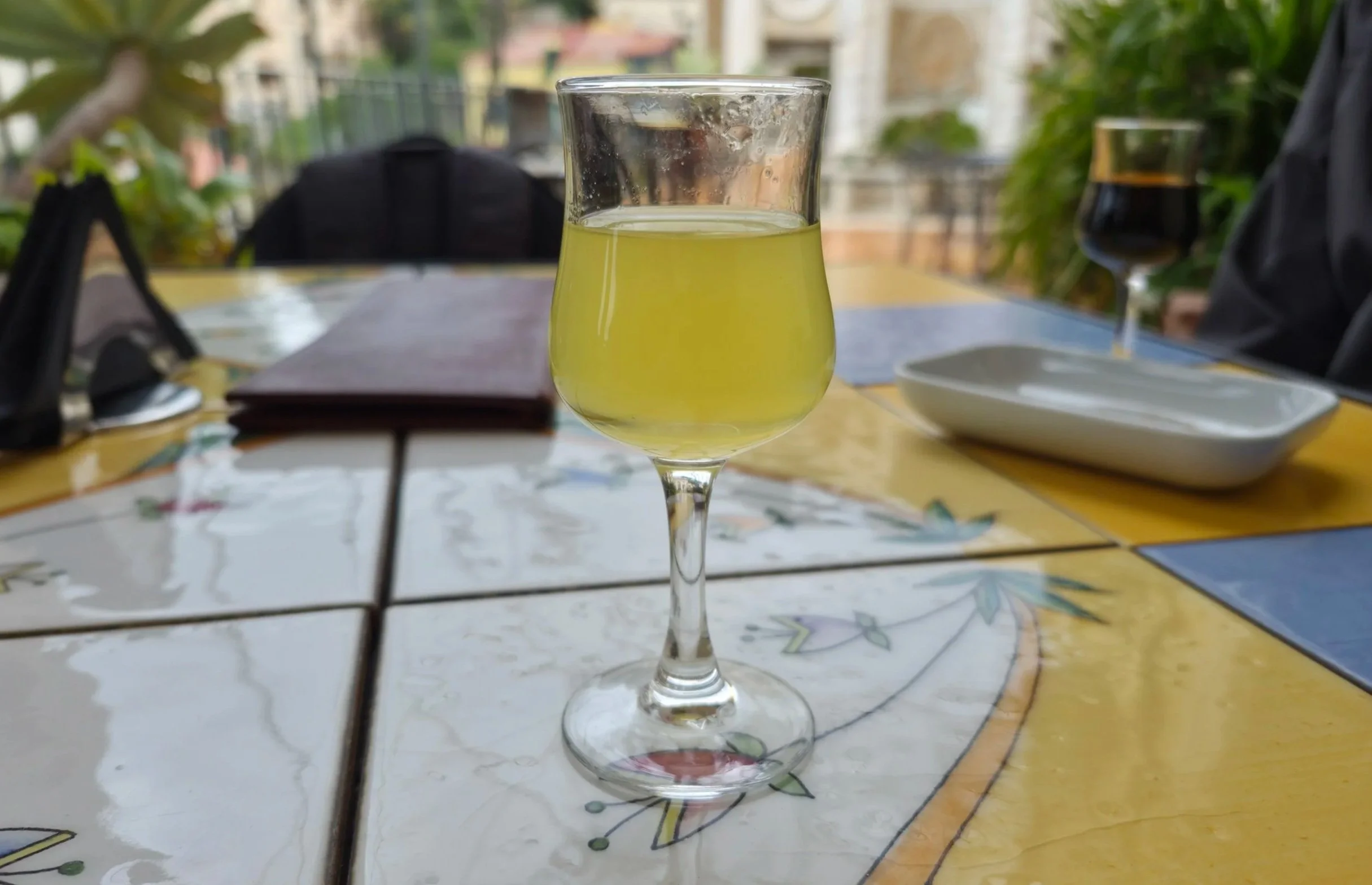
At the Garden of Minerva, a botanical garden that once supported Salerno’s medical school, one of the oldest in the world, I tried a homemade version from the local tea emporium that sits within the museum. It was thicker than expected, with a balance between sweetness and bitterness that made it far more enjoyable than the overly sugary versions you often find elsewhere.
Rome, Where Food and History Collide Quietly
Rome is overwhelming in all the ways you expect from its rich history to its enormous hordes of tour groups, but its food often sits in quieter corners. Via dei Banchi Vecchi is one of those places. Tucked away just a short walk from the Tiber, this street has a history that stretches back to Renaissance Rome. The name itself comes from the “banchi”, or benches, used by bankers and money changers who operated here when the Vatican’s financial activity spilled out into the surrounding streets. It was effectively part of Rome’s early financial district, linking commerce, religion and daily life in a way that feels very Roman. Today, it has softened into something far more relaxed. Small restaurants, wine bars and artisan shops line the street, but it still carries that sense of history. It feels lived in rather than curated, which makes it a perfect place to step away from the heavier tourist areas.
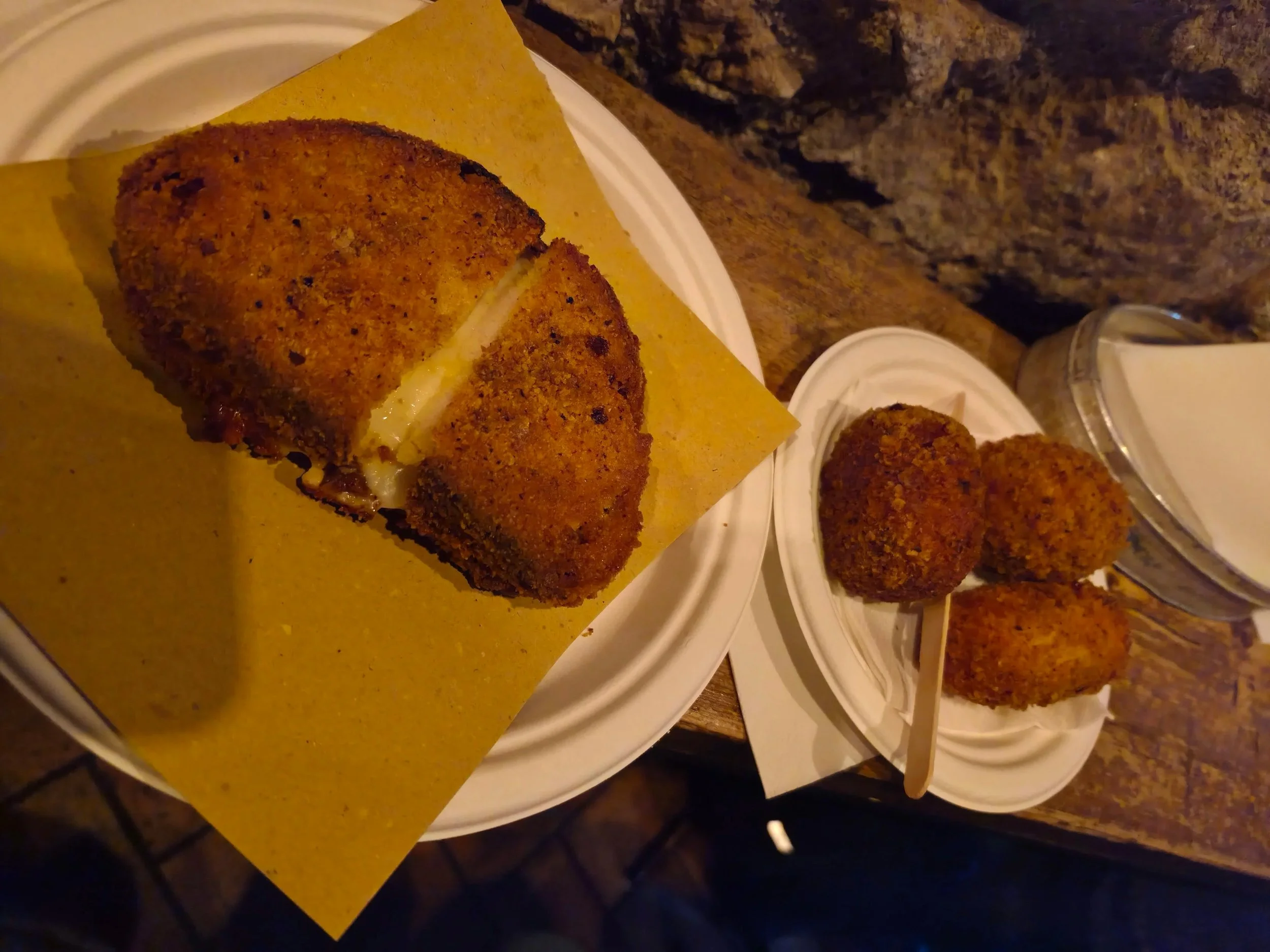
At Supplizio, a local star for quick Roman street food, I tried mozzarella in carrozza, a fried sandwich filled with mozzarella and anchovies. Alongside it, their amatriciana: tomato, pecorino, and guanciale. It’s nothing complicated, but everything is done properly and for ten euros, it felt like a bargain in a city that can quickly become expensive.
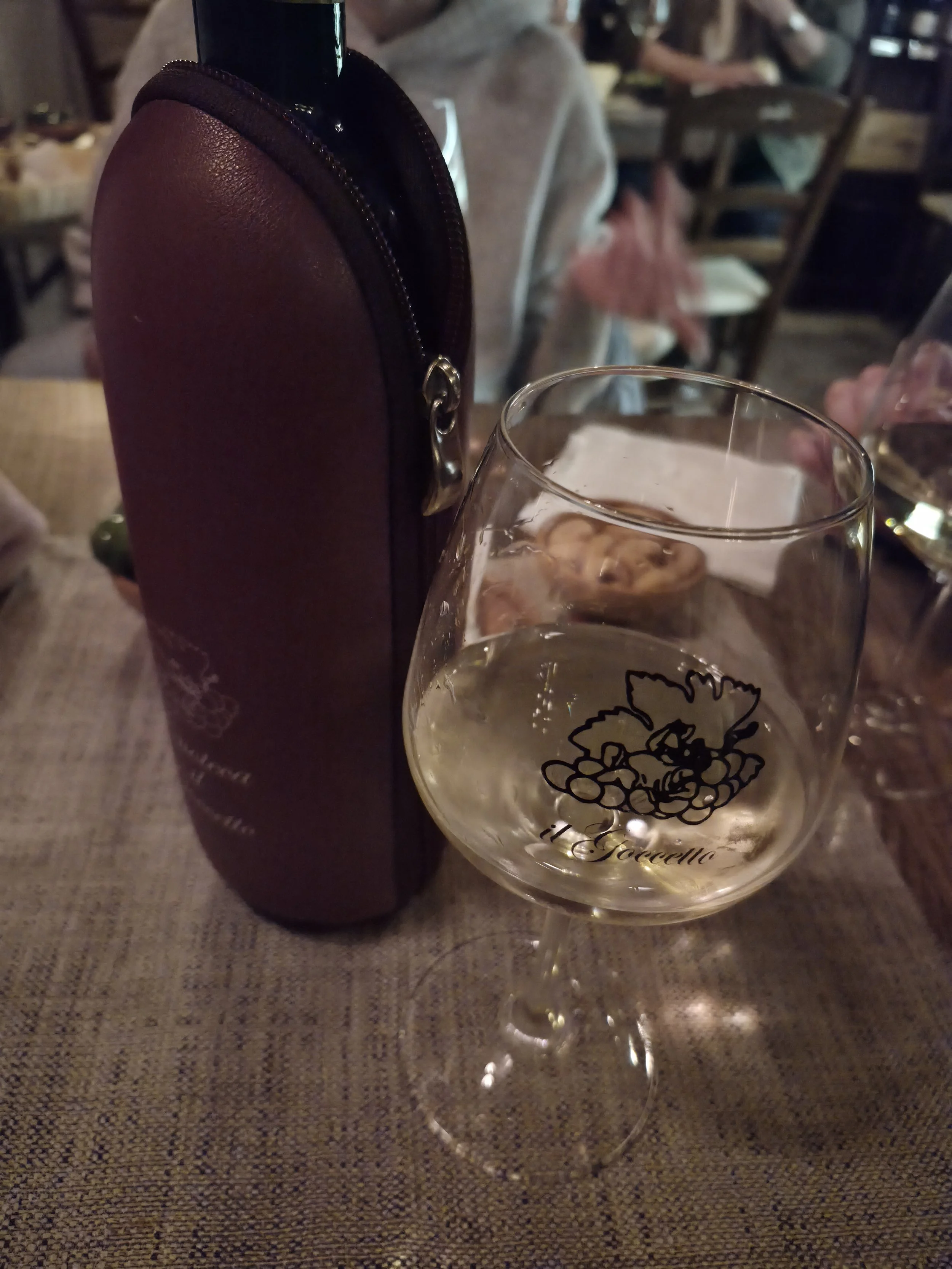
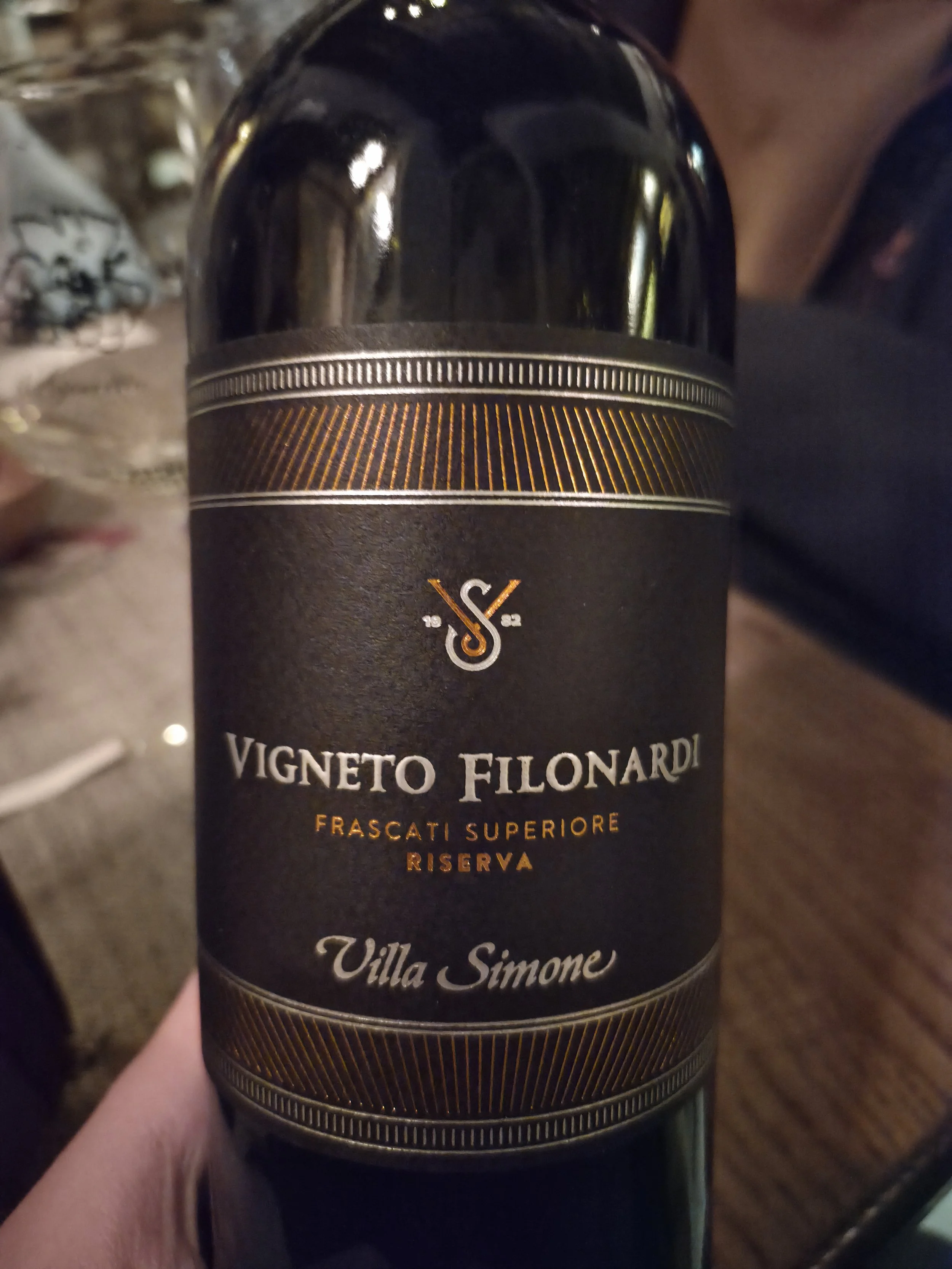
Just down the road, Il Goccetto offered something different. It’s a small wine bar with an enormous selection, but no pretence. I went for a Frascati Superiore from Monte Porzio Catone, just outside of Rome. This wine has roots going back to ancient Roman times, where it was consumed by emperors and later became a favourite among Renaissance popes. It was crisp and dry, with a clean acidity and subtle citrus notes, it paired perfectly with olives, cutting through the saltiness without overpowering it. It is the kind of wine that quietly disappears if you are not paying attention.
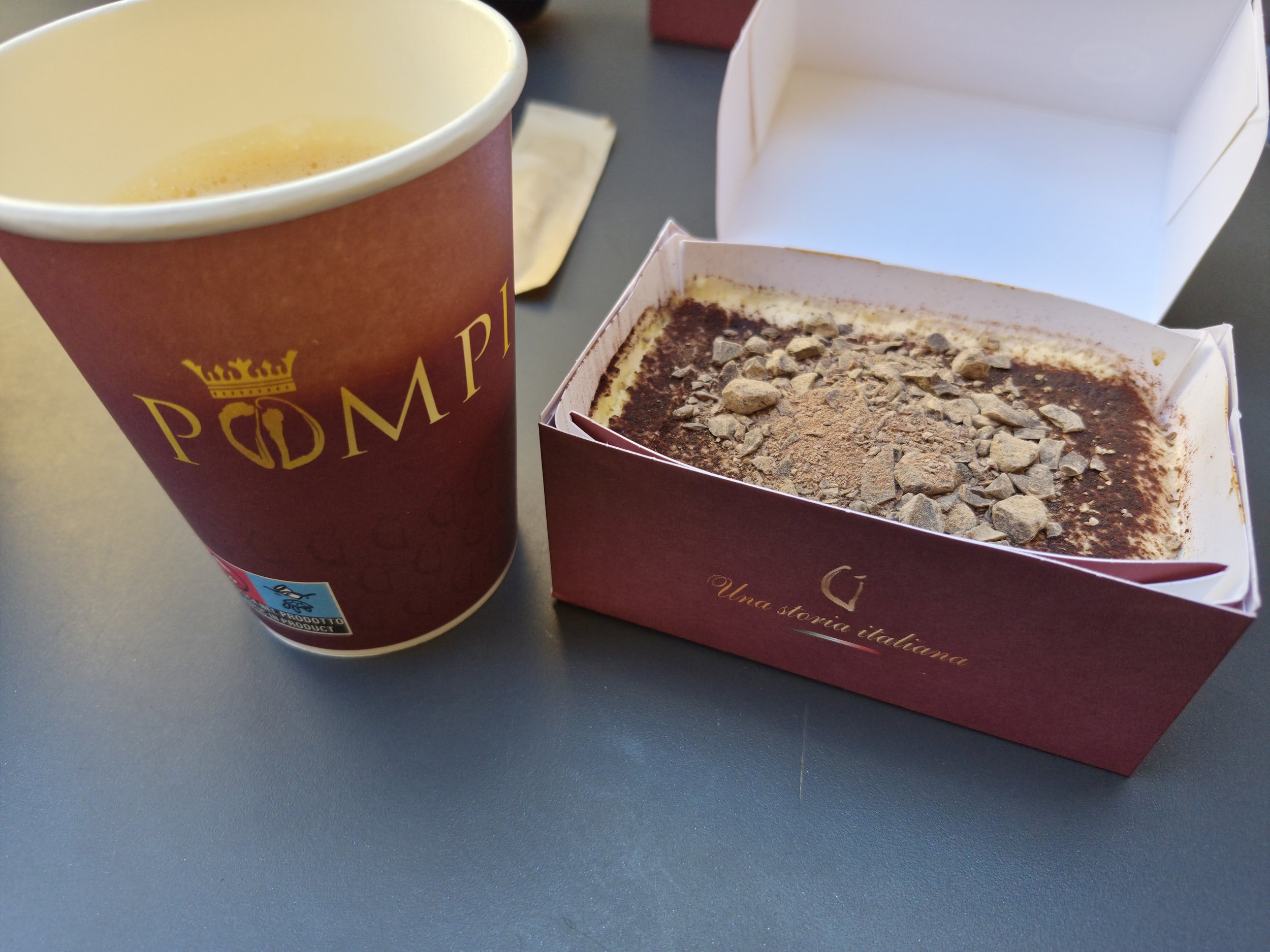
Tiramisu might have originated in Veneto, but Pompi has turned it into something of a Roman institution. What began in 1960 as a simple dairy and bar slowly evolved into a destination in its own right, particularly from the 1980s onwards when its tiramisu recipe started gaining serious attention. Over time, Pompi didn’t just serve tiramisu, it helped standardise what many people now expect from it.
Their approach leans heavily into balance and consistency. The mascarpone is rich but not overly dense, whipped to a point where it holds structure without becoming heavy. The savoiardi biscuits are soaked just enough in coffee to carry flavour without collapsing into mush, which is where a lot of lesser versions fall apart. The coffee itself is present but controlled, giving depth rather than bitterness, while the cocoa dusting on top adds a slight dryness that pulls everything back together.
It is very easy for tiramisu to lean too far into sweetness or alcohol or coffee, but this stayed right in the middle, balanced, refined, and gone far quicker than expected.
Florence, History on the Walls and in the Glass
Florence shifts everything again. This is a city that takes its meat seriously, but it is also deeply tied to wine culture with Tuscany as a region being built on it.
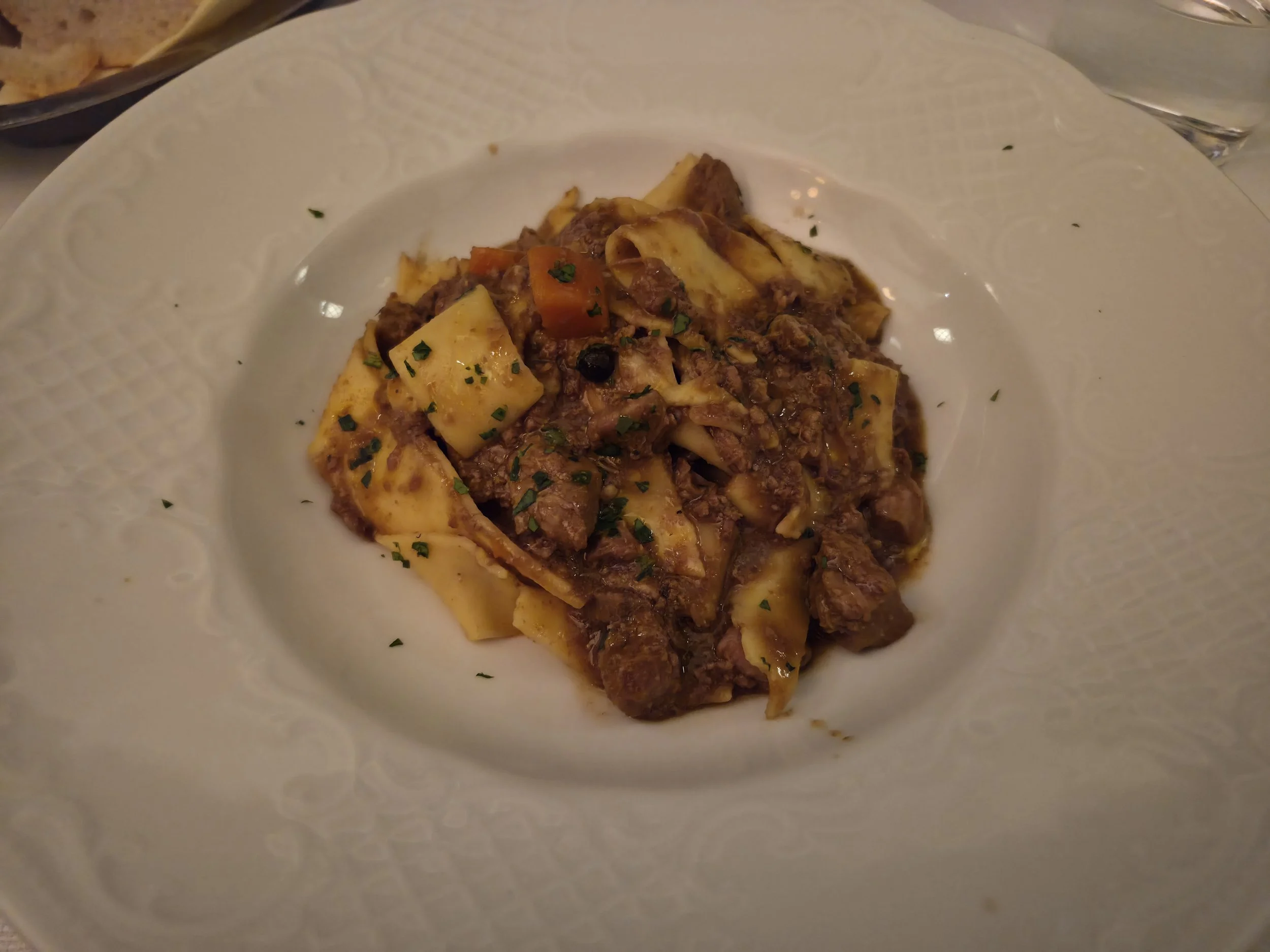
At Antico Ristorante Paoli 1827, I tried on of Florence’s signature dishes: pappardelle al cinghiale. Established in 1827, Antico is widely recognised as the oldest restaurant in Florence still in operation. There is something quite grounding about eating a traditional dish in a place that has likely been serving variations of it for generations. The pappardelle al cinghiale itself was exactly what it should be, a wide egg pasta dish paired with a slow-cooked wild boar ragù. It was rich, slightly gamey, deeply satisfying.
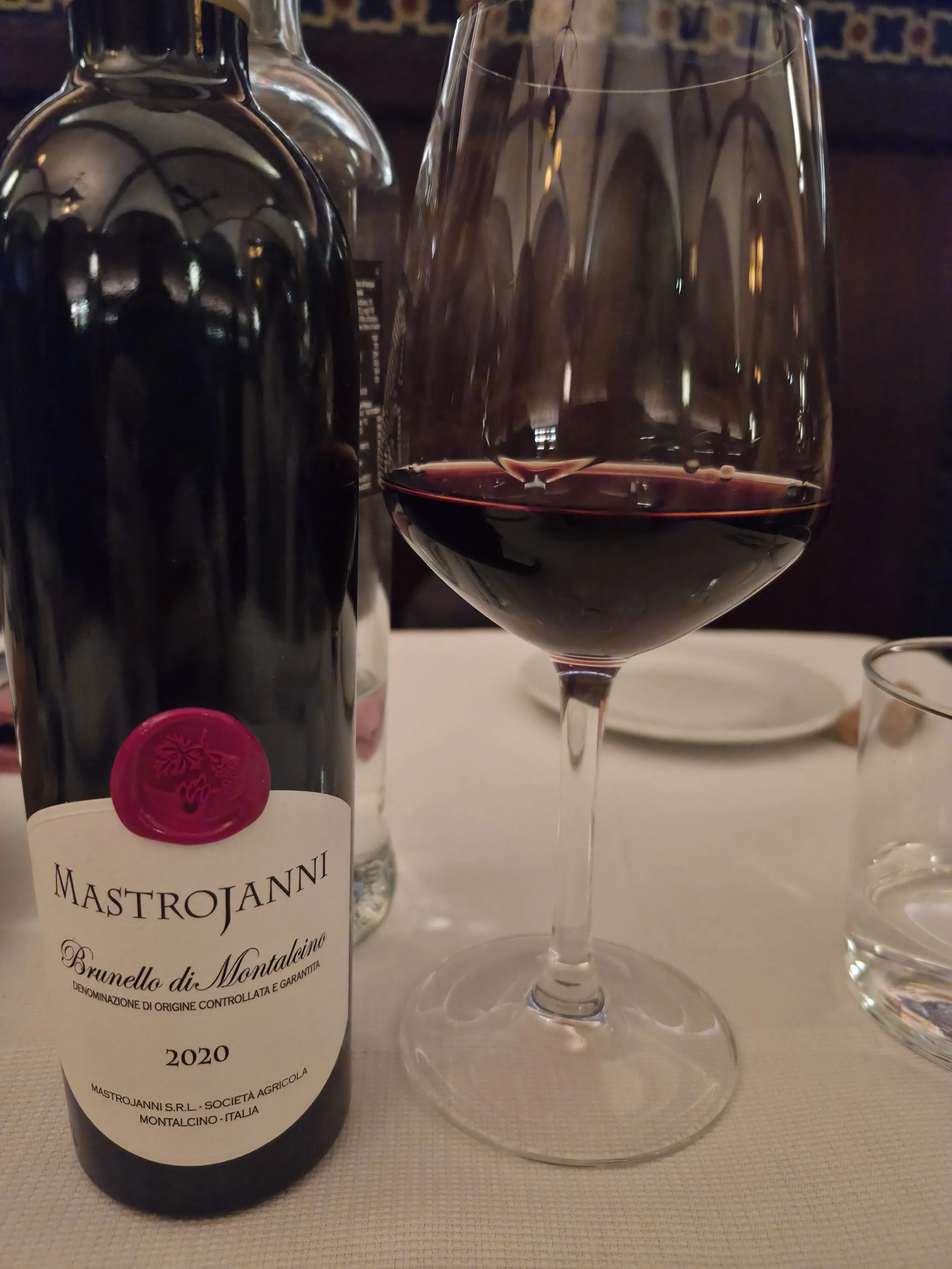
Alongside it, I had a Brunello di Montalcino, and this is where the wine really stood out. Brunello is made from 100% Sangiovese, specifically the Sangiovese Grosso variety. It was first developed in the 19th century in the town of Montalcino and has since become one of Italy’s most prestigious wines. Regulations require it to be aged for a minimum of four years before release. Pairing it with the wild boar made complete sense and the richness of the wine complimented the deep flavours of the meat.
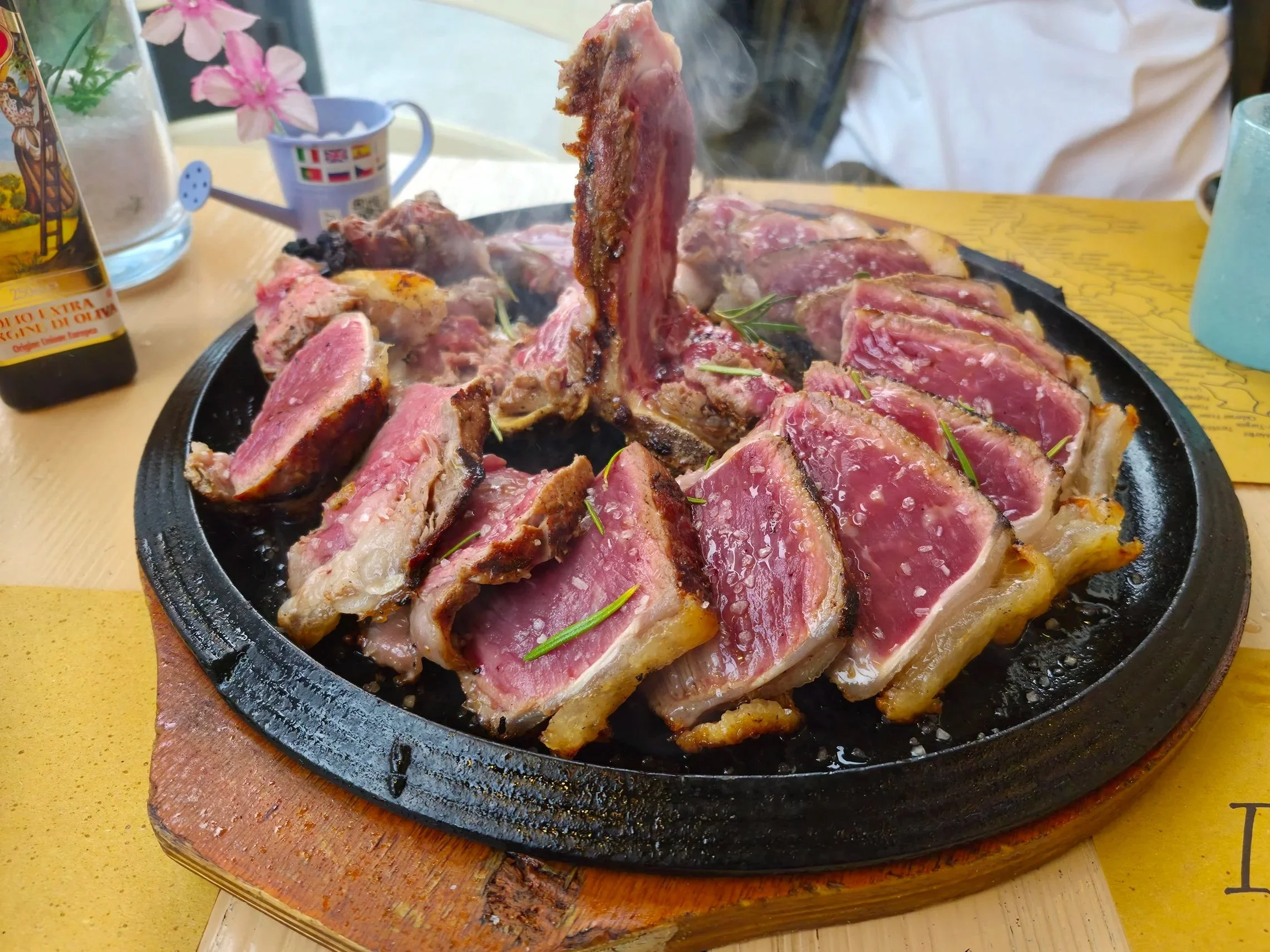
The following day brought the Bistecca alla Fiorentina,or steak Florentine as its also commonly known by, at Trattoria Vecchio Mercato. A 1.5kg T-bone steak, shared between three of us, this unit came from the Chianina breed of cattle, one of the oldest in the world. Cooked rare, seasoned simply with salt and a drizzle of olive oil, it arrived sizzling and unapologetically simple. It was one of the best steak dishes I have ever had and is arguably the one dish I think about the most.
Bologna, Ragù and Ending with Patience
Bologna was the final stop from a food perspective and is where ragù alla Bolognese originates. It is very different from what most people expect as there is far less tomato, and far more emphasis on the meat itself. It is cooked slowly with soffritto vegetables, wine, and often a small amount of milk to soften the acidity.
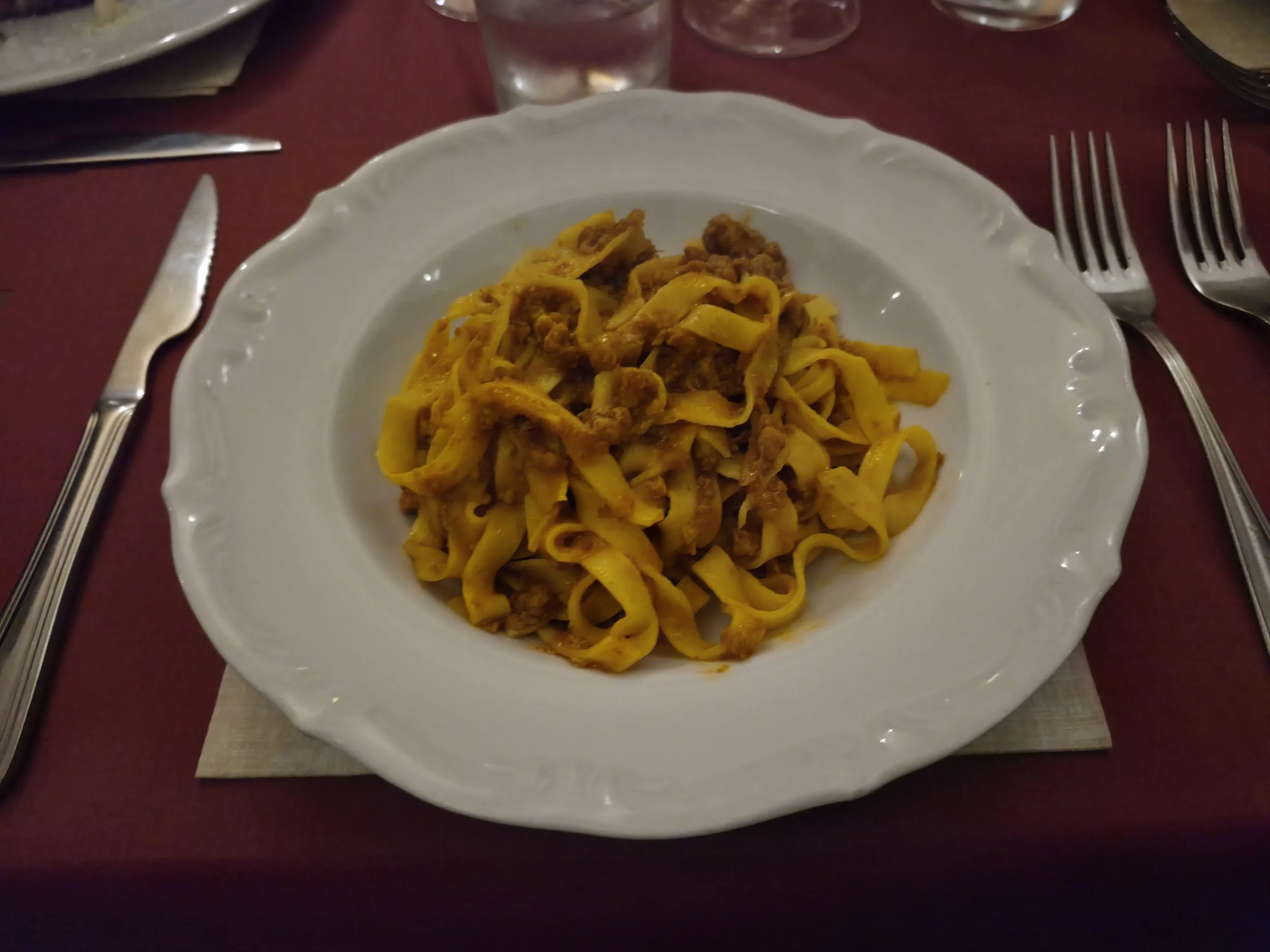
At La Taverna Di Roberto, I had it in its proper form. Thick, rich, and deeply layered, it was the kind of dish that clearly takes time to get right. In Bologna, every family has their own variation, but the fundamentals remain the same. And at La Taverna Di Roberto, you can tell just by the look of it that it was not rushed, and it does not need to be.
It felt like the right place to end the food side of the journey.
Final Thoughts
Italy changed how I think about its food and not because it was surprising, but because it was consistent.
Every region has its own identity, shaped by history, geography, and tradition, where nothing feels forced, and nothing feels like it is trying to cater to an outside audience. It simply exists as it always has. You can eat Italian food anywhere in the world, but you do not really understand it until you experience whilst moving between regions, seeing how dishes change, and understanding why they exist.
If you take anything from this, it should be simple: eat locally, take your time, and pay attention. Italy rewards that approach more than most places and I already know this is a trip I will eventually repeat.
—
From the streets of Palermo to the markets of Bologna, this journey through Italy was as much about what I saw as what I tasted. If you want to see the coastal views, historic streets, and the moments in between that brought this food tour to life, take a look at my Italy photo gallery.
If you enjoyed this story, you might like some of the other adventures I’ve shared:


Written by Max Biddlecombe following a trip through Italy in March and April 2026. Max is a UK-based travel photographer and writer who documents the world's overlooked places - from obscure territories and geopolitical curiosities to cities most guidebooks skip straight past.