Concrete Dreams: Bratislava’s Petržalka and Eastern Bloc Brutalism
There’s something strange about arriving somewhere that feels both familiar and alien. That’s how I felt stepping off the tram into Petržalka at the end of August 2025, the southern district of Bratislava that’s home to the largest collection of socialist-era tower blocks in Central Europe. From above, the district stretches like a concrete ocean, punctuated by flashes of colour from bright, freshly painted facades. Walking among those blocks, it’s hard not to marvel at the scale and uniformity - a monument to a time when urban planning was as much about ideology as it was about housing.
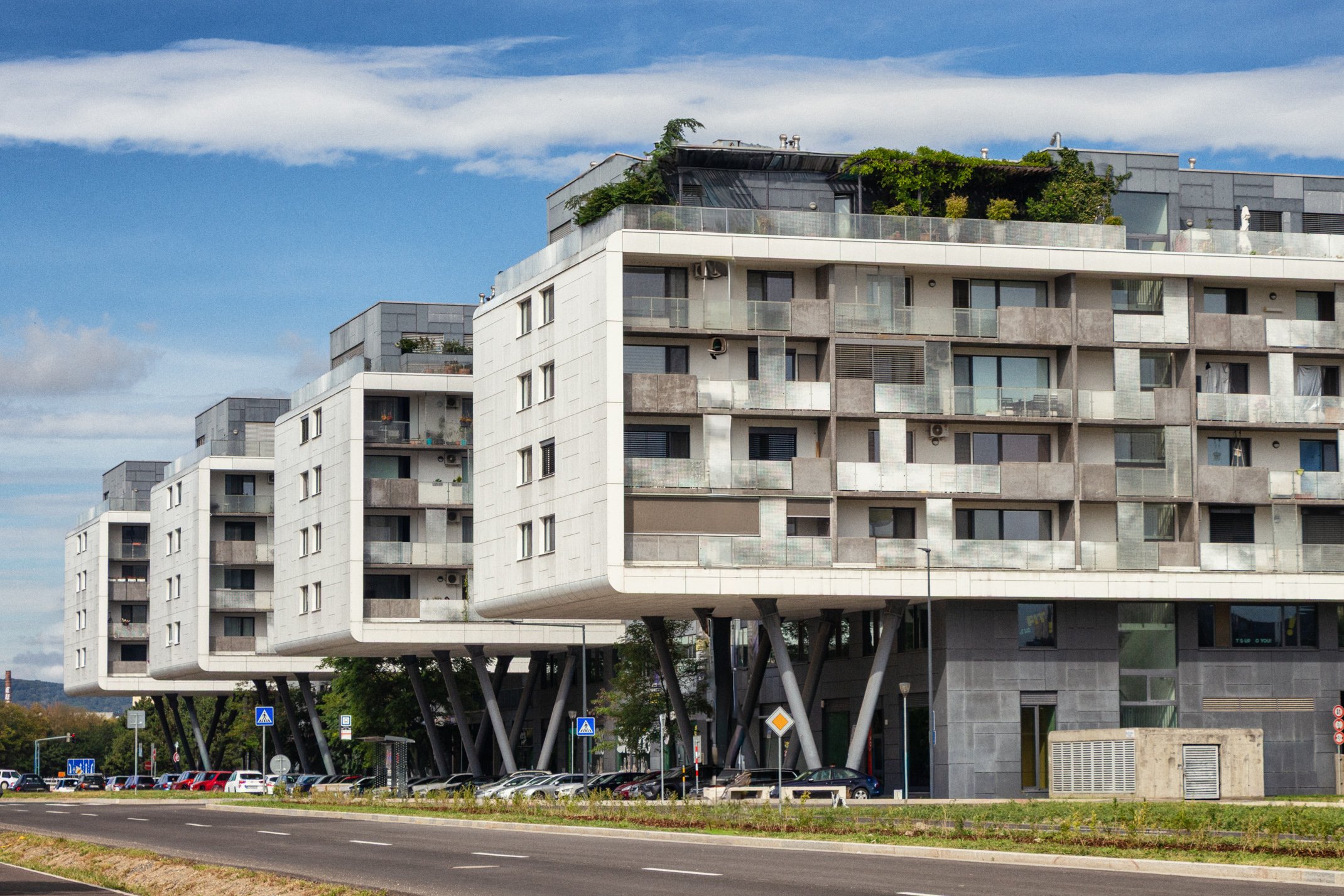
Petržalka is probably not on your ‘to-do’ list if you’re visiting Bratislava, it’s certainly absent from most guidebooks or brochures. But if you’re drawn to Brutalist architecture, or intrigued by how a once-obscure style dominated entire cities under the Soviet Bloc, it’s worth the tram ride. The No.3 tram from the city centre and near the Old Town hops across the bridge into Petržalka in minutes, and for just €1.80 for an hour-long ticket, it’s not exactly breaking the bank.
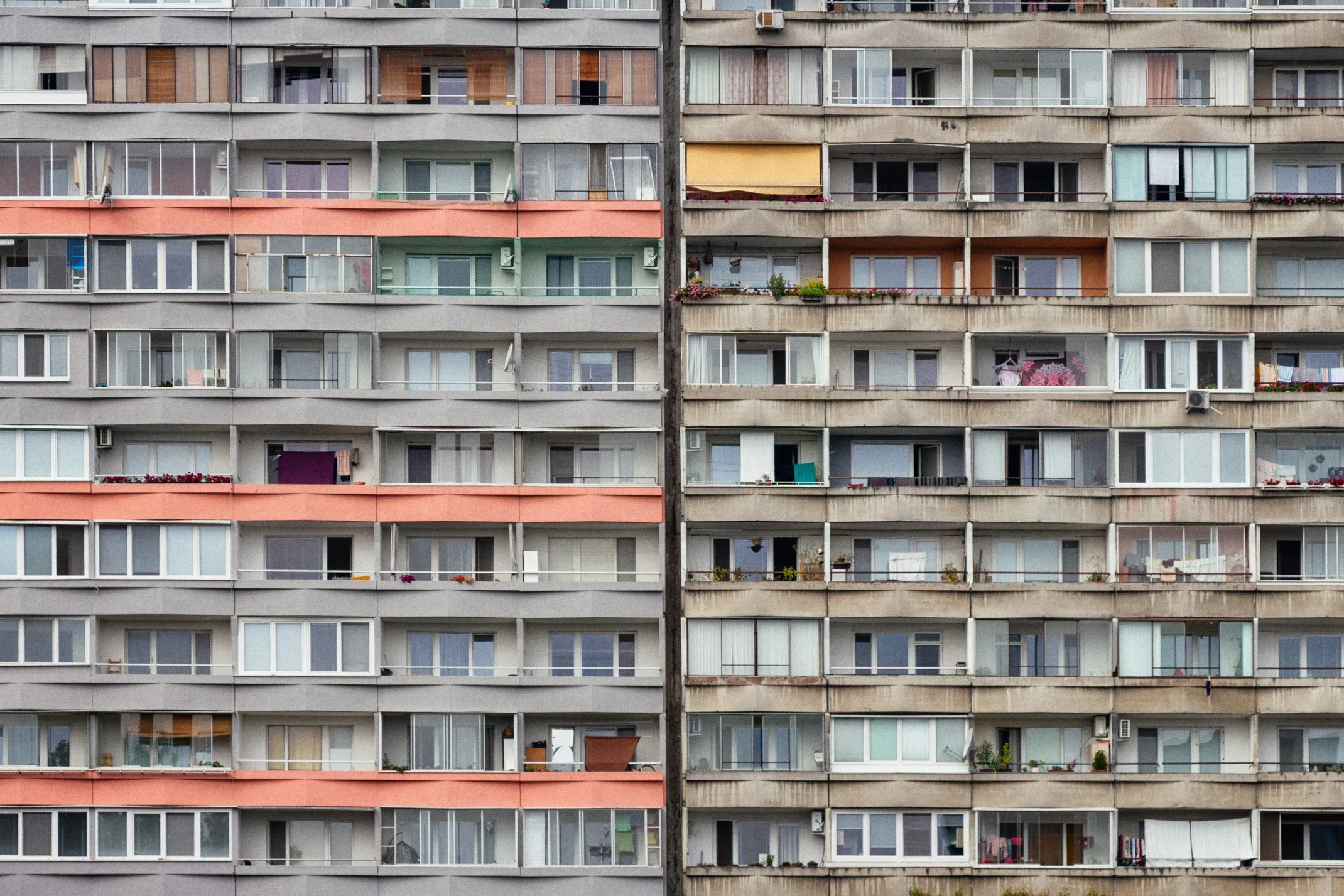
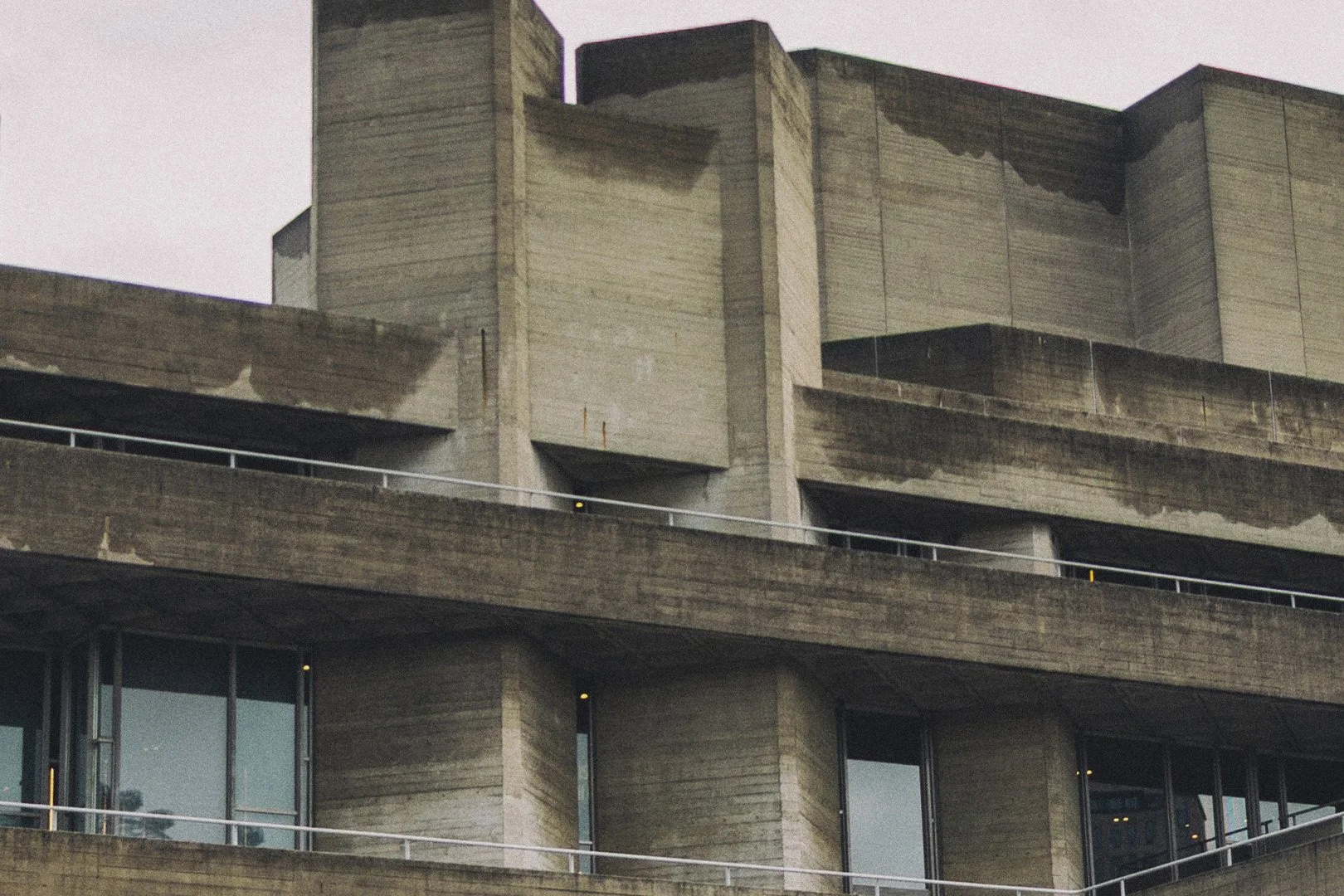
The architecture is raw and uncompromising, and these are structures of béton brut, pared-down forms with minimal decorative flourish. Whole streets are lined with identical blocks, their repetition a little unsettling. And yet, within that monotony, there are human touches: facades painted in bright orange, yellow, and blue. The colours transform the drab concrete into something almost playful, a strange contrast to the severity of the original design.
Walking among the blocks, I began to notice subtle differences between the buildings. Some had the characteristic underpass “holes” beneath their bases, creating awkward, cavernous spaces that seemed to stretch forever. Others extended in long linear forms that could easily be mistaken for a single structure from a distance, their uniform repetition emphasizing the sheer ambition of these estates. The patterns of windows, the arrangement of balconies, the way sunlight hit different facades at various times of day - all of it combined to create a rhythm both mechanical and strangely alive.

One of the standouts I stumbled across was Kostol evanjelickej cirkvi, a local church with a spire of raw concrete topped by a metal cross. Its sharp lines and Soviet-era aesthetic fit seamlessly among the surrounding blocks, yet it manages to command attention, a reminder that even in a landscape defined by repetition, architectural quirks can emerge. It’s the kind of structure that fascinates anyone with a morbid curiosity for Brutalism: simultaneously austere, ambitious, and a little intimidating.
Petržalka itself is a place that encourages wandering. There’s no obvious “centre” to aim for; instead, the district reveals itself in layers. Small parks tucked between blocks, children cycling on wide paths, and older residents perched on benches lend life to what might otherwise be perceived as a cold, machine-like landscape. Even the communal shops and cafés feel like attempts to soften the edges of this vast concrete experiment. I found myself pausing frequently, not just to photograph, but to absorb the way people interact with these spaces decades after their construction. The buildings are brutalist, yes, but also lived-in, humanised by the passage of time and the interventions of those who call the blocks home.
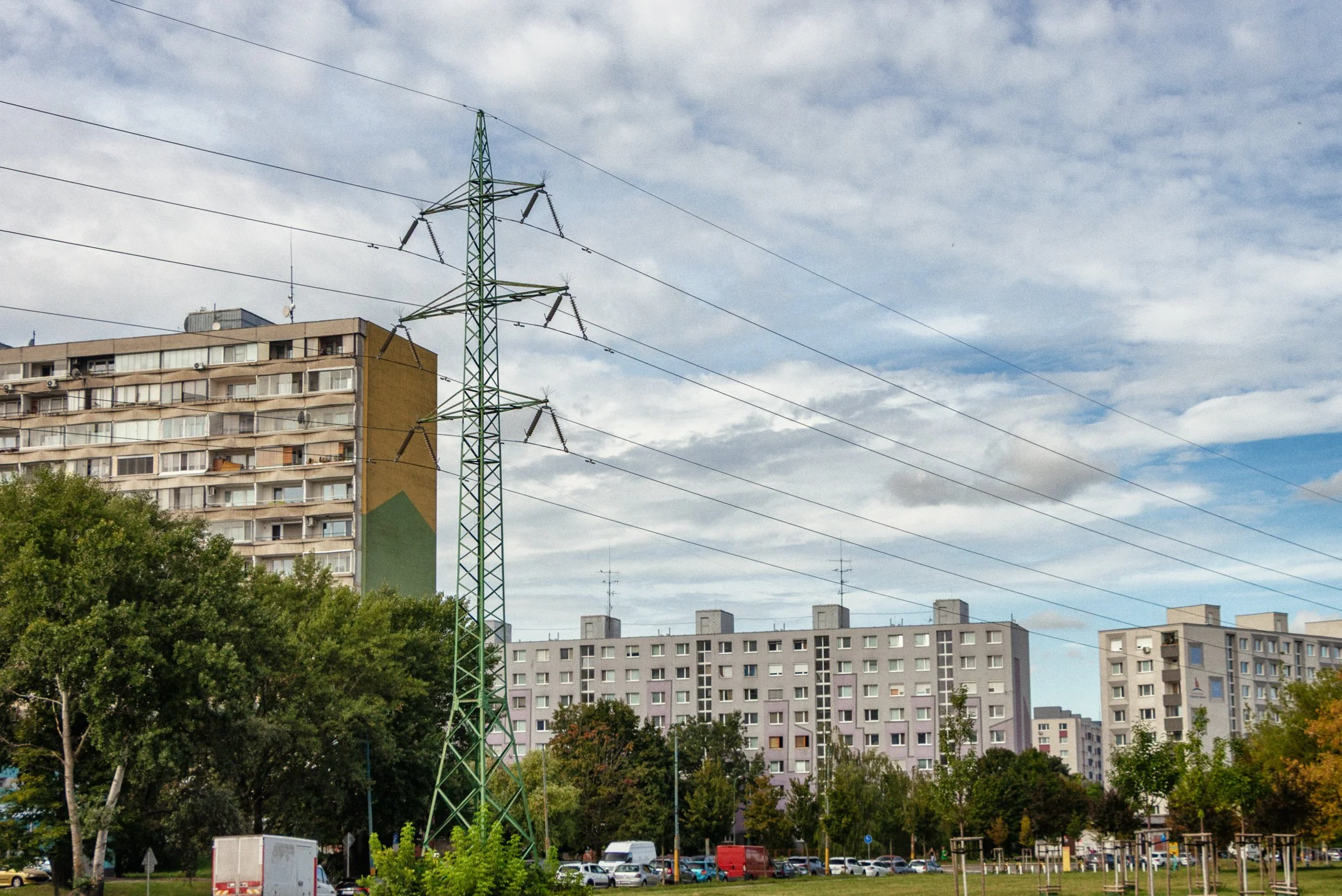
What struck me most about Petržalka is the sheer audacity of it. These aren’t small residential projects - the blocks stretch for hundreds of metres, forming entire neighbourhoods. The scale is almost overwhelming, a city within a city, built to house over 100,000 people. For someone fascinated by architecture and urban planning, it’s a rare opportunity to see how a specific style - once considered niche or avant-garde - was deployed on such a massive scale. There’s a certain morbid beauty in the repetition, the uniformity, and the stark geometry, a visual testament to the ambitions and constraints of a particular era.
Beyond Petržalka, Bratislava hides other Brutalist relics worth exploring:
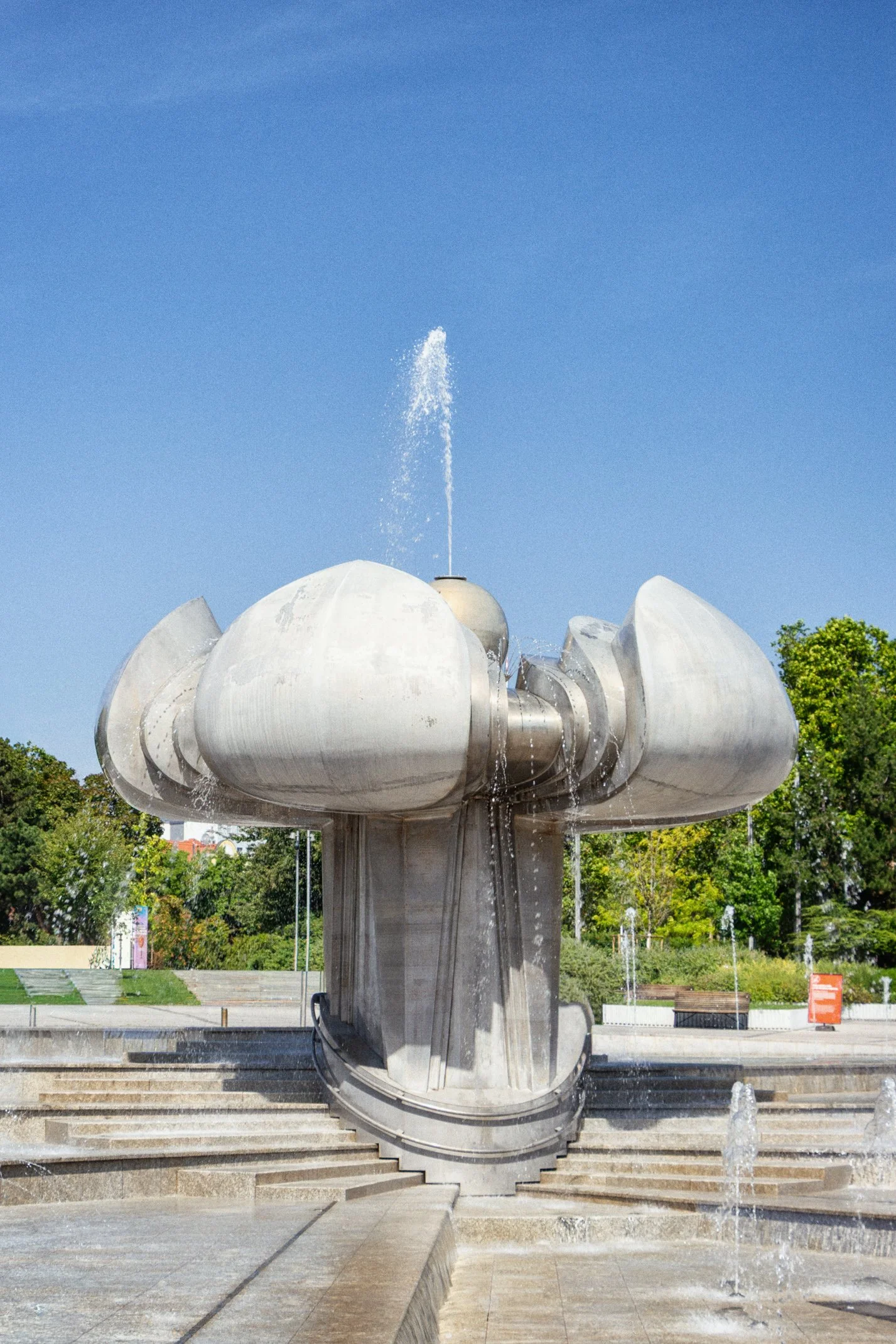
The Union Fountain, with its sharp, geometric forms, feels like a sculpture that has been frozen mid-motion.
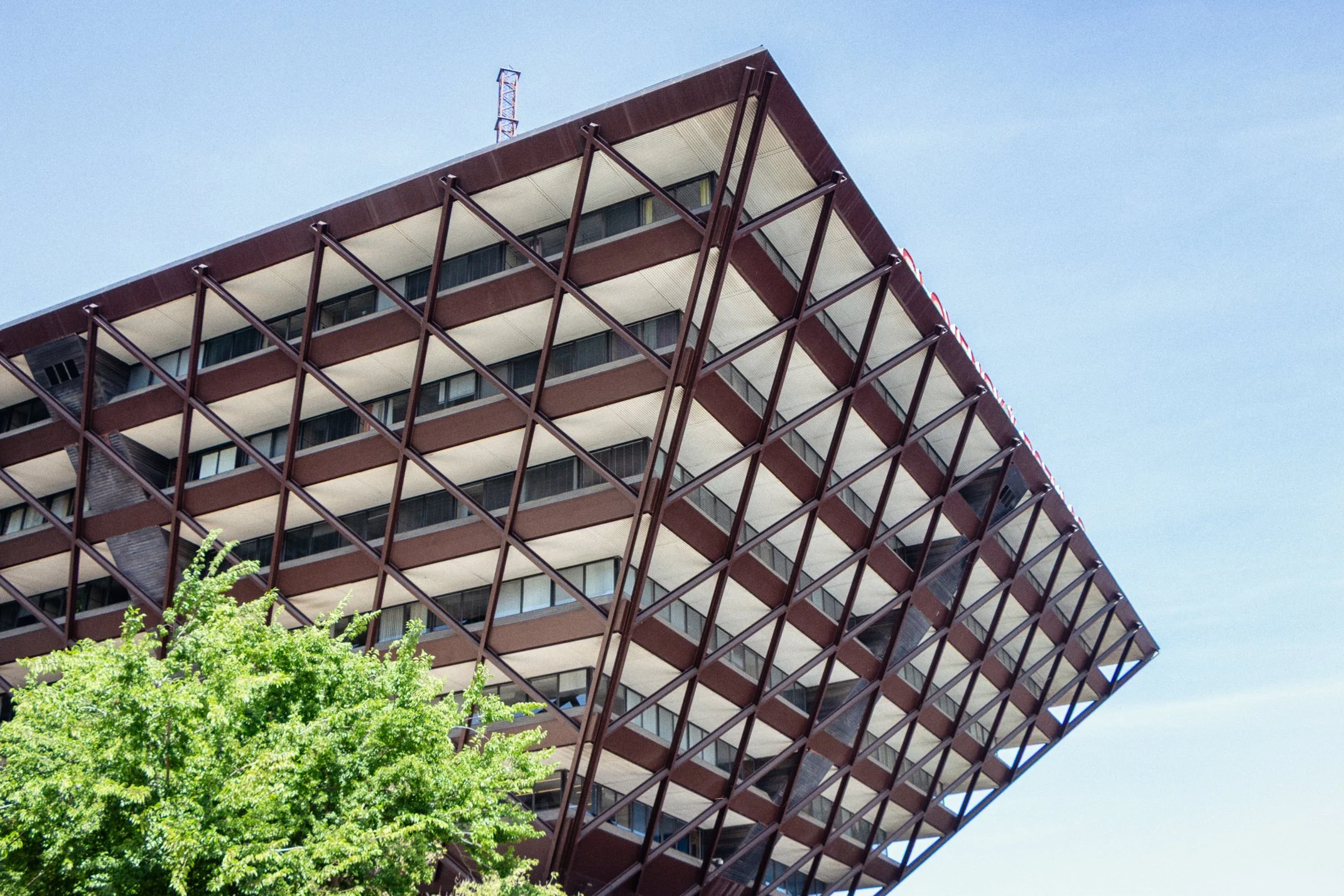
The Slovak Radio building looms with its inverted pyramid design, an architectural statement that still manages to surprise decades later.
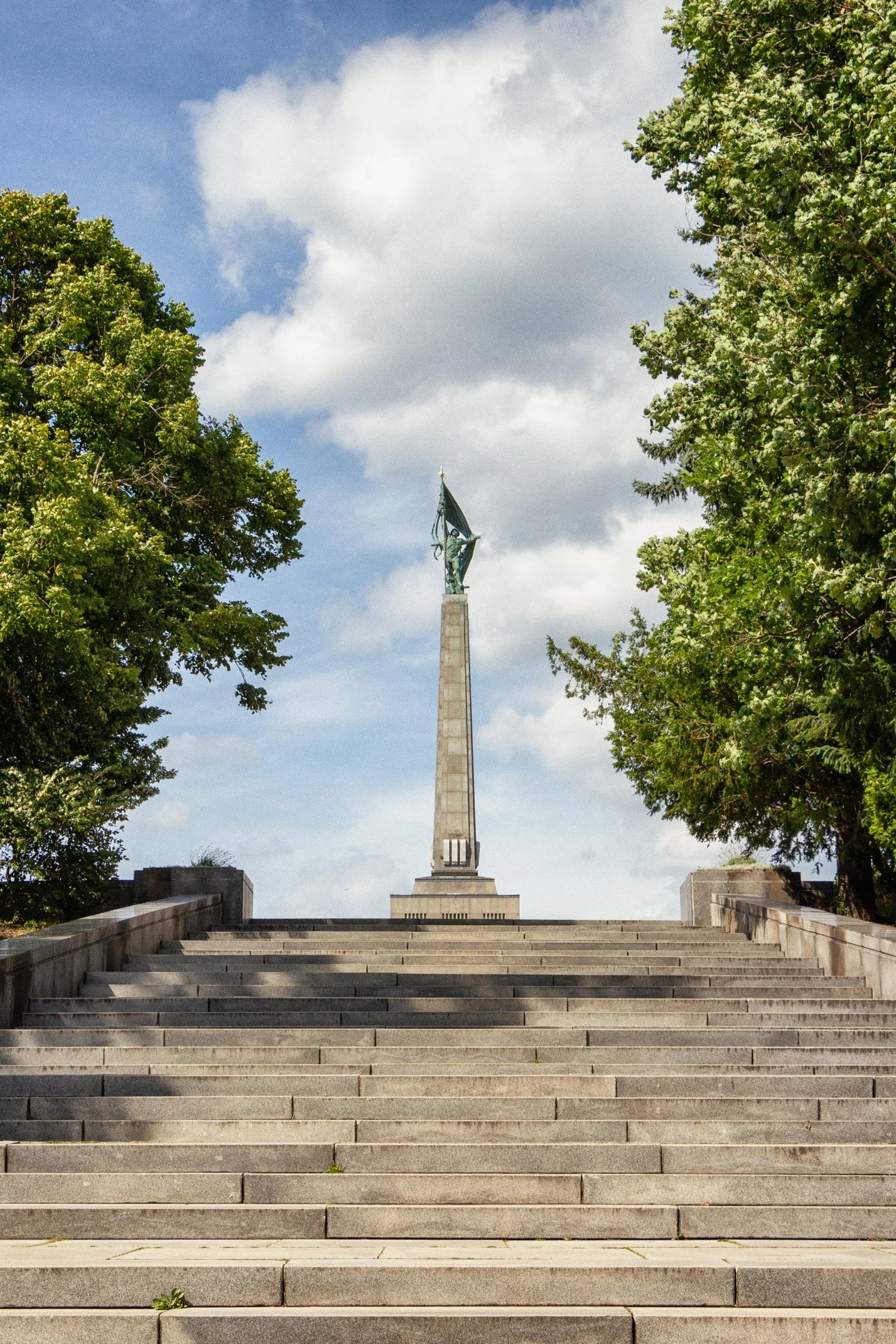
Slavín, the monumental war memorial, rises stoically above the city, blending commemorative function with stark modernist lines.
Each of these sites offers a different perspective on the city’s architectural past, and the lingering influence of Eastern Bloc planning decisions.
As I wandered, I noticed how the colour interventions transformed the district. Brightly painted facades softened the otherwise intimidating scale of the concrete blocks, turning what could have felt oppressive into something strangely energetic and playful. Families hung laundry across balconies, murals appeared on walls, and graffiti added a layer of urban storytelling. It reminded me that while the architectural intent was rigid, human life always finds a way to inject individuality into even the most uniform spaces.
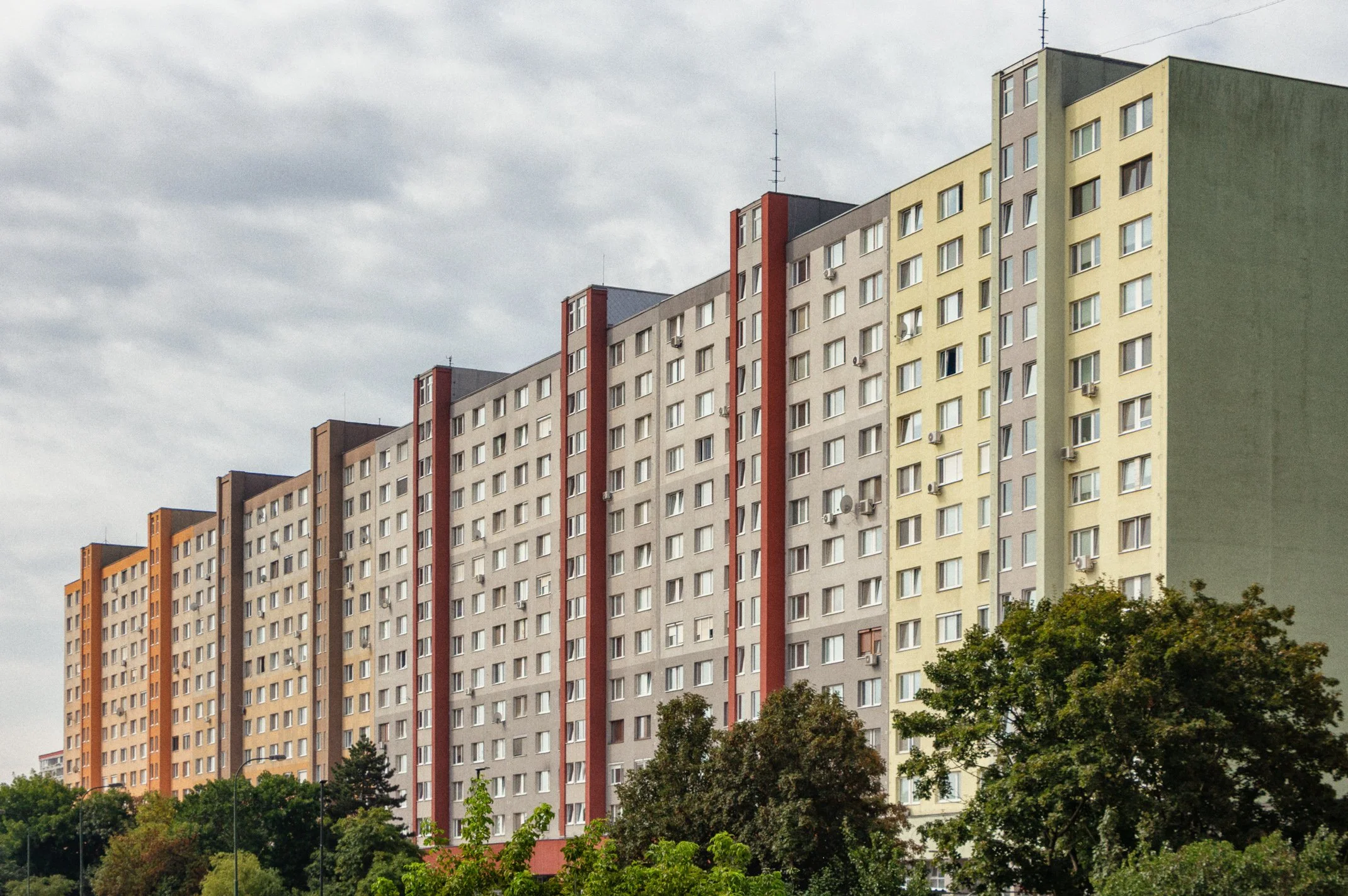
For photographers, Petržalka is a playground. Shadows fall across endless rows of panels in the afternoon sun, reflections in puddles create abstract landscapes, and the sheer scale can feel cinematic. There’s a fascination in seeing human life threaded through grids of concrete, in the way residents have adapted to these spaces over decades. Each frame tells a story: of planning, of survival, of the subtle reclamation of space by everyday life.
Leaving Petržalka, I felt a strange mix of awe and disquiet. The district is unapologetically what it is: a product of industrial ambition, political expediency, and architectural ideology. But it’s also lived-in, colourful, and strangely compelling. Even if you’re not interested in the socialist backstory, the scale, the repetition, and the raw lines of the buildings make Petržalka a unique window into a time and style that defined entire cities across Central and Eastern Europe.
Bratislava’s Petržalka is more than a relic. It’s a testament to the power of concrete, the allure of Brutalism, and the audacity of Eastern Bloc planning. Walking among the blocks, it’s impossible not to feel the weight of history and the peculiar beauty of a city defined by uniformity and ambition.
—
I visited Bratislava at the end of August 2025, photographing the contrasts of past and present in Petržalka and beyond. You can explore the full photo series from that trip in the Slovakia 2025 gallery.
If you enjoyed this story, you might like some of the other adventures I’ve shared:
Written by Max Biddlecombe following a trip through Slovakia in September 2026. Max is a UK-based travel photographer and writer who documents the world's overlooked places - from obscure territories and geopolitical curiosities to cities most guidebooks skip straight past.