The Road Less Taken: Thailand, Malaysia & Singapore
Three countries, two weeks, one route that most people walk straight past:
The contrast between these three countries is the whole point. Bangkok is loud and chaotic, Penang is warm and unhurried, Singapore is sleek and surprising.
Malaysia is the most underrated stop, and most people skip it entirely. Penang alone, a UNESCO-listed island widely considered the food capital of Asia, is reason enough to take this route.
Two weeks is doable, but a month is the trip. Rushing this route means missing exactly the kind of slow, unplanned moments that make Southeast Asia memorable.
When you look at South East Asia, you're presented with a variety of countries, all packed with vibrant cultures, incredible food, and all shaped uniquely by their various histories but modern and further back in time. Vietnam and its immediate neighbours were shaped heavily by the Vietnam war, Malaysia curated today by its colonial period when under British rule and the immigration from China and India that was a bi-product, Singapore, one of the world's great micronations - a category of place I find endlessly compelling, for reasons I've written about elsewhere - is slowly replacing Hong Kong as a key financial hub in Asia Pacific.. But exploring this rich area isn't something you can merely do in a few weeks. You're either looking at spending years in the region, or doing trips back visiting only pockets of incredible locations in certain areas. Additionally, popularity of countries like Vietnam and Thailand also take away from the other nations that lie in the region.
One route that I don't hear many people often talking about is Thailand to Singapore (or vice-versa) through Malaysia in the middle. I often see routes where people cover Vietnam, Cambodia and Thailand, or Vietnam, Cambodia, Laos, or Indonesia and Malaysia. But I found there was something special about going from Thailand down to Singapore via Malaysia. It's not that it mirrors the route of the Eastern and Oriental Express, or that I'm slightly biased towards Malaysia (I have visited it multiple times now), or that there's countries I'm yet to visit. For me, it's the contrast, each country differs in its culture, its food, and its way of life, but also in certain aspects, they're all very similar to each other.
I did this trip in late 2022, and it even inspired me to produce a photobook about the trip. I did it over two weeks, mainly because I've been to Malaysia before so some aspects of that I could gloss over or skip entirely, but for those fresh to all three countries, I do recommend a month. That's to ensure you're not rushing and really maximising your time. If you're flying from Britain or somewhere with a direct link to Singapore via Singapore Airlines, I've often found that airline to be the cheapest. Book a return there and either look to connect to Bangkok or fly to Singapore from Bangkok at the end of the trip. AirAsia is a cheap airline that can cover that route. There's also Scoot too which is a cheap fare subsidiary of Singapore Airlines - which also sells its own merch on their flights. If you fancy a hat with 'Scoot' written on it. Then maybe that's for you? I'll be covering this with Bangkok as the starting point but there's nothing stopping anyone from starting this in Singapore and running it in reverse.
Thailand: The Backpacker Classic
Thailand is the first country on the route, and probably the one that needs the least introduction. It’s the backpacker classic, a place where golden temples, street food, and island sunsets all somehow coexist with the chaos of Bangkok traffic and the occasional wandering elephant. Yes, it’s touristy in parts, but it’s popular for a reason, Thailand delivers, every time.
Bangkok is a city that buzzes with energy from dawn until well past midnight. When I say it’s crazy, I mean it in the best possible way. It’s loud, chaotic, colourful, and utterly captivating. The expat community here continues to grow, drawn by the city’s endless opportunities, lively culture, and relatively affordable lifestyle. There’s so much to see and do, it can almost feel overwhelming, but that’s part of the charm.
For starters, the temples alone are reason enough to spend days wandering the city. Wat Arun and Wat Phra Kaew are architectural marvels, like nothing I’ve seen anywhere else in the world. Wat Arun’s intricate spires rise dramatically beside the Chao Phraya River, especially magical at sunset, while Wat Phra Kaew inside the Grand Palace complex is steeped in history and ornate detail. These places aren’t just tourist attractions, they’re living parts of the city’s spiritual fabric.

Beyond the temples, Bangkok’s craft beer scene is booming. Hidden bars and microbreweries pop up in the most unexpected corners, offering a refreshing break from the usual Chang Beer. Places in neighbourhoods like Ekkamai and Ari have some seriously good brews, and the vibe is friendly and local. There is the 'legendary' Khao-San Road. But I personally found it a sketchy experience, but the side roads that run alongside Khao-San Road? Now that's where the cool stuff sits often overshadowed by what goes on nearby. Lots of small bars serving craft beer will welcome you, alongside some incredible street food. Not far from Khao-San Road sits Adhere The 13th Blues Bar. My favourite night in Bangkok was sipping some speciality cocktails whilst listening to live blues and jazz music from local musicians. Every single one that hopped on stage was simply superb and really share and expose their love for the genre.
I found Bangkok the most entertaining city to wander with my camera - there’s always something happening just around the corner. From street-food stalls sizzling with aromas and chatter to a chaotic traffic ballet of tuk-tuks, motorbikes, and cars, it’s a city that’s alive in every sense. And then, just a stone’s throw from golden temples and bustling markets, you’ll find concrete jungles of bridges, motorways, and skyscrapers, making Bangkok a city of fascinating contrasts. It’s definitely a photographers paradise.

Moving south from Bangkok, you’ve got several options to break up the journey before reaching the Malaysian border. Phuket is the obvious choice for many, famous for its beaches and nightlife, but if you want something a bit quieter and more convenient, Krabi or Trang are worth considering. Krabi offers stunning limestone cliffs and laid-back beaches, perfect for relaxing and snapping some memorable shots, while Trang is a lesser-known spot with beautiful, untouched coastlines and a strong local vibe. Both are great places to pause, recharge, and experience a different side of southern Thailand.
One thing to keep in mind is that this stretch of south-west Thailand is surprisingly long. Travelling from Bangkok to Phuket by bus can take up to 16 hours, which is a serious test of endurance. Flying cuts that down to just over an hour but comes at a higher cost. For those with time rather than money, overnight buses or trains can be an adventure and a way to watch the scenery change as you head south. Either way, stopping at Krabi or Trang makes the journey easier and sets you up nicely before crossing into Malaysia, where a whole new world awaits.
Malaysia: The Cultural Melting Pot
Malaysia is country number two, and arguably my favourite, but also one of the more forgotten or less thought of countries in South East Asia. As an ex-British colony, a Muslim nation, and with high Chinese and Indian populations, it’s one of the most diverse countries culturally to visit and there’s so much to see.
Heading down from Thailand you can either start with the island of Langkawi, known as the pearl of Kedah, and a duty-free zone - meaning ridiculously cheap alcohol - and a wealth of incredible beaches to relax on and sights to explore. Or you can go onwards to Penang, an island I would consider a must visit on the route. If you’re travelling to Penang from Southern Thailand, getting a bus across the border might be the more direct route but flying is also easier as Penang does have its own airport. If you are going across the border though, once you get to Alor Setar, I do recommend Malaysia’s west-coast train network, it’s reliable, cheap (by Western standards) and pretty much covers every spot you want to visit on the Western side of the Malaysia’s western peninsula.
Penang is my home away from home! It’s where I’ve been the happiest, and it also happens to be the food capital of Asia. It’s the only place I know that so seamlessly blends Malay, Indian and Chinese cuisine, and when you add in how warm and welcoming the locals are, there’s really nothing bad to say about it. A visit to George Town is essential; this UNESCO World Heritage site, once a British free port founded in the 1780s, tells the story of 500 years of cultural exchange along the Strait of Malacca. Among its temples, shophouses and colonial-era buildings, you’ll find historic spots like Fort Cornwallis and creative corners like Armenian Street, a once-forgotten alley now transformed into a canvas for local artists. The street art here is iconic, and yes, a photo with the famous bicycle mural is practically a rite of passage.

Food wise there’s so much on offer, all you have to do is walk around and you’ll find something incredible. Tek Sen is a personal favourite of mine and offered some of the most succulent Chinese dishes I have ever tasted and is sat in the heart of Georgetown. Restoran Kapitan is also the perfect spot for some quick Indian flatbreads and Biryani, which is often served on metal dishes with some various sauces which make for an incredible taste experience.
Outside of Georgetown, Penang offers a few gems that are well worth the extra effort. Kek Lok Si Temple, perched on a hillside, is a stunning Buddhist complex with the Pagoda of Ten Thousand Buddhas, a giant Kuan Yin statue, and sweeping views of the island. Take the cable car unless you’re feeling brave. Further north, Monkey Beach is a hidden, hard-to-reach spot that's best accessed by hiring a local fisherman, unless you fancy hacking through a barely-maintained 30 year old jungle trail. On the way back, a stop at Batu Ferringhi is worth it for the lively night markets, questionable designer gear, and some solid people-watching. And finally, make time for Penang Hill. The sunrise from the top is easily one of the most breathtaking sights I’ve witnessed anywhere in the world.

Onwards further south now and Malaysia’s rail is the easiest option here. Whether you go onwards to Ipoh or further down to Kuala Lumpur, the KTM network hasn’t failed me in my previous trips. If you fancy visiting the Cameron Highlands - perfect for those who love landscapes, hiking and tea - Ipoh is the stop for you. It's a similar mindset to the one I'd recommend in Japan: the best experiences are rarely on the main line stops. But otherwise, the next stop is Kuala Lumpur, the bustling metropolis that makes up the capital of Malaysia.
Kuala Lumpur is vastly different to Penang. It doesn’t feel quite as liberal, it’s a lot busier, and getting anywhere is a slower process. But between the sprawling high-rises and skyscrapers, there’s a lot to enjoy in Kuala Lumpur. Staying near Bukit Bintang isn’t a bad shout if you’re looking for al fresco bars and live music within walking distance. Also from there you can get around fairly easy with the metro or bus networks.
North from Bukit Bintang is the Petronas Twin Towers which is arguably the most iconic set of buildings in Malaysia. A trip to the top is highly recommended and as long as the day or night is clear, you’ll see some incredible sights of the city and beyond.

Kuala Lumpur features load of parks too. The Lake Gardens just west of the Central Market is one I enjoyed visiting a lot. With a botanical garden within it, it’s a fun spot to explore if you’re a photographer. Also seeing the skyscrapers towering around the park is an interesting contrast. The Eco Park is one to visit as well as it offers a canopy walk that lets you explore the forest from high up offering a unique perspective of the wildlife.
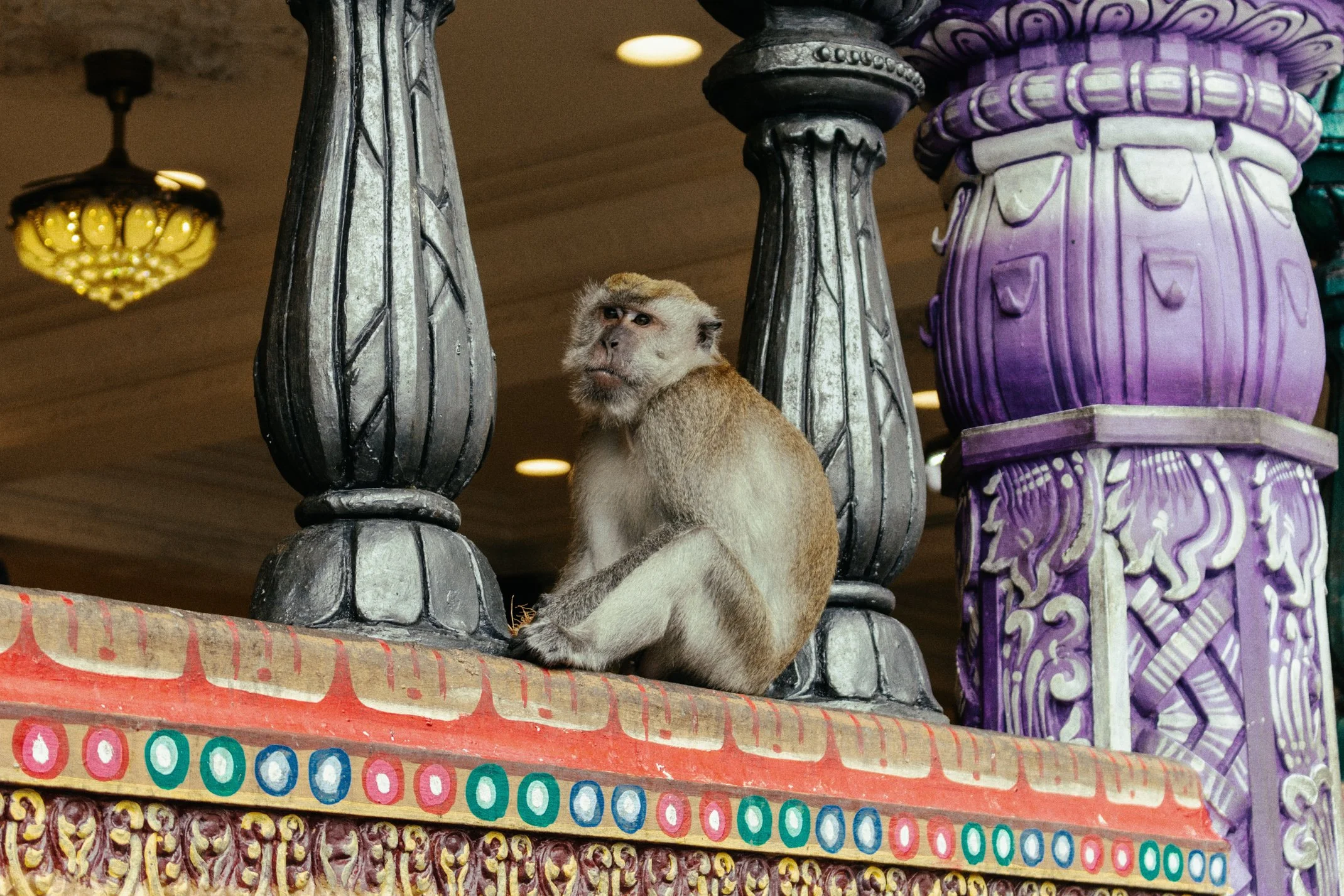
If you fancy more steps than you can handle, the Batu Caves in the north of Kuala Lumpur allow you to get up close and personal with the monkeys as well as featuring a tall mogote statue and a variety of caves to explore.
Heading further south again, a stop-over in Malacca is recommended if you’re interested in Naval or colonial history or colonial era architecture. Start your day in Dutch Square (Stadthuys). This is the postcard-perfect heart of Malacca, with bright red colonial buildings, a clock tower, and cobbled streets. The Stadthuys, once the Dutch governor’s residence, now houses the History and Ethnography Museum. Climbing up to St. Paul’s Hill is also worth checking out. The old stone structure and tombstones are weathered and beautiful, and the view over the city and coastline is well worth the climb. Lastly, no trip to Malacca is complete without wandering through Jonker Street, the city’s lively Chinatown district. It’s packed with antique shops, quirky cafés, street art, souvenir stalls, and hawker-style eateries.
Lastly one more journey South to Singapore. This is a bit of a fiddly journey to do. There’s no direct train route into Singapore so you can either fly from Kuala Lumpur or once in Johor Bahru, you can get the bus across the border into Woodlands and from there you can utilise the incredible public transport networks in Singapore to get yourself anywhere and everywhere.
Singapore: The Modern Micronation
Singapore the final country on the route, and a bit of a curveball. It’s sleek, efficient, and very much not your typical Southeast Asian stop, think spotless streets, air-conditioned malls, and futuristic gardens that light up at night. But beneath all that shine is a rich blend of Chinese, Malay, Indian and colonial British influences, and a food scene that might just ruin you for life.
Singapore often gets pegged as a quick stopover city, something to breeze through in two days before moving on - not unlike how people dismiss smaller, stranger destinations without giving them a real chance. But I’d argue it deserves at least four days if you really want to peel back the layers and discover its true character, beyond the typical tourist checklist. There's a polished, futuristic face to Singapore, sure, but look closer and you'll find a vibrant mix of cultures, hidden neighbourhoods, quirky street art, and some genuinely unexpected green spaces - the kind of details that reward the traveller who goes looking rather than just passing through.

Of course, no visit to Singapore is complete without a trip to Gardens by the Bay. This place is something else entirely. The Supertree Grove, with its towering vertical gardens that look like giant futuristic trees, is stunning enough during the day, but when night falls and the colourful lights come on, it becomes almost magical. The whole area is designed to inspire curiosity. You can spend hours wandering around the Cloud Forest, home to the world’s tallest indoor waterfall and a lush, misty environment that feels like stepping into another world. It’s one of those rare places that rewards slow exploration, you’ll find yourself discovering new details around every corner.
Just a short walk away is the Marina Bay Sands, the unmistakable building with its sleek, surfboard-shaped rooftop. Even if you’re not staying there, the observation deck at the top is worth the visit. The panoramic views stretch out over the whole island city, giving you a rare chance to appreciate just how compact and diverse Singapore really is. From the futuristic skyline to the traditional neighbourhoods dotted around the edges, you get a real sense of the city’s layers in a single glance. And, well, if you do happen to be tempted by the world’s tallest infinity pool, booking a room is one way to make your stay unforgettable, but even without that, the sights alone make it a highlight.

Many travellers don’t realise that Singapore is surrounded by a handful of smaller islands just a short ferry ride away from the main city. St John Island is one of my favourites. It offers a quiet retreat with peaceful hiking trails, secluded beaches, and plenty of green space to relax. It’s an ideal spot to bring some snacks, water, and a good book, and just enjoy a slower pace away from the city’s noise. The ferry schedule can be a bit limiting, but that only adds to the charm of feeling truly cut off and immersed in nature for a few hours. If you’re looking to explore a different, calmer side of Singapore, these islands are definitely worth the visit.
Another hidden gem worth seeking out in Singapore is Lorong Buangkok, the city’s last remaining traditional village. Tucked away amid modern housing estates, this small kampong offers a rare glimpse into Singapore’s past with its wooden houses, narrow lanes, and a quiet, old-world charm that feels worlds away from the high-rises. It’s a fascinating spot to explore if you want to see a side of Singapore that many visitors miss, the heart of a community that has managed to hold on to its roots amidst rapid urban change.
Lastly, no trip to Singapore is complete without a trip to the Raffles Hotel and trying out its famous Singapore Sling drink with some peanuts on the side. And if you’re near there anyway, tie it in with a trip to Fort Canning, the historic hilltop park in the heart of Singapore, quietly brimming with centuries of layered history, lush greenery, and the occasional wedding photo shoot.

In all, this route might not be the most popular or the most travelled, but in many ways, that’s exactly why it’s worth exploring. There’s something special about taking the road less crowded, whether you’re weaving through the chaotic streets of Bangkok, savouring the incredible food scene in Penang, or gazing out over Singapore from the top of Marina Bay Sands, this journey offers a rich and diverse experience of Southeast Asia.
Of course, there are countless other incredible places in Thailand and Malaysia that deserve your attention too. The north of Thailand, with its misty mountains and charming cities like Chiang Mai and Pai, offers a completely different pace and culture. The east coast of Thailand boasts stunning islands and beaches far from the typical tourist trail. In Malaysia, don’t overlook Borneo, an entirely different world of rainforests, wildlife, and indigenous cultures waiting to be discovered.
This route was what made me truly fall in love with Southeast Asia, and I’m confident it will capture your heart too. It’s a trip that blends vibrant city life, fascinating history, mouth-watering food, and natural beauty, all within just a few weeks. So if you’re looking to dive deeper into this part of the world, this is the adventure to take.
—
I travelled from Bangkok to Singapore through Malaysia in late 2022, capturing the contrasts and colours along the way. If you want to see bustling city streets, tranquil islands, and vibrant street food scenes all in one journey, take a look at my photo gallery from the trip.
If you enjoyed this story, you might like some of the other adventures I’ve shared:

Written by Max Biddlecombe following the overland route from Bangkok through Penang and Kuala Lumpur to Singapore in 2022. Max is a UK-based travel photographer and writer who documents the world's overlooked places - from obscure territories and geopolitical curiosities to cities most guidebooks skip straight past.