Discovering Karlovy Vary - A European Spa Town
Before you dive into the full story, here’s what Karlovy Vary quietly revealed to me:
Architecture defines the experience. Pastel façades climb the hillsides, Romanesque-inspired colonnades frame the river, and every corner feels deliberately elegant without feeling crowded.
You do not need a strict itinerary here. Slow walks along the promenade, pausing at the Mill Colonnade, and taking the funicular for panoramic views are what make the town memorable.
Karlovy Vary shows that the Czech Republic offers far more than Prague. Step beyond the capital and you may find a calmer, equally beautiful experience waiting for you.
How did I end up in Karlovy Vary, you ask? I was visiting Prague, Brno and Bratislava in August 2025, with a spare day in Prague and a craving for something unplanned. Rather than pick a destination, I wandered into the central bus station and looked at the dozen buses heading out to towns within two hours of the city. I asked the man behind me in the queue to pick a number between one and twelve. He chose seven. Two hours later, I was stepping off the bus into a town that felt like someone had bottled history and sprinkled it across pastel façades.
The first thing that hits you in Karlovy Vary is the architecture. Imagine Prague, but stretched across hillsides and layered in a way that makes every turn of the street a new surprise. The high street is calm, quiet even, a place where you can stroll without dodging selfie sticks or jostling crowds. Buildings rise above each other in tiers, each more ornate than the last, each whispering the town’s long history as a playground for Europe’s aristocrats.

If you want a starting point for your own exploration, head to the Mill Colonnade. Its Romanesque-inspired arches stretch for nearly 140 metres along the River Teplá, their pale stone contrasting against the forested hills behind them. The sheer scale and symmetry of the colonnade, with rows of carved columns and elegant balustrades, feels cinematic. Step inside and listen carefully: the sound of your own footsteps echoes softly, a reminder that you’re walking in the footsteps of kings, composers, and poets who once sought the healing waters here. Sip from the mineral springs scattered beneath the colonnade, and you’re participating in a ritual that has endured for centuries.
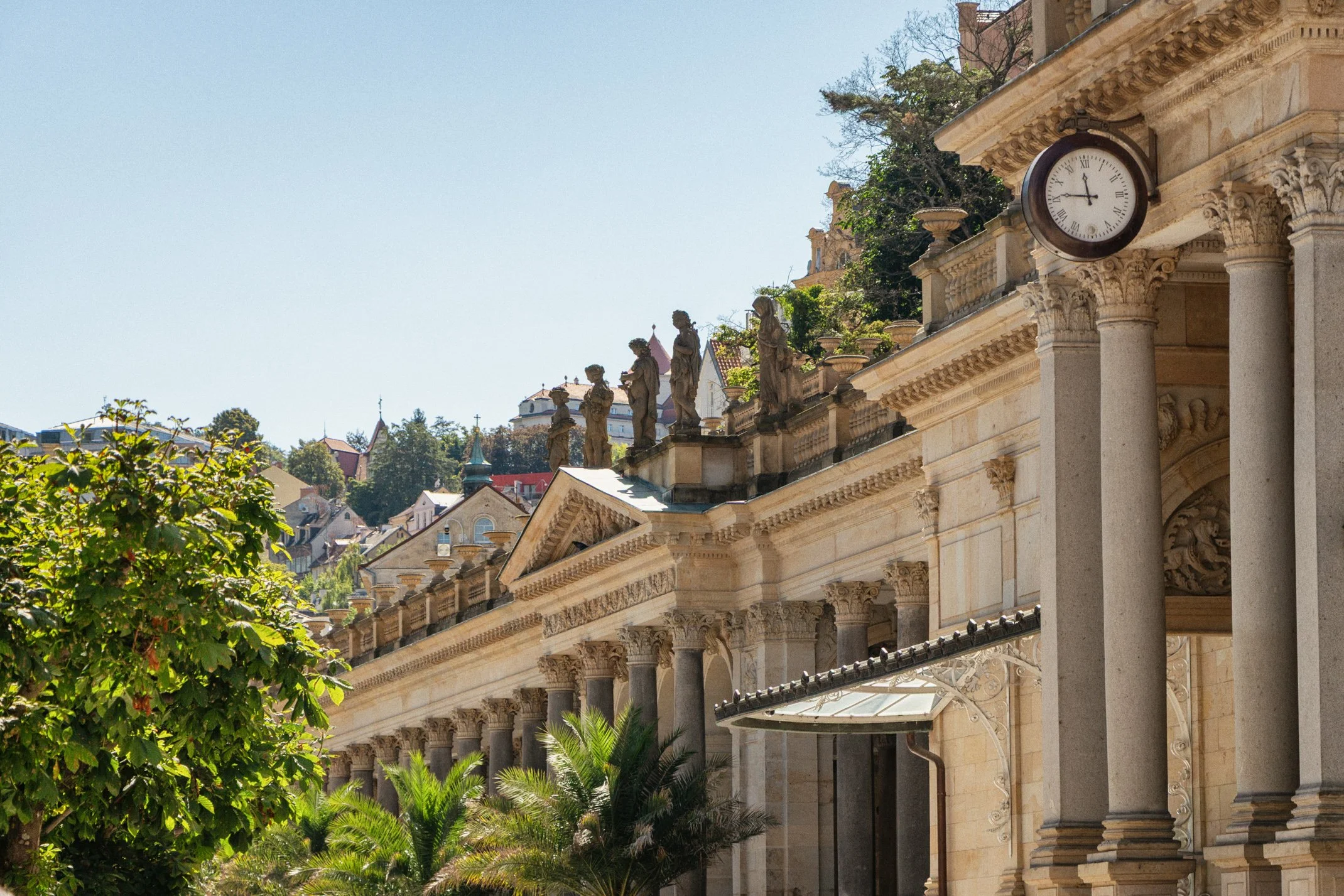
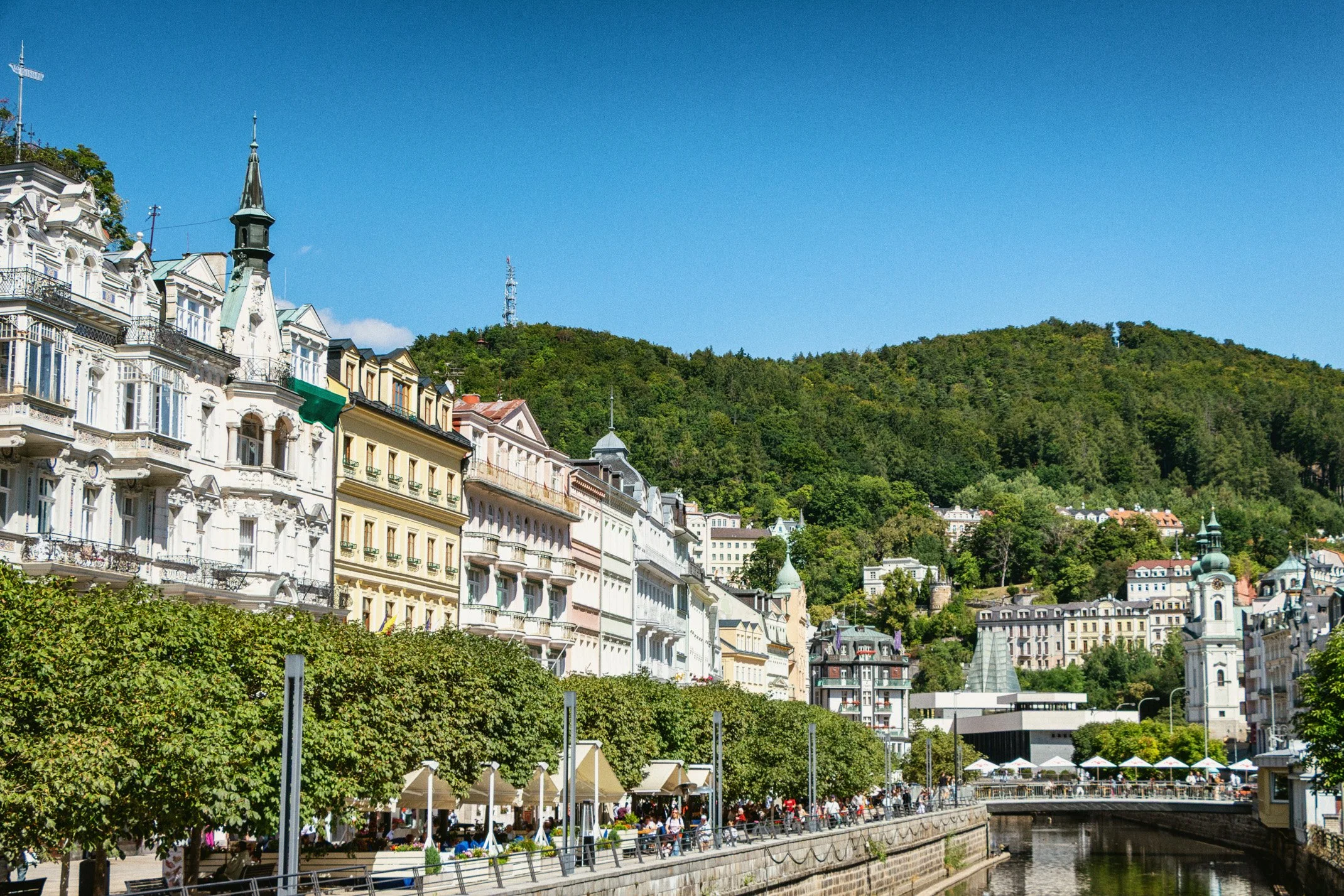
From there, wander the promenade of Stará Louka, the “Old Meadow”. Cobblestones guide you past cafés, luxury hotels, and tiny shops, the kind of place where you can pause for an espresso and watch the day unfold. Buildings in Art Nouveau, Neo-Renaissance and Empire styles lean slightly over the river as if to catch your gaze, and every fountain, every ornate façade, feels deliberate. Here, you can take your time. Watch the locals sip the hot mineral waters from cast-iron fountains, feel the sun on your face, and let the rhythm of the town set your own pace.
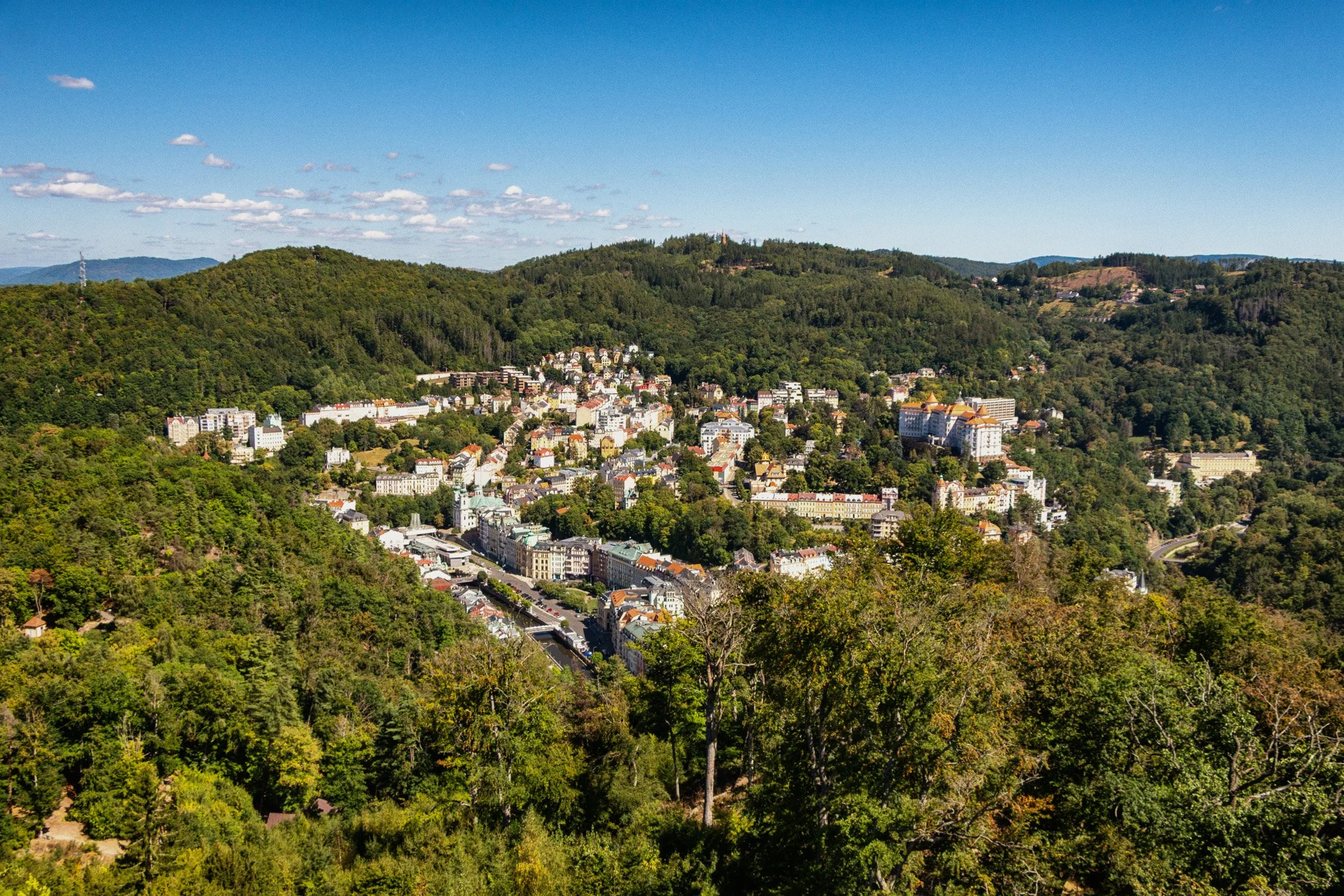
To see Karlovy Vary from above, take the historic funicular to the Diana Observation Tower on Friendship Hill. The ride through the spa forests is gentle and green, the scent of pine mixing with the distant steam of hot springs. From the tower’s platform, the town unfolds beneath you, a patchwork of pastel roofs, curling river bends and forested hills stretching into the horizon. There’s a quiet magic in seeing it all at once - the scale, the elegance, the way the town feels both curated and effortlessly lived in.
And then there’s the Orthodox Church of St Peter and Paul, dominating the Westend district with its gilded onion domes and intricate façades. Inside, the light filters through stained glass, highlighting rich mosaics and wooden carvings. It’s easy to get lost in the details, imagining the wealthy Russian and Serbian spa patrons who financed its construction in the 19th century.

Karlovy Vary is a town of contrasts. Amidst its historic grandeur, the Hotel Thermal and Vřídelní Colonnade from the 1960s and 70s provide a striking, almost playful counterpoint to the older buildings. Cafés serve modern lattes alongside the town’s famed mineral waters, and the streets hum quietly with tourists and locals alike, never enough to disrupt the feeling of calm.
To truly experience Karlovy Vary, let yourself wander without a plan. Pause at every colonnade, every fountain, every café. Take a seat by the river, sip the mineral water, and watch the town breathe around you. The charm of Karlovy Vary isn’t in ticking off landmarks - it’s in letting the town reveal itself slowly, like a photograph coming into focus.
By the time the sun dips behind the hills, Karlovy Vary glows. The Mill Colonnade casts long shadows over the river, golden light washes the pastel façades, and the hills behind the town seem to cradle it in timeless serenity. You arrive for no reason, guided by chance, and leave convinced you’ve stumbled into a place that feels untouched by the rush of modern life.
Karlovy Vary is waiting for you, in the quiet of its streets, in the echoing colonnades, in the warm mineral waters. Go without an agenda, pause often, and let the town’s history and beauty sink in. You might come for a day, but the memory lingers long after.
—
I visited Karlovy Vary in August 2025. The full photographic journey, from colonnades to panoramas, can be explored in my Czech Republic gallery.
If you enjoyed this story, you might like some of the other adventures I’ve shared:
Written by Max Biddlecombe following a visit to Karlovy Vary, Czech Republic in 2025. Max is a UK-based travel photographer and writer who documents the world's overlooked places - from obscure territories and geopolitical curiosities to cities most guidebooks skip straight past.