
A Love Letter to Sepang International Circuit
I wrote this article originally for Slicks Mag and can be found in issue 2 released in October 2025. Go check out Slicks Mag to find more fascinating motorsports stories and photography from other creatives around the world.
Every motorsport enthusiast has a favourite racing circuit. And from the corkscrew design of Laguna Seca’s turn 8, to the infamous full-sends up Eau Rouge at Spa, or even the incredible podiums that bless Monza, every track builds its legacy in its own way. Some circuits gain fame through their heritage, others by their daring design, and many by the pinnacle moments of drama that unfold on them, and for me, all of that comes together in one place: Sepang International Circuit. Just outside of Kuala Lumpur in Malaysia, it is, without question, my favourite.
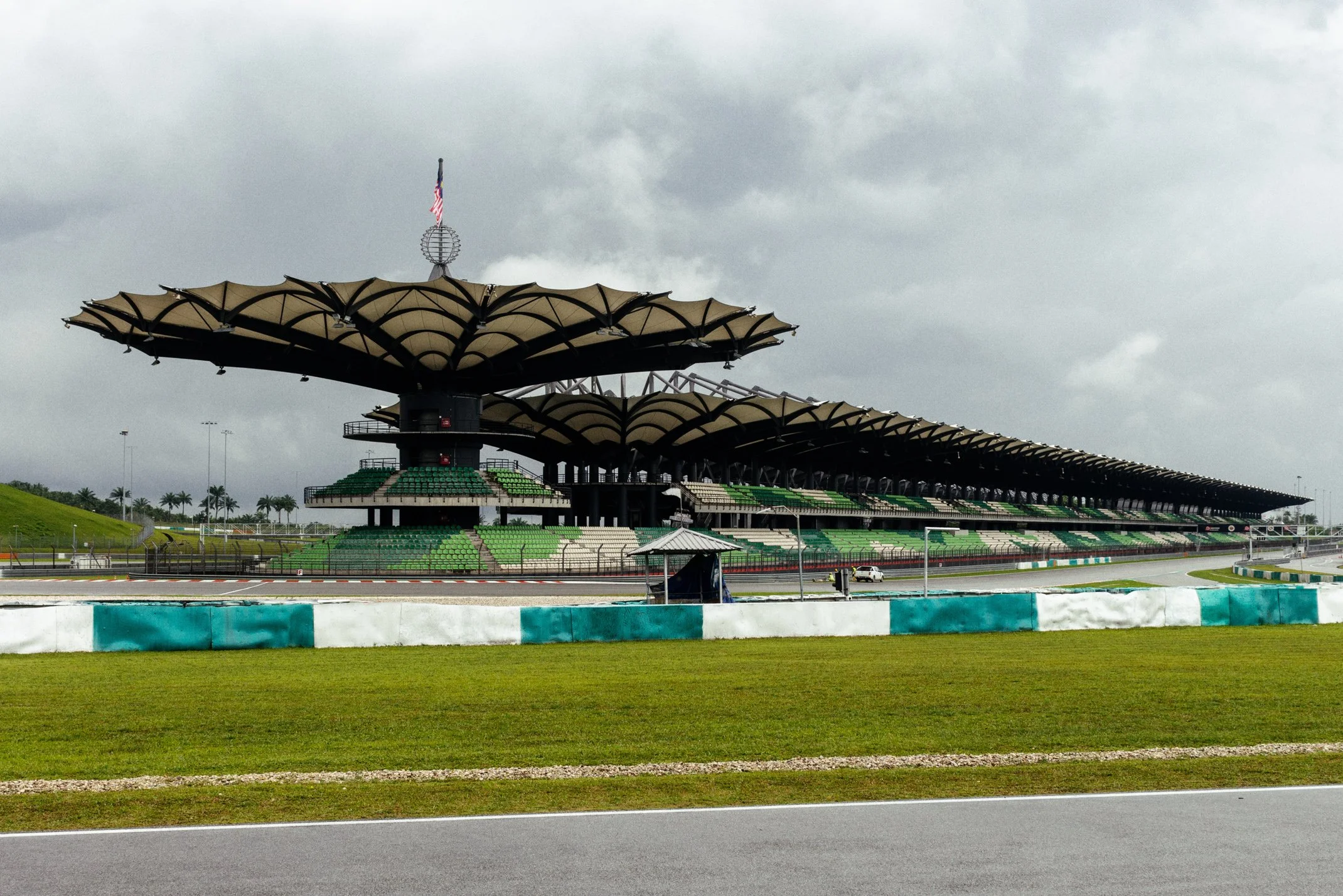
The Formula One calendar welcomed Sepang as its newest addition in 1999 when Malaysia sought to announce its presence to global audiences. The country had already unveiled the Petronas Towers and a sprawling new international airport, and following that was a Grand Prix. What better way to announce Malaysia’s arrival on the global stage than to host the biggest motorsport event on the planet? And so, carved out of an oil palm plantation and finished in a scarcely believable 14 months, Sepang International Circuit was born.
Setting new standards, it was wide and flowing, offering overtaking opportunities that other circuits of the time could only dream of, whilst its twin straights allowed cars to blast past each other before slamming into tight corners. Its medium-speed bends punished mistakes and rewarded rhythm. But the architecture was just as memorable. With a hibiscus-shaped roof, the tower rising above the main grandstand, the palm-leaf canopy became an instant icon. It wasn’t just a circuit, it was a landmark, something that looked as impressive in still photographs as it did when lit up by the flash of racing cars - a true merit to the design work of Hermann Tilke.
The racing matched the stage: Michael Schumacher made history here, charging through the field in torrential rain. Fernando Alonso claimed his first pole and Kimi Räikkönen secured his first win. And who can forget Sebastian Vettel disobeying team orders in the infamous “Multi-21” saga? Sepang was never boring and its climate alone made sure of that. The circuit sits in the tropics, and Malaysia’s weather is notorious for flipping without warning. One moment the cars would be gliding under blistering sun, the next they’d be aquaplaning as a monsoon swept across the tarmac. If you wanted drama, Sepang delivered.

But nothing lasts forever. By 2017, hosting fees had spiralled beyond reason and local interest had waned. Formula One made its final bow in Malaysia, and the calendar moved on. For many fans, myself included, its absence left a noticeable gap. Races at Sepang had a character and unpredictability that’s been hard to replicate.
In 2022, I finally visited the circuit myself. No race, no fanfare, just me, my camera, and the wide, empty expanse of Sepang. With a paid pass in hand, I was left to wander amid a moderately wet day with the clouds lingering low and heavy, leaving the track glistened with leftover drizzle. The surface was fraying in places, still holding up from its last resurfacing in 2016 but showing the scuffs of hard racing. The paddock lay silent, shutters pulled down, everything in hibernation but ready to burst into life whenever MotoGP next rolled into town.
Inside, the vast media centre stood empty, rows of desks and screens patiently waiting for the hundreds of reporters who would usually cram themselves in to capture every twist of the story. Race control felt like the nerve centre of a spaceship: walls of monitors, hundreds of feeds showing every inch of the track, waiting for the marshals and stewards to take their posts. Even without people, you could feel the anticipation lingering, like the place was permanently on standby for the next moment of chaos.
Walking alone through the circuit gave me the chance to soak in the details. I stood on the pit straight beneath the hibiscus roof, imagining the thunder of V10s echoing through the grandstand. I traced the long back straight, picturing the slipstream battles that unfolded there year after year. I found myself at Turn 9, that tight uphill left-hander where so many drivers locked brakes in the heat of battle. Without the noise and spectacle, Sepang felt almost melancholy. Yet that quiet also revealed its soul. I wasn’t distracted by the roar of engines or the cheer of crowds. I could take it all in, piece by piece, as if the circuit itself was whispering its history.
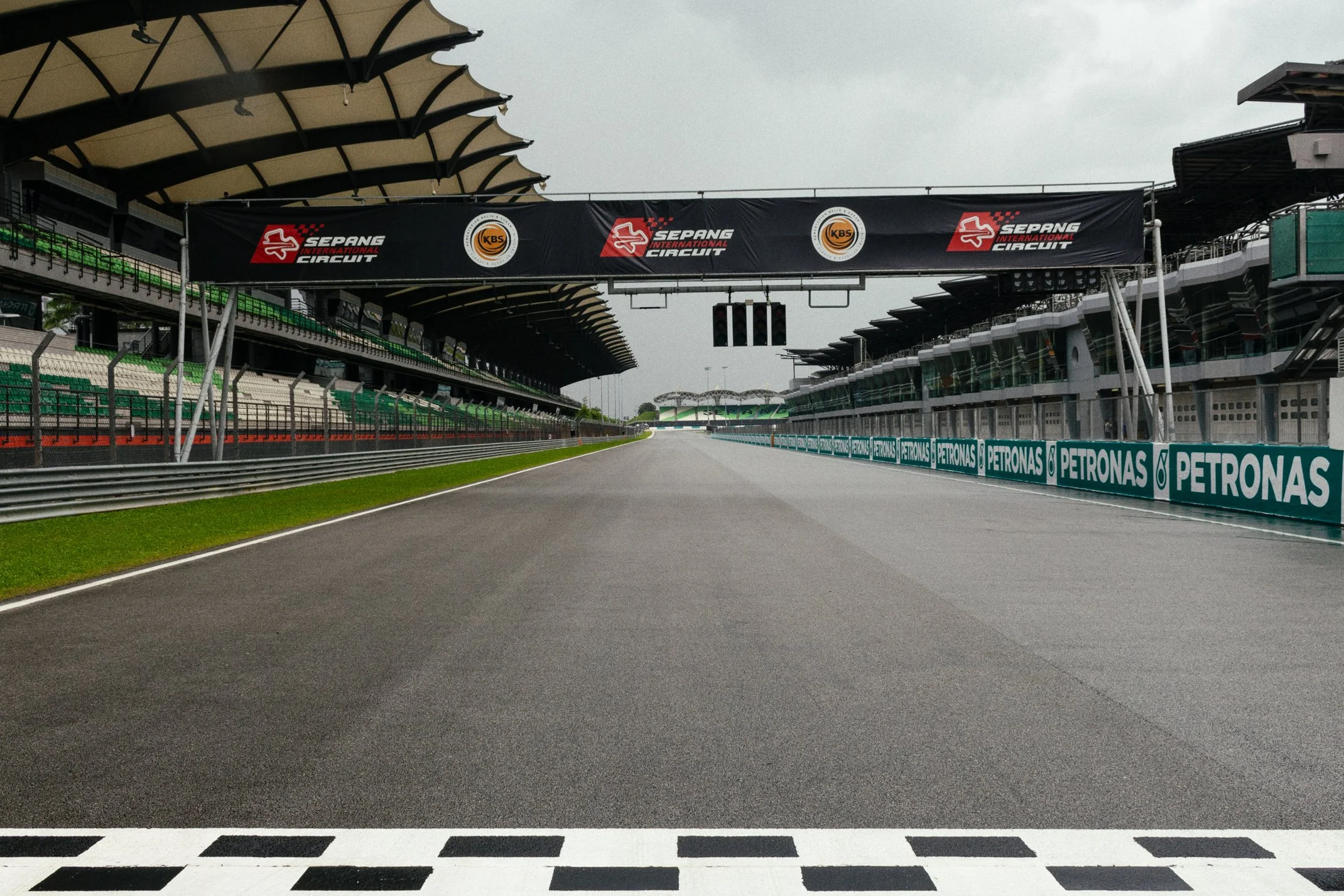
Nowadays, Sepang doesn’t see much love from four wheels. Formula One is gone, and international car series rarely visit. But two wheels keep the spirit alive. MotoGP still arrives every year, and it isn’t just another stop on the calendar. Riders call it one of the toughest, most rewarding circuits they face. Crowds of more than 150,000 still flock to watch, proving Sepang hasn’t lost its allure. The corners that tested Schumacher and Alonso now test Quartararo and Márquez. The twin straights still host wheel-to-wheel battles, the Malaysian heat still saps strength, and the tropical skies still threaten to drench everything in a heartbeat.
There are occasional whispers about Formula One making a comeback, but reality suggests otherwise. Hosting fees remain sky-high, and the modern calendar is already bursting. Yet I can’t help but hope. Because Sepang feels unfinished. It has more stories to tell, more moments to deliver on the biggest stage. When you walk the circuit, you feel that potential hanging in the air.
For me, Sepang is more than just another racetrack. It represents Malaysia’s ambition and its ability to rise onto the world stage. It’s a blend of bold architecture, demanding design, and tropical unpredictability. It’s a place where legends were made, where rainstorms rewrote races, and where, in 2022, I found myself wandering alone with a camera, quietly in awe.
So perhaps this isn’t just an article about a track, rather a love letter to Sepang International Circuit. To the hibiscus tower and its sweeping canopy, to the straights that roared with wheel-to-wheel battles, to the corners that tested the very best. To the silence I found on a rainy afternoon in Malaysia, and the life that still pulses through it when the bikes return each year. It may no longer have a place on the Formula One calendar, but for me, it will always have a place in my heart.
—
I visited Sepang International Circuit in 2022, exploring one of Formula One's most beloved modern venues long after the championship had moved on. You can discover the full photographic journey from that visit in my Malaysia 2022 gallery.
If you enjoyed this story, you might like some of the other adventures I’ve shared:
Written by Max Biddlecombe following a visit to Sepang International Circuit, Malaysia in 2022. Max is a UK-based travel photographer and writer who documents the world's overlooked places, from obscure territories and geopolitical curiosities to cities, landscapes and landmarks that most travellers pass by without a second glance.