The Sovereign Order Hidden in Plain Sight
There are places in Rome that attract huge crowds like the Colosseum, the Trevi Fountain, and the Pantheon. Then there’s places that attract people because they make almost no sense at all, obscure corners of the city that most visitors have never heard of. In this case, the attraction is a geographical and historical anomaly that somehow still exists in the 21st century. That’s where the green door on the Aventine Hill comes into focus.
In March 2026, I found myself standing in a quiet queue on Piazza dei Cavalieri di Malta alongside tourists, photographers and curious Romans, all waiting to look through a tiny brass keyhole. The view itself lasts only a second, but at the end of a perfectly aligned, hedge-lined tunnel sits the dome of St Peter’s Basilica, framed with precision. It is one of Rome’s most famous hidden viewpoints and yet the thing that fascinated me was not the dome itself, but what sat behind the door.
Technically, you are looking into another sovereign entity and across territory belonging to three different sovereign powers. Well... sort of. And you're probably wondering what the third one is besides Italy and the Vatican.
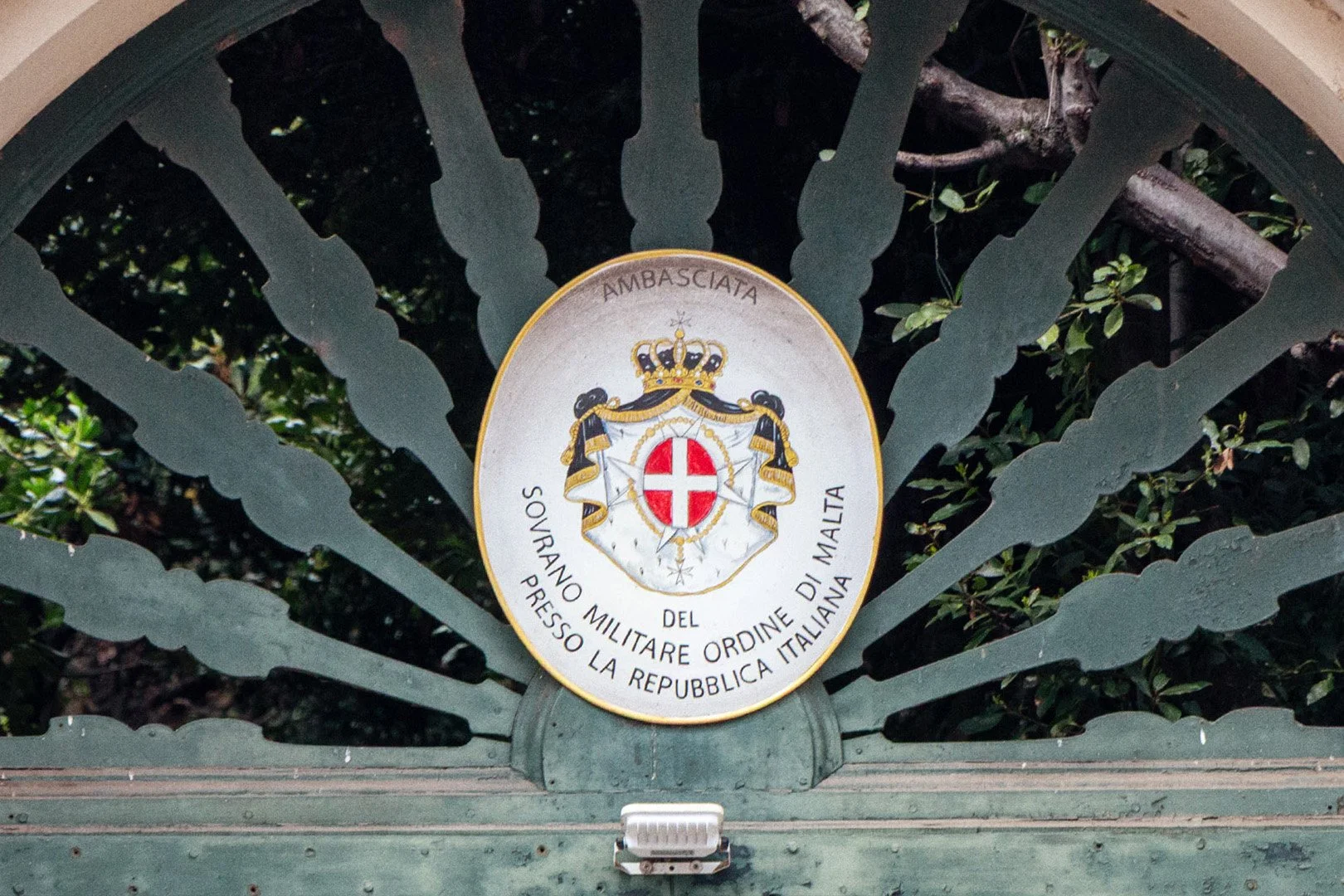
The door, and the garden behind it, belongs to the Sovereign Military Order of Malta, one of the strangest political and religious remnants left in Europe. It’s an organisation founded during the Crusades that once ruled islands, operated fleets, fought wars, lost everything, and somehow still exists today as a sovereign order recognised by more than 100 countries despite not actually owning a country.
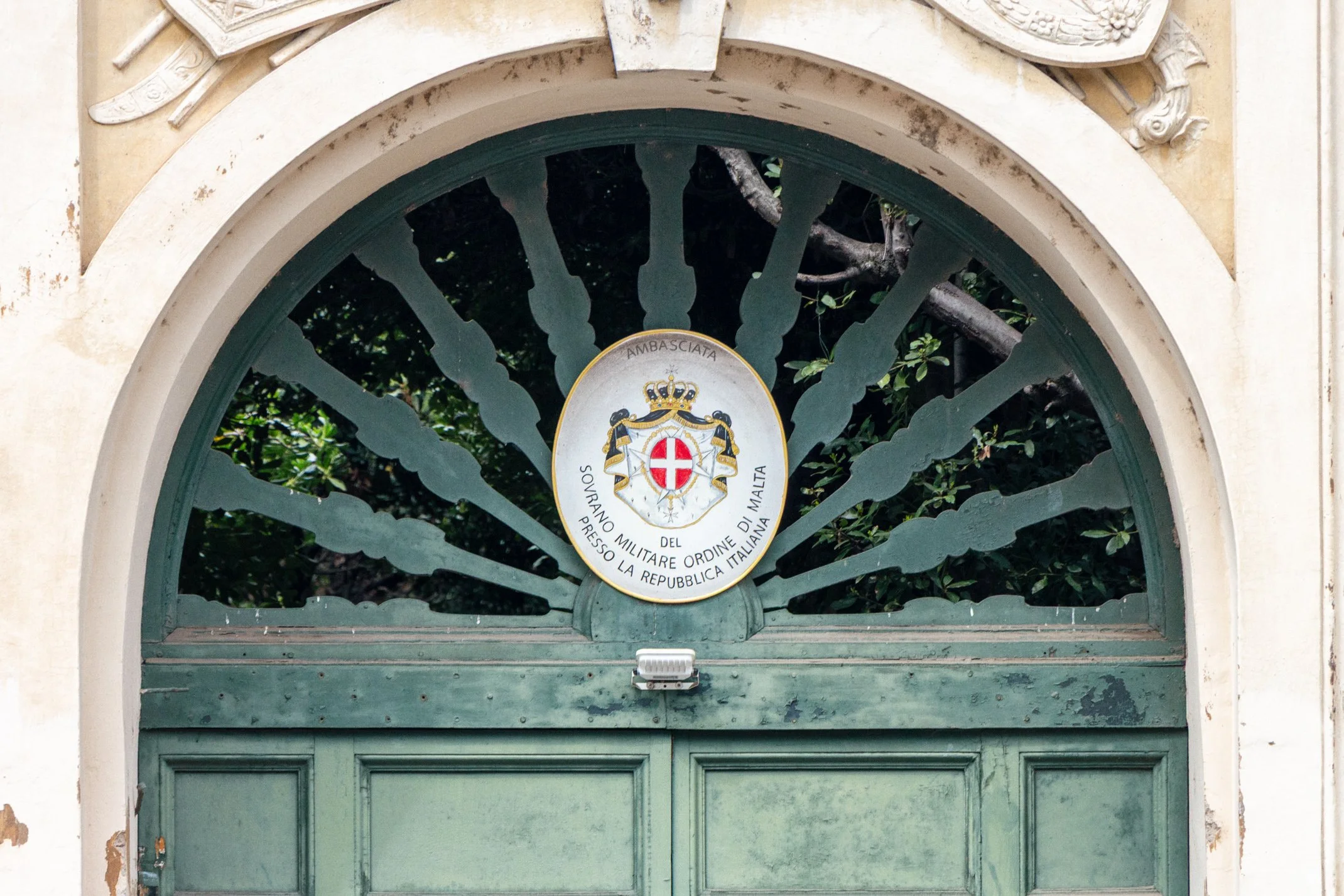
To understand why this tiny corner of Rome matters, you have to go back almost a thousand years. The Order began in Jerusalem during the 11th century as a religious hospital order caring for sick Christian pilgrims travelling to the Holy Land. Officially recognised by Pope Paschal II in 1113, the Knights Hospitaller quickly evolved into something much larger than a charitable group, and like many organisations born during the Crusades, religion, politics and military power became deeply intertwined.
Over time, the Order transformed into a naval and military force, ruling territories including Rhodes and later Malta itself. The name “Order of Malta” comes from this period, when the Knights governed the island from 1530 until Napoleon arrived in 1798 and expelled them during his Mediterranean campaign.
Most organisations would have disappeared at that point. However, the Order did not. Instead, it entered one of the strangest reinventions in European history. After years effectively stateless, the Knights eventually re-established themselves in Rome in 1834. But unlike governments in exile, they never stopped insisting they remained sovereign.
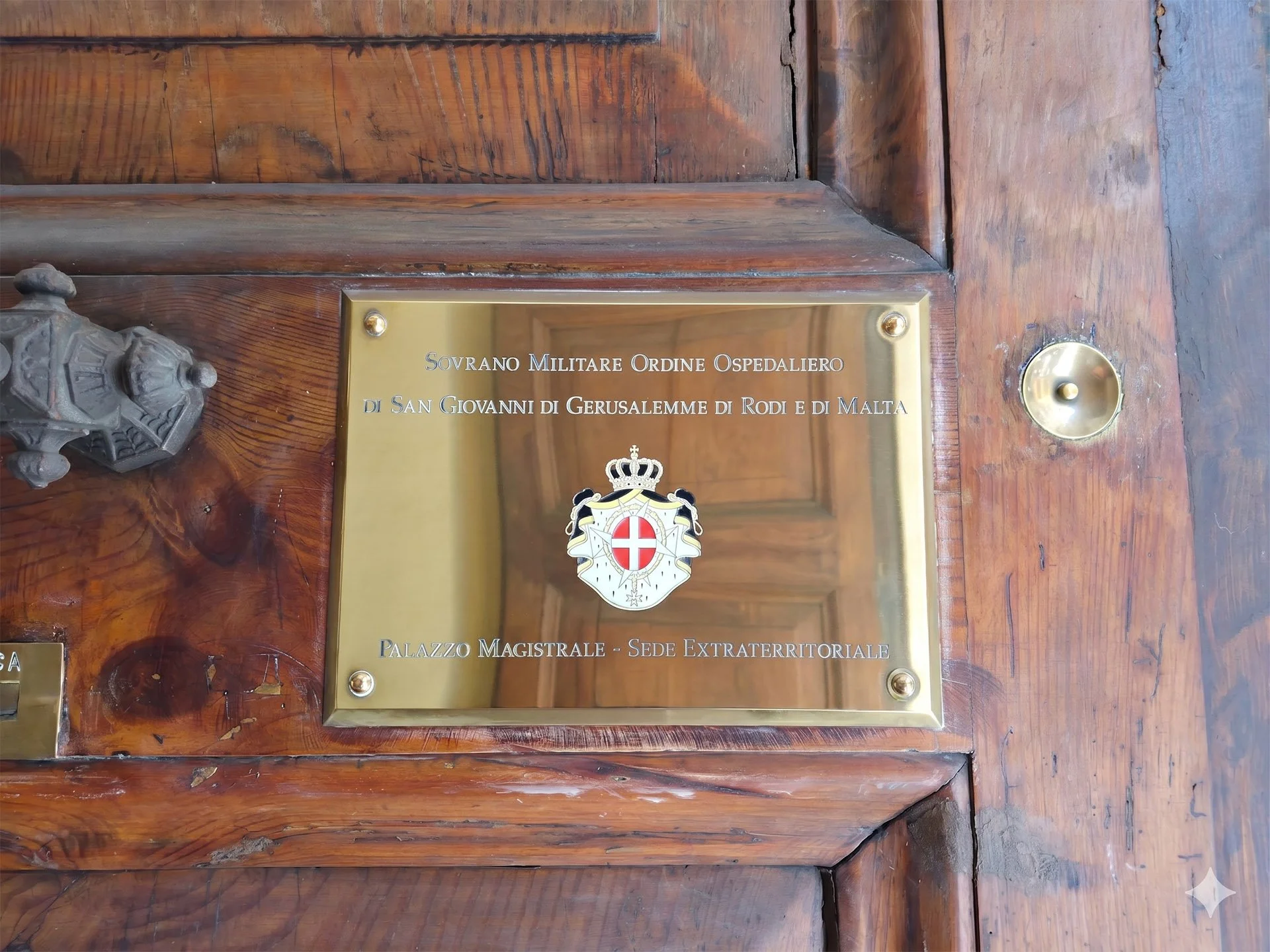
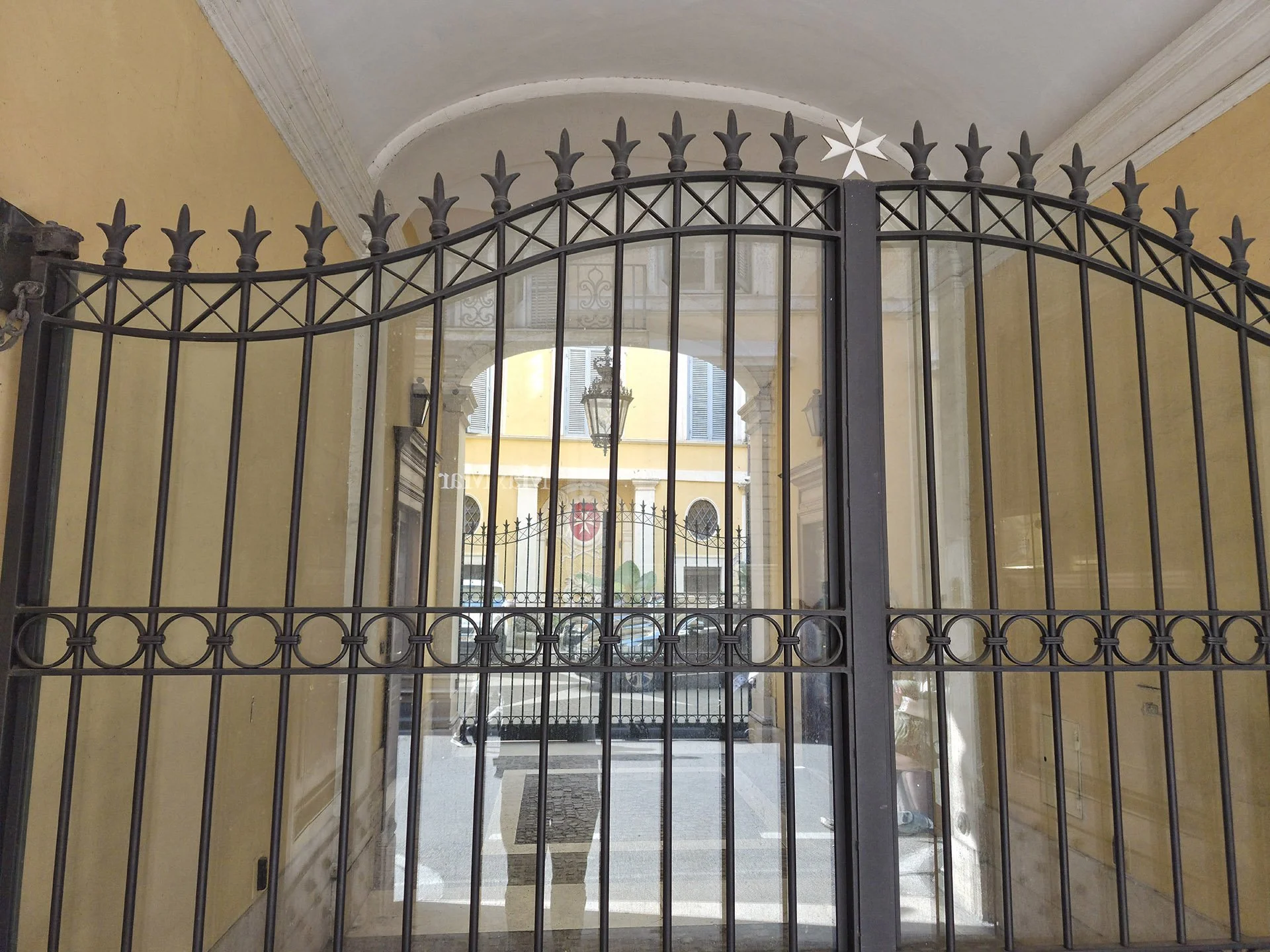
Today, the Order operates from two properties in Rome. The first is the Magistral Palace on Via dei Condotti, only a short walk from the Spanish Steps. From the outside, you could easily walk past it without noticing as luxury shops, expensive hotels and tourists carrying shopping bags dominate the surrounding streets. Yet behind those walls sits the headquarters of an internationally recognised sovereign entity. The second property is the Magistral Villa on the Aventine Hill, home to the famous keyhole and the Order’s Grand Priory of Rome.
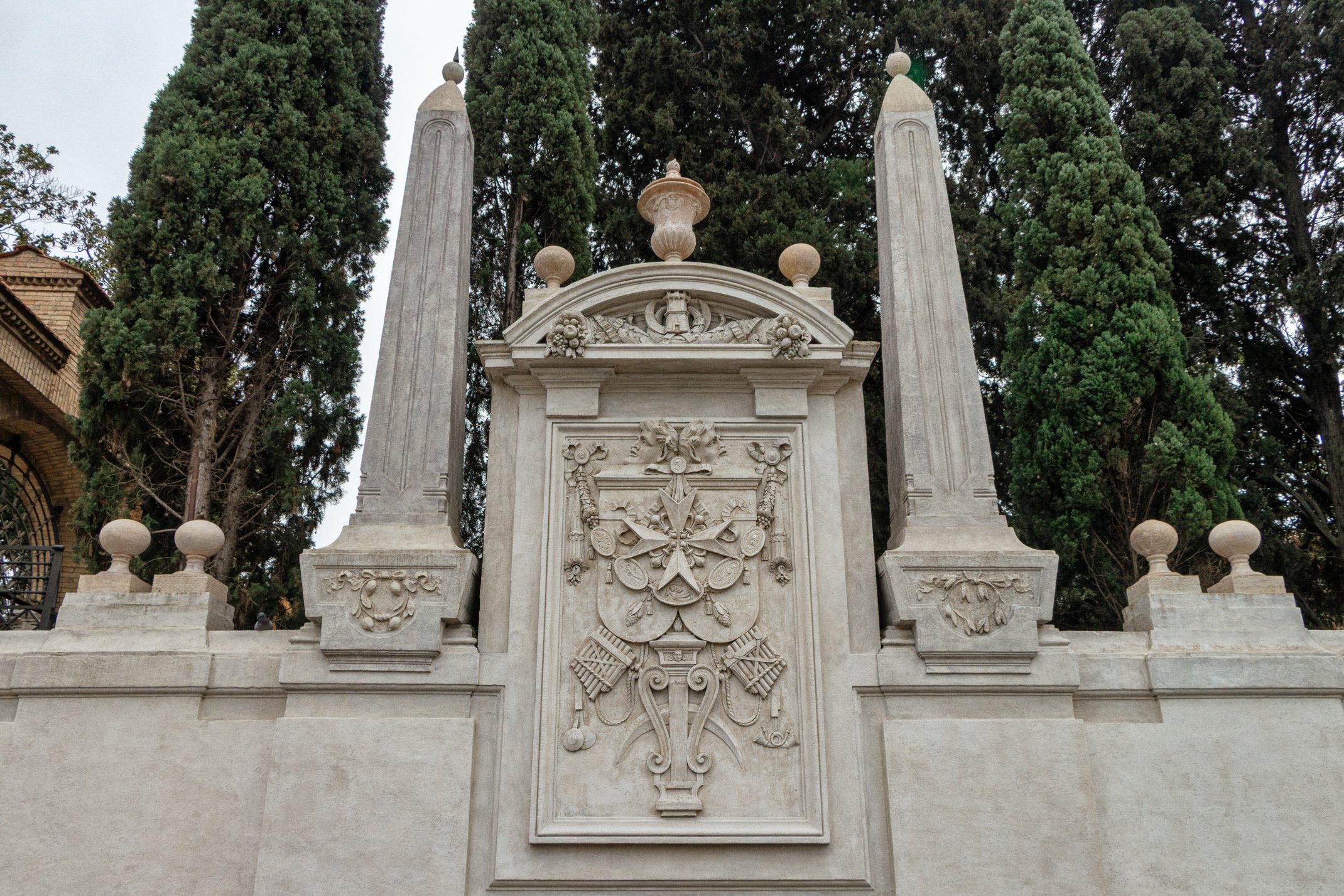
Both sites were granted extraterritorial status by Italy in the 19th century. In practice, this means they function similarly to embassies. Italian authorities cannot simply walk in or exercise normal jurisdiction there and the properties are legally protected as sovereign premises even though they are entirely surrounded by Rome. But it gets even more complicated…
The Order is not a country in the normal sense and it has no permanent population, no farmland, no natural resources, and no real territory beyond these protected sites. Yet it maintains diplomatic relations with around 115 states and the European Union. It has permanent observer status at the United Nations, it issues passports, licence plates, coins and stamps. It signs treaties and ambassadors present credentials to it exactly as they would to a nation-state. It is essentially a sovereign entity without sovereign land. Even compared with places like Liechtenstein or the unusual German exclave of Büsingen am Hochrhein, the Order occupies a category almost entirely of its own.
And remarkably, this arrangement has survived empires, world wars, Italian unification, the collapse of monarchies and the modern bureaucratic obsession with putting everything neatly into categories.
What fascinated me most after digging deeper into the Order was how little of its identity today revolves around military history. Despite the name sounding like something straight out of medieval Europe, the modern Order is overwhelmingly humanitarian. Around 13,500 Knights and Dames are involved globally, supported by roughly 100,000 volunteers and tens of thousands of medical professionals. Through organisations like Malteser International, they operate hospitals, ambulance services, refugee programmes, elderly care facilities and disaster relief projects across more than 130 countries.
That charitable mission is largely why the Order still retains international legitimacy. It occupies an unusual middle ground between religious institution, NGO and sovereign diplomatic actor. Governments cooperate with it because its diplomatic neutrality allows humanitarian work in difficult regions where traditional politics often struggles. That independence, however, has not always been without challenge.
In 2017, a major constitutional crisis erupted when Pope Francis intervened in an internal dispute involving the Order’s leadership. The Order initially resisted Vatican investigations entirely, arguing that cooperating would compromise its sovereignty. Eventually, Grand Master Fra’ Matthew Festing resigned under pressure, and the Vatican introduced constitutional reforms. Yet even through that crisis, the Order’s sovereign status ultimately survived intact. That persistence feels oddly Roman somehow.
Rome is full of institutions that outlived the worlds that created them. From ancient temples repurposed into churches to obelisks dragged from Egypt standing beside fascist-era buildings to republics becoming empires, becoming city-states, becoming museums… the Order of Malta fits naturally into that landscape because it exists in a strange grey zone between past and present.
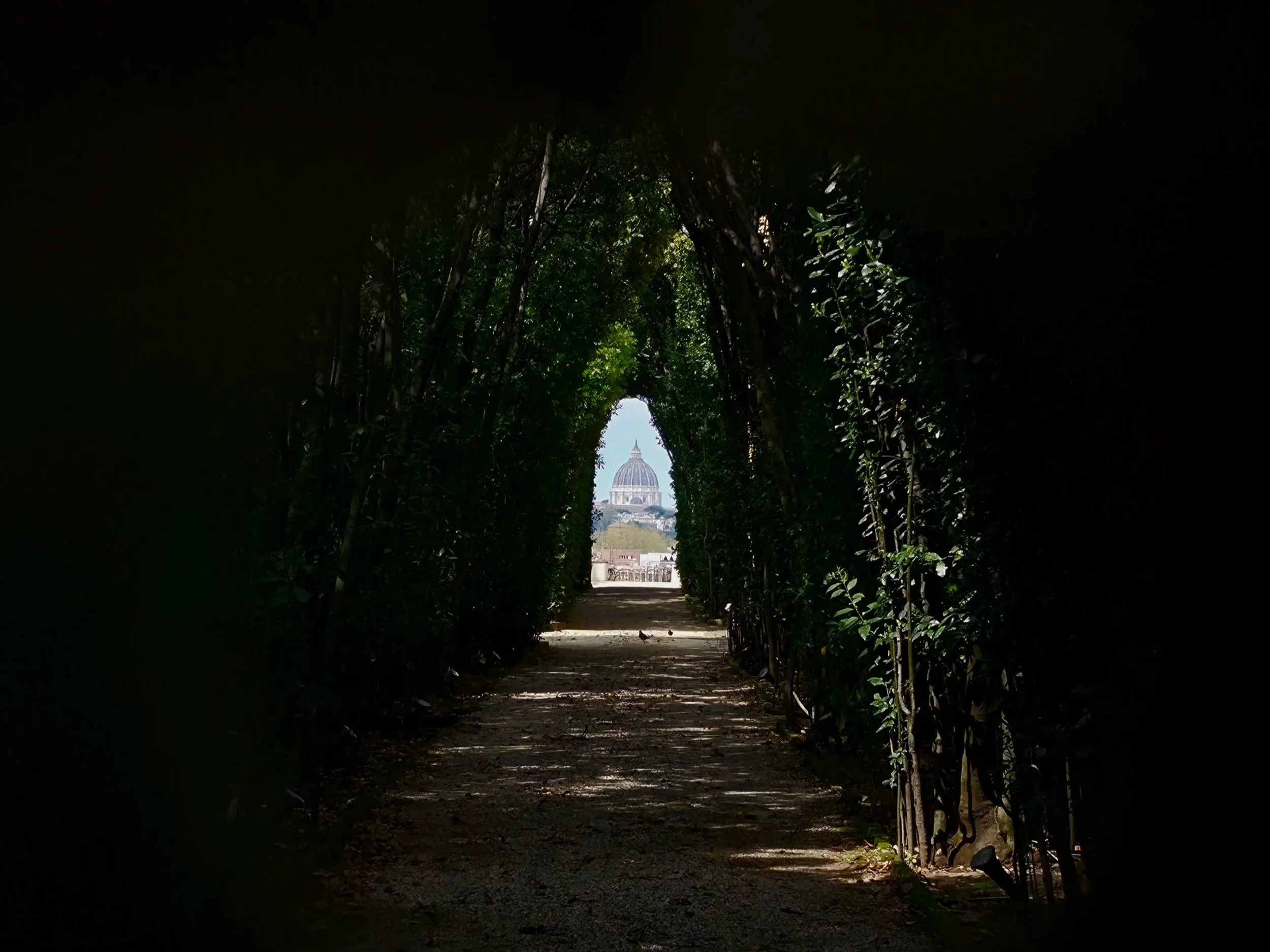
And perhaps that is why the keyhole feels like such a fitting symbol for the Order. You stand outside on an ordinary Roman street and you lean forward for a brief glimpse through a tiny opening and suddenly the city aligns itself into something far stranger and more layered than it first appeared.
The dome of St. Peter's Basilica sits framed in the distance and technically you are standing in Italy, looking through property belonging to a sovereign Catholic order, towards the Vatican, another sovereign entity entirely. Having spent time photographing both Rome and Vatican City during the trip, it felt like a uniquely Roman view. Only in Rome could geopolitics become a tourist attraction.
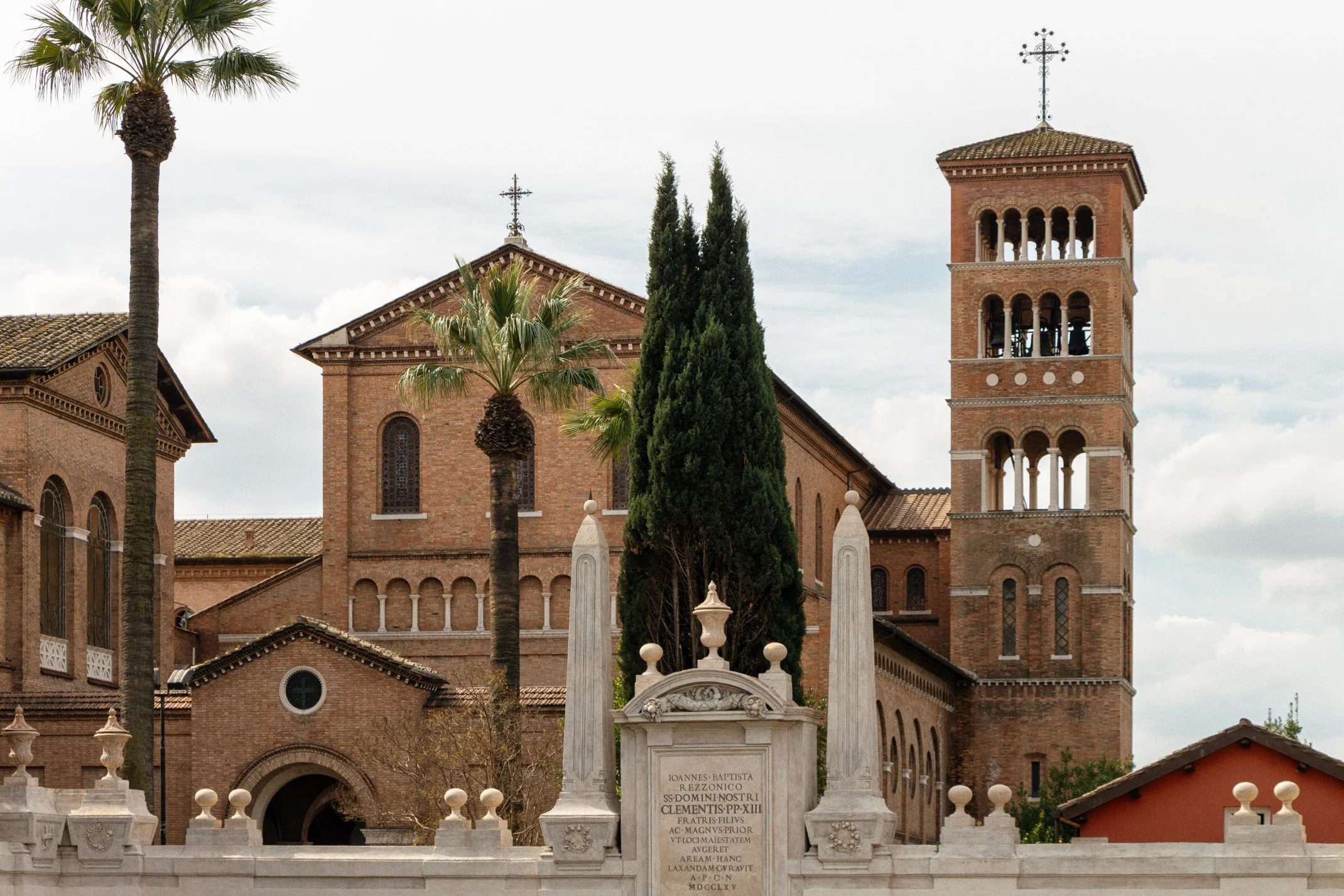
What I found interesting while standing there was how many people around me had no idea what the Order actually was. Most simply wanted the photograph and a quick stop between the Orange Garden and the Circus Maximus. Yet behind that tiny tourist moment sits nearly a millennium of history involving crusaders, diplomacy, exile, religion, sovereignty and humanitarian work.
That is what makes the Order of Malta so fascinating. It survives not because it fits neatly into the modern world, but because history occasionally leaves behind institutions too unusual to disappear completely, and Rome has simply learned to absorb them into its fabric.
And somewhere behind a green door on the Aventine Hill, that strange survival continues quietly every single day.
—
If you want to see more from that trip, including Rome, Vatican City, and the streets, architecture and hidden viewpoints that made the city so fascinating, take a look at my Italy gallery.
If you enjoyed this story, you might like some of the other adventures I’ve shared:

Written by Max Biddlecombe following a visit to Rome in March 2026. Max is a UK-based travel photographer and writer who documents the world's overlooked places, from obscure territories and geopolitical curiosities to forgotten corners of famous cities.