
In November 2025 I was invited to a wedding in Rio de Janeiro, which meant Brazil was finally on the cards. Ten days, one wedding, and a lot of empty space in between so I did what I always do and got to work researching the city, mapping out everything I could reasonably fit around the actual reason I was flying eight thousand miles.
The obvious ones went straight on the list such as Christ the Redeemer, Sugarloaf Mountain, Escadaria Selarón. They’re all worth the time, all photographed by roughly every person who has ever visited the city, but I wanted to scratch a bit deeper than that. I wanted to find the thing that would let me tick Rio off as properly explored rather than just seen.
What I did not expect was to scratch beneath the surface, fall straight through the floor, and land in a place that no Brazilian I have ever spoken to had heard of before I mentioned it to them.
That place is Hans Klussmann Square.
Finding somewhere nobody was looking for
One of the first sites I open when I start planning a trip is Atlas Obscura. It works on submissions, so instead of the same recycled top ten you get from TripAdvisor and every other travel site running the same list in a different font, you end up with the things people actually want to share. And with that you get odd corners, local knowledge, and places that have never been shouted about from the rooftops because nobody thought to. This has paid off previously as that’s how I discovered Büsingen am Hochrhein, Germany’s exclave in Switzerland, The frozen-in-time Subaru dealership I hunted down in Mosta during my Malta trip and also what led me to check out the embassy of The Sovereign Order of Malta as well as the iconic keyhole in Rome.
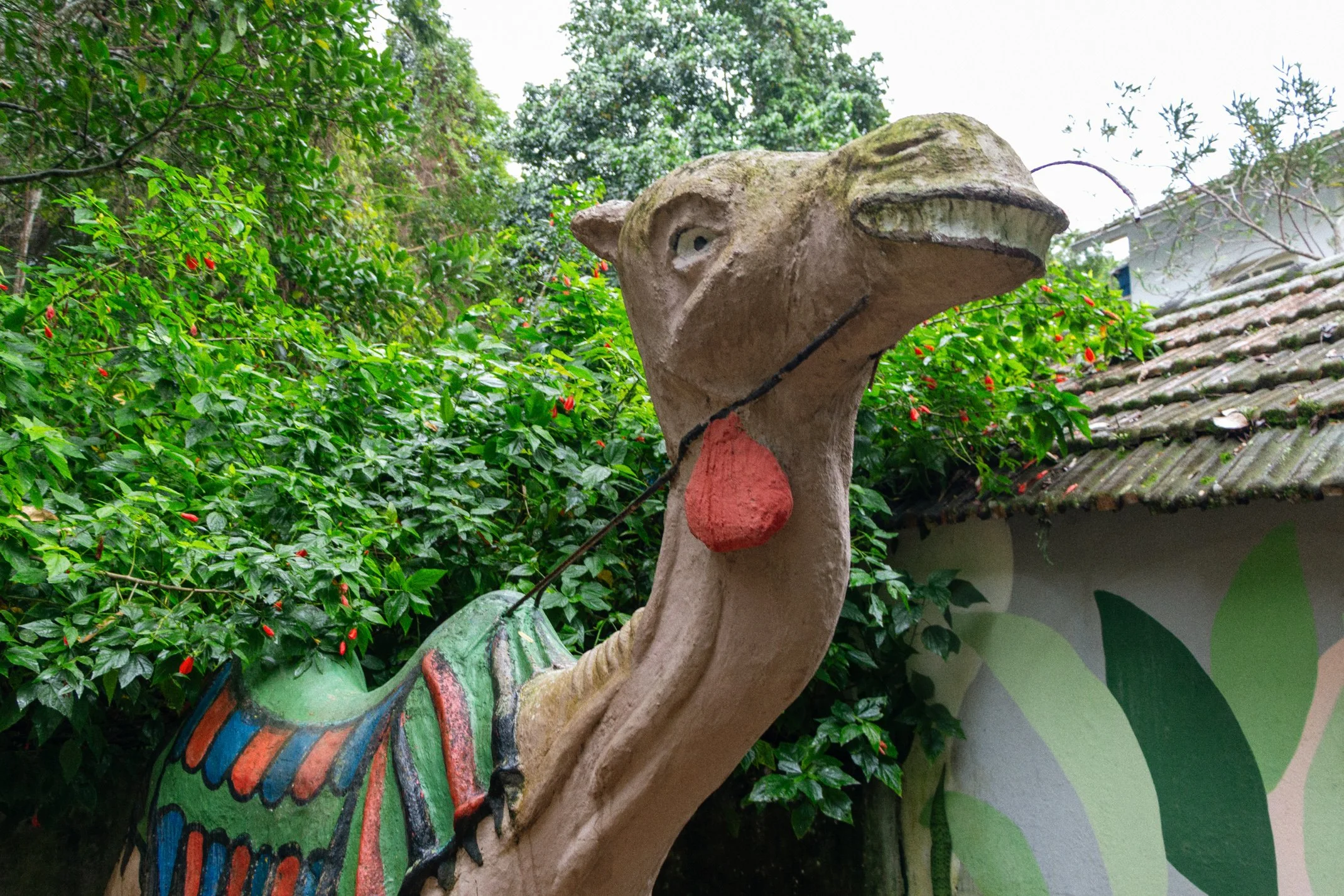
Atlas Obscura has taken me to some strange places before, but Hans Klussmann Square was on another level, mostly because the Atlas Obscura entry was, as far as I could tell, the only source of information about it anywhere online. Their write-up describes it as ‘“a hidden and wondrous square" tucked between the Tijuca Forest and the residents of Saboia Lima, and home to more than forty Naïf-style sculptures, a bandstand, and a river running along the back of it. Animals, characters from Brazilian children's books, and a pyramid, all in concrete, all apparently visited daily by local residents.’ There was also a Google Maps listing pointing to the exact location, but otherwise, no trace of it online.
That was it. That was everything the internet had.
Six months of nagging and a set of custom t-shirts
The groom, who for the sake of his privacy will be known here as Large Dave, was confused when I first raised it, then perplexed, then reluctantly impressed that I had managed to dig up a location he had never heard of in a city he knew far better than I did. That impression faded fairly quickly once he worked out which neighbourhood it sat in, which by most accounts is a slightly sketchy part of Rio.
Large Dave said no. Understandably, because he had a whole wedding party to think about rather than one photographer with an itch to scratch.
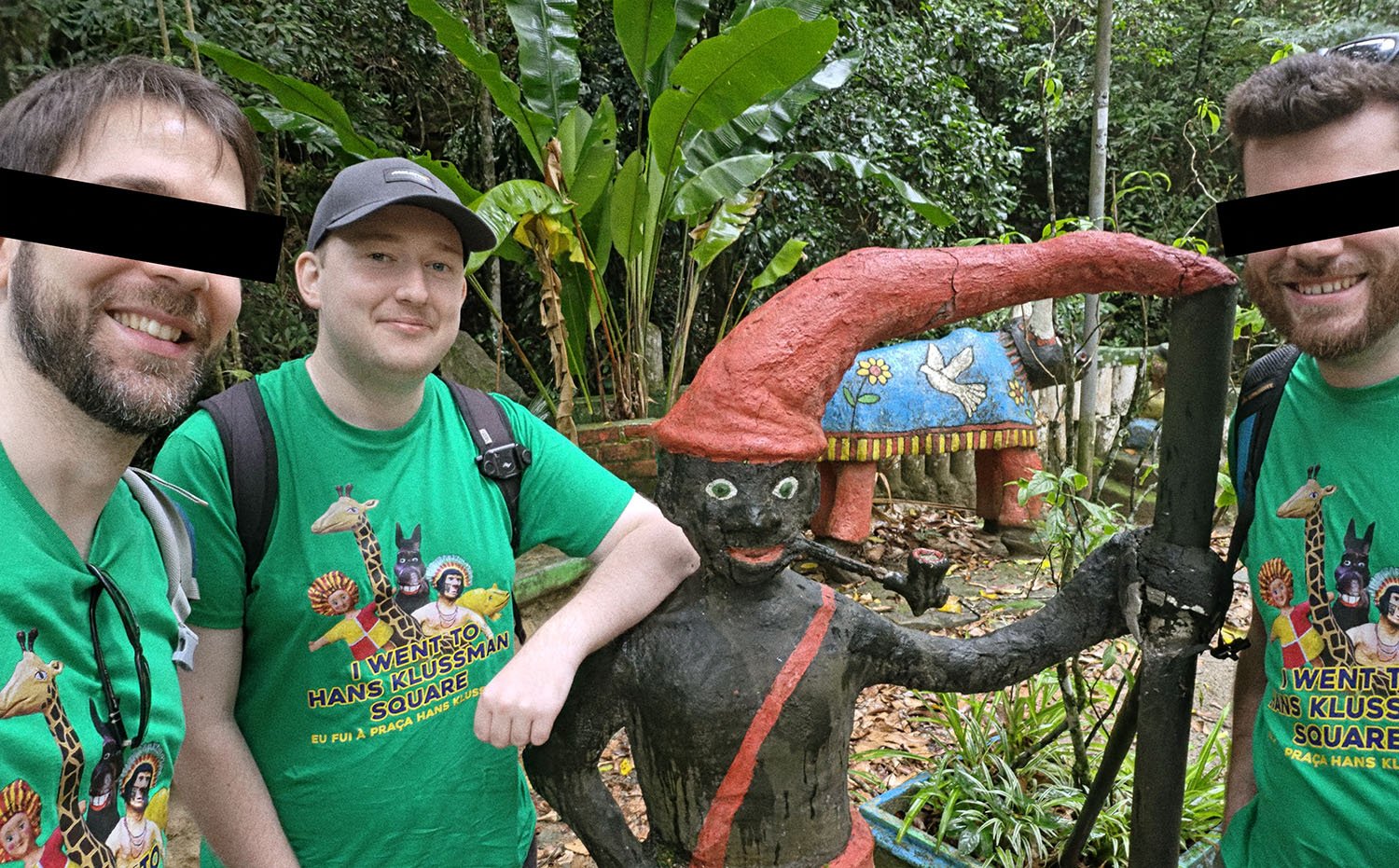
So I did the only sensible thing available to me, which was to bring it up again roughly every fortnight for the next six months. At some point I had custom t-shirts made and by the time we landed, the whole thing had picked up a nickname among the people closest to Large Dave, and it was going into the calendar as ‘the crazy square day’. Once a joke runs that long, you cannot really not go.
So what actually is it?
The plaque at the entrance fills in most of what the internet cannot. The full local name is Praça Hans Klussmann, with a subtitle underneath: Recanto dos Bichinhos, which translates to ‘something like the little creatures' hideaway’.
In the mid 1970s a teacher named Professor Paulo de Tarso came up with the idea and then built the entire thing himself, a miniature forest populated with characters lifted out of Brazilian folklore and children's stories. He made it for his own children and their friends. The sculptures are mortar and iron, brightly painted, and according to the plaque they were made by his hands and paid for out of his pocket. There was no commission behind it and no arts budget, purely just a bloke building a concrete menagerie in the woods for the kids in his life.
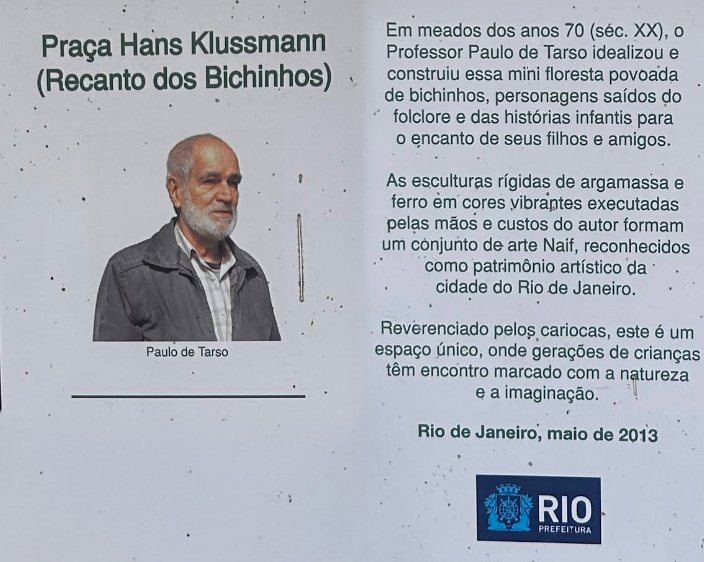
It has since been formally recognised as part of the artistic heritage of the city of Rio de Janeiro, and the plaque itself was put up by the city council in May 2013.
The name is where it gets slightly muddled, because the square carries one man's name and the sculptures belong to another. I have not been able to find out who Hans Klussmann was, and I am not going to pretend otherwise.
Arriving on a grey afternoon
We took an armoured vehicle out there, which I appreciate is not a sentence that appears in most travel blogs. The sky had gone flat and heavy by the time we pulled up, and it turned out to be perfect.
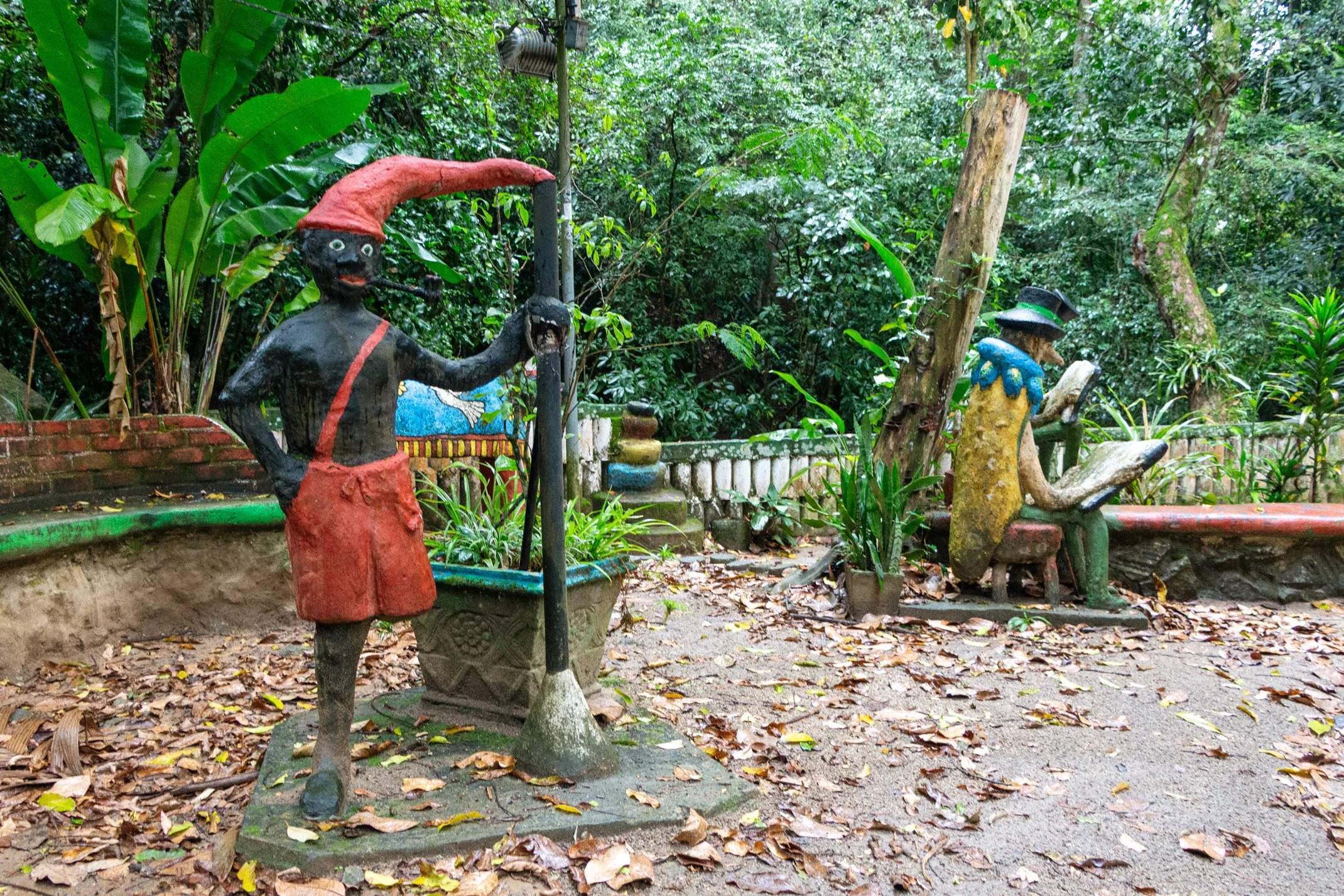
The first sculpture greets you before you have properly got out of the car. It is Saci, a one-legged figure from Brazilian folklore, usually shown with a red cap and a pipe, generally up to no good. Every Brazilian I have since described him to knew instantly who I meant, which only made the fact that I went here all the more amusing.
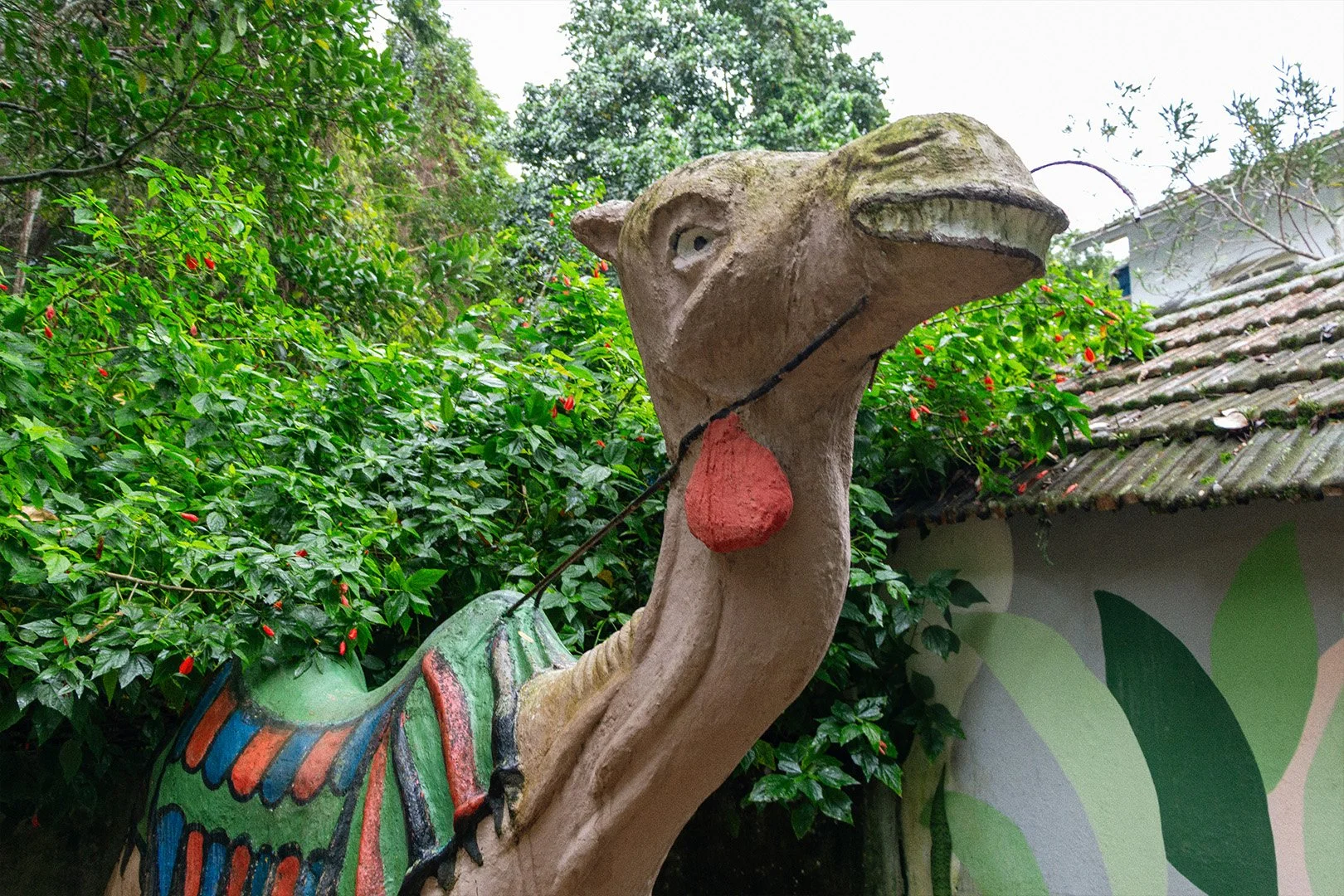
From there you have a choice as steps lead down towards the Trapicheiros river, where the aquatic sculptures sit, or you can head the other way towards the pyramid. Yes, a pyramid. It is not a large one, and it is surrounded by camels and dinosaurs, a combination I have thought about a fair amount since and still cannot account for.
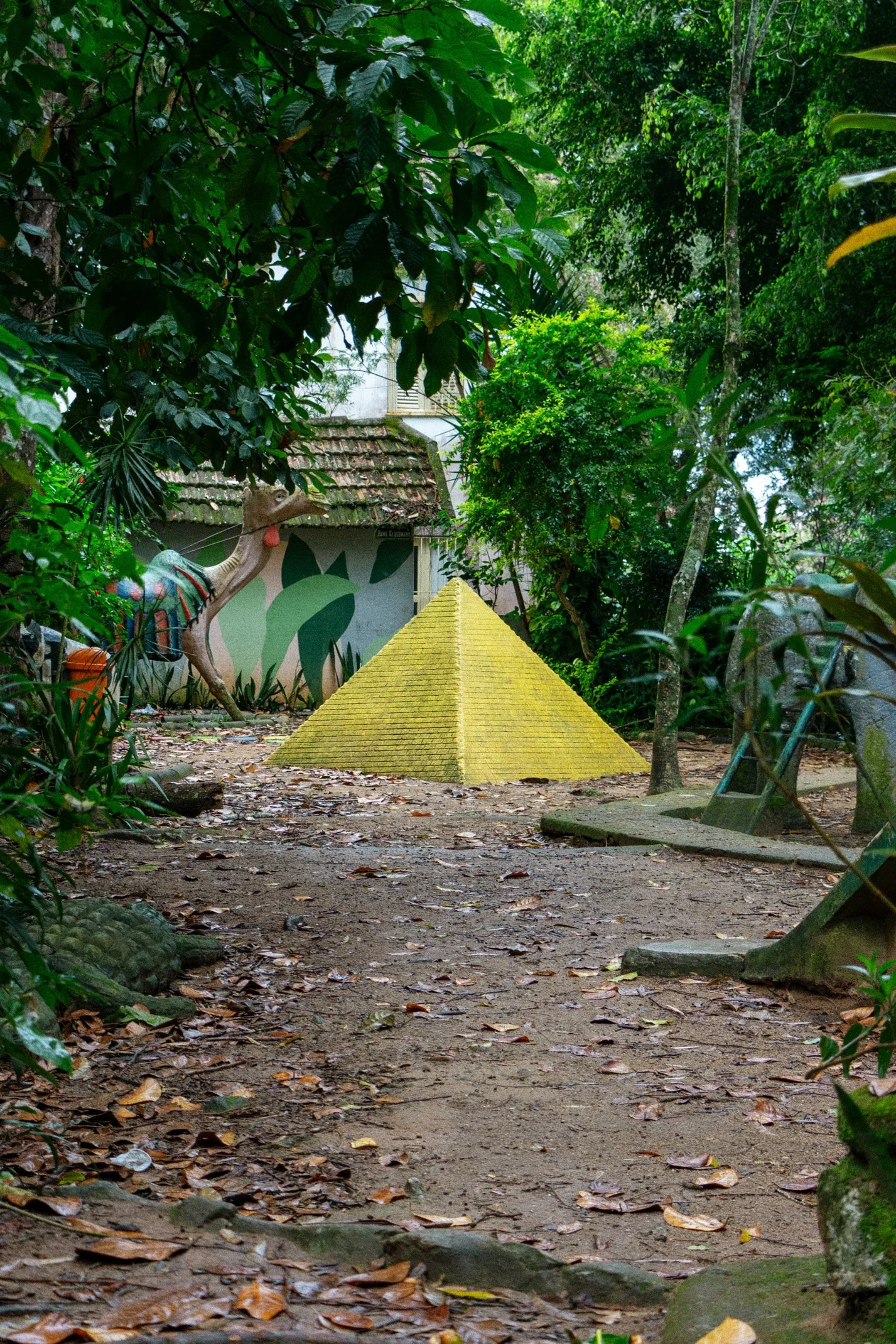
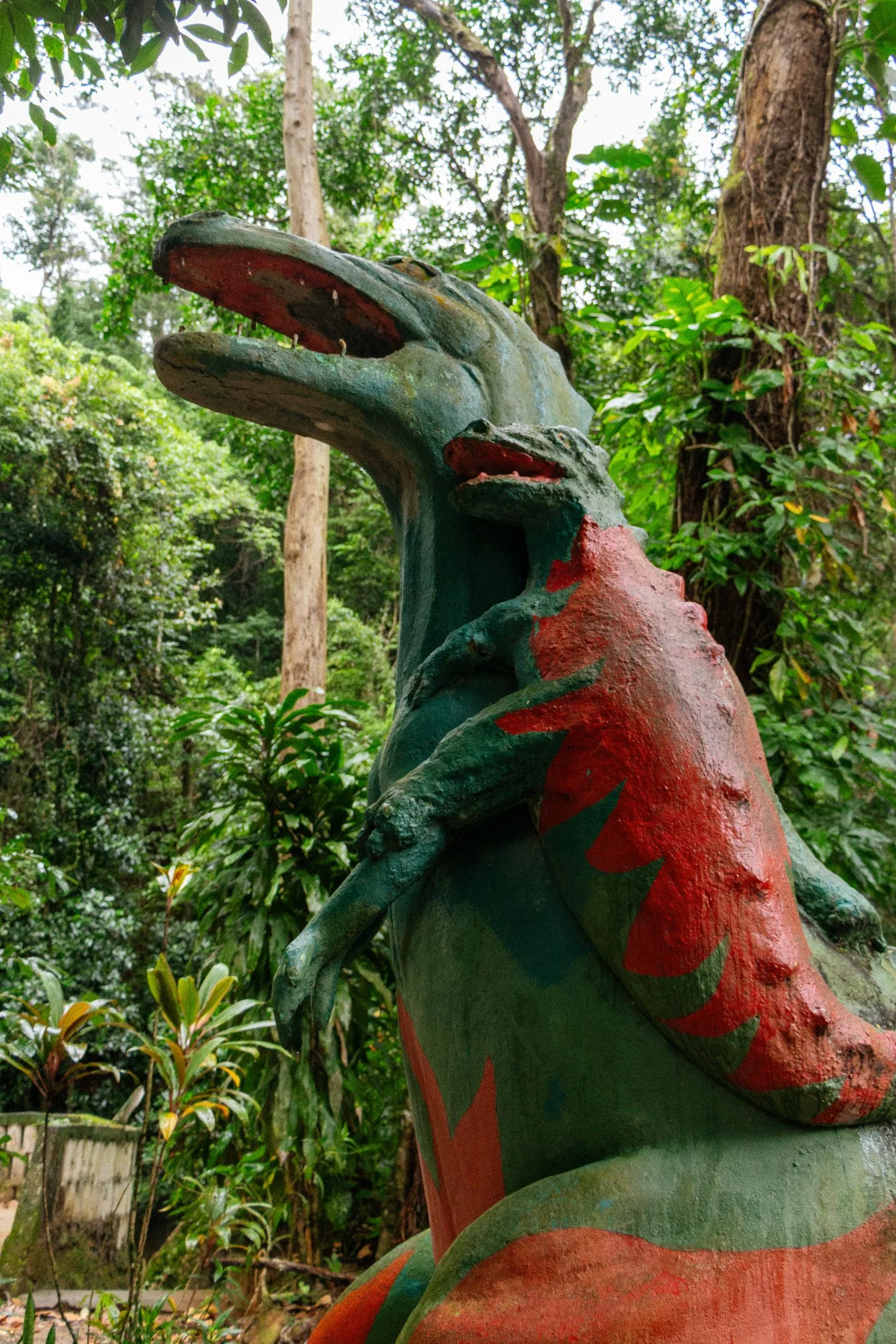
Why the sculptures look quite so cursed is another thing I cannot explain. They have that particular quality that comes from somebody making forty of something entirely by hand with no formal training and a great deal of enthusiasm. Some of the animals look delighted. Some look like they have seen things.
What made the day, though, was not really the sculptures. It was standing in the middle of it with people who had spent half a year telling me this was a terrible idea, watching them slowly come round. We ended up sitting in the little bandstand at the centre of the square with a few cold beers, some ciders, and an amount of ham-flavoured crisps that I am not going to write down.
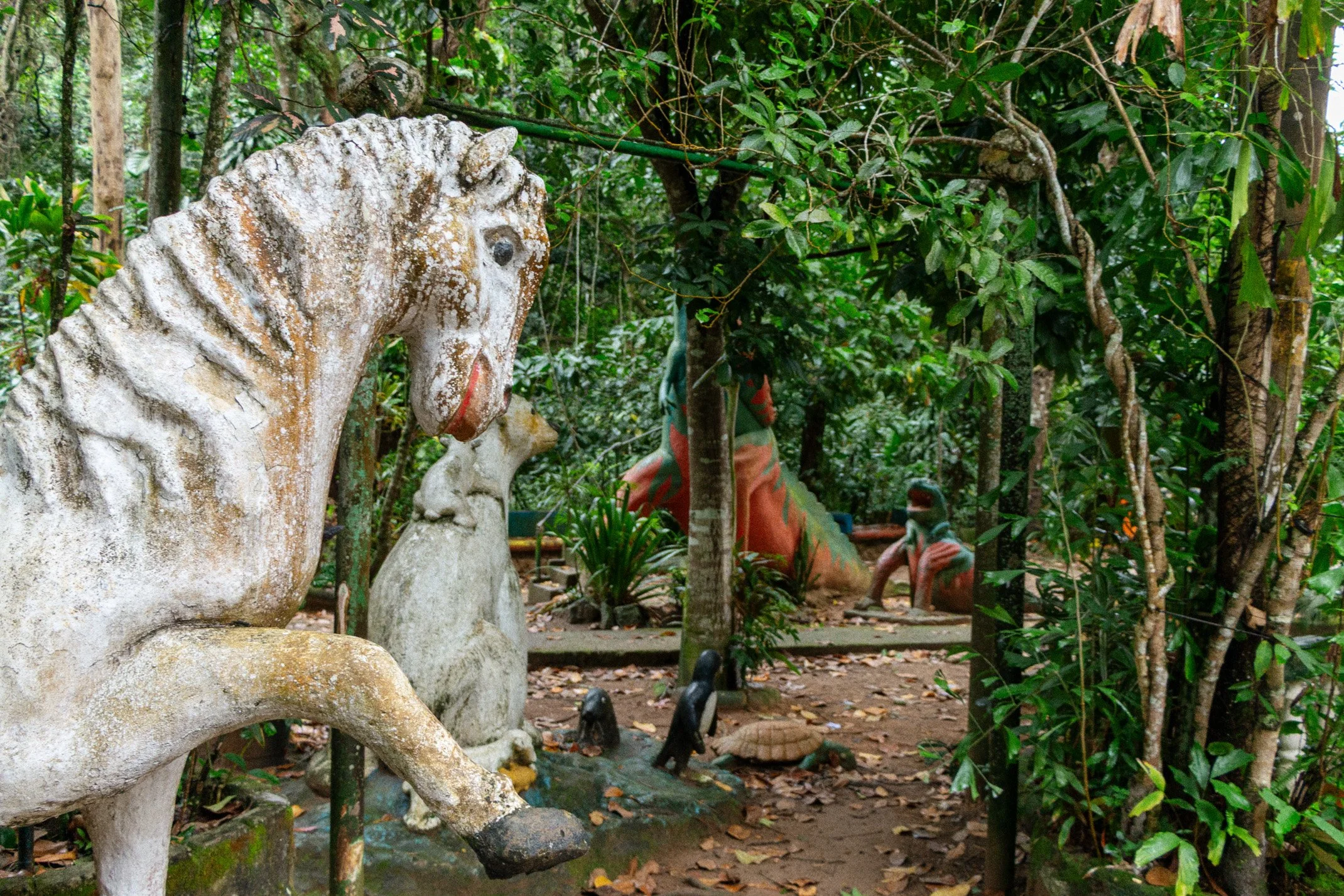
Next time you plan a trip, scratch a bit deeper than the first page of results. The thing you find might not be glamorous, and it might well be a concrete pyramid guarded by camels in a part of town your friends would rather avoid. But it was the getting there and the company that turned this one into a day people still bring up.
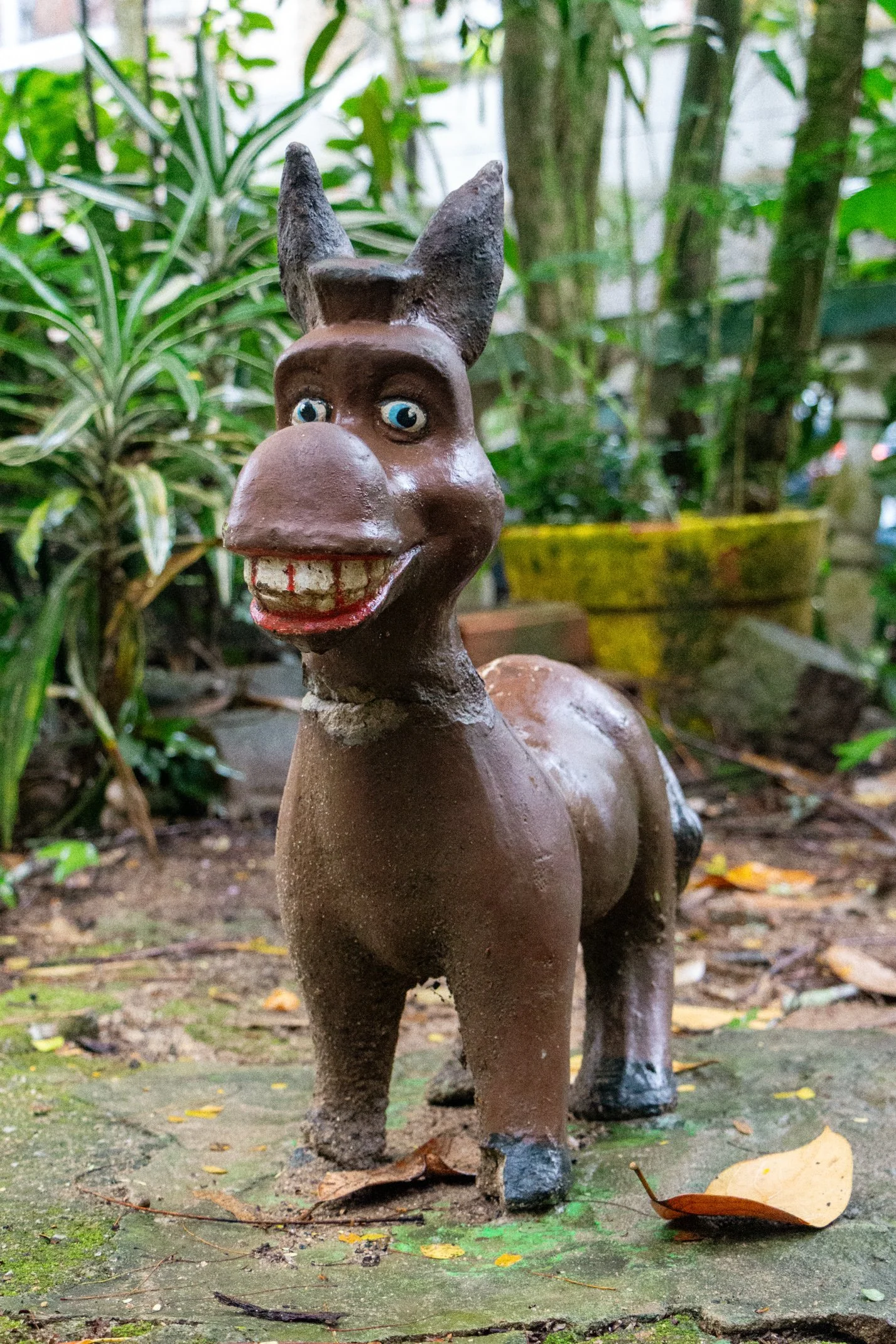
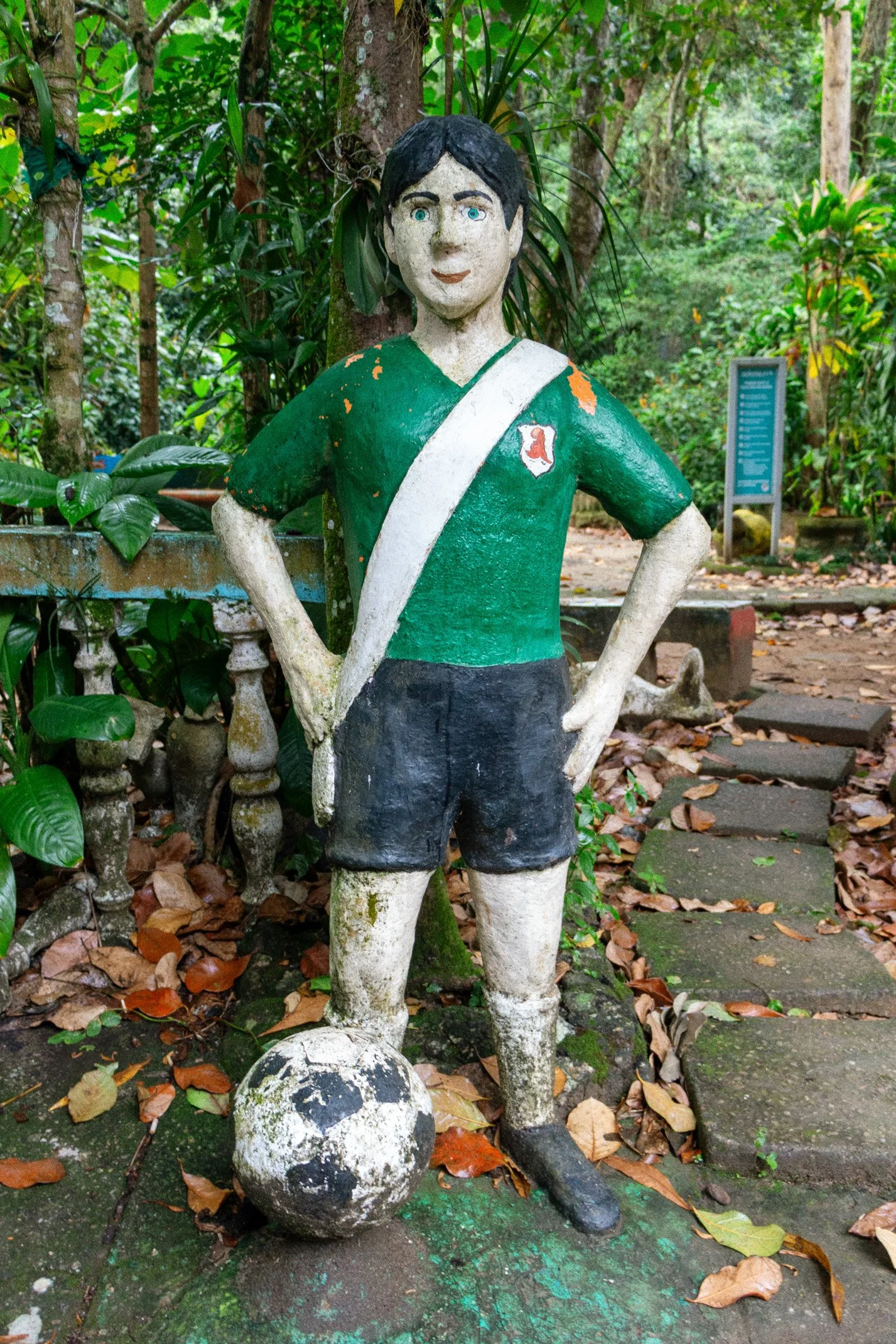
You can find the square on Google Maps, and the original Atlas Obscura listing is still the only real write-up out there. For the record, I am not endorsed by Atlas Obscura in any way. I just think it is a great website.
—
I visited Rio de Janeiro in August 2026, photographing the city from the obvious landmarks to whatever I could find in the corners nobody had written about. You can see the full series in my Brazil gallery.
If you enjoyed this story, you might like some of the other adventures I’ve shared:

Written by Max Biddlecombe following a visit to Rio de Janeiro in August 2026. Max is a UK-based travel photographer and writer who documents the world's overlooked places, from obscure territories and geopolitical curiosities to cities most guidebooks skip straight past.